CODE 221
Reflection 1
I recently started researching animals in southern Illinois, and honestly, I find it fascinating. What surprised me right away is that some of these animals are ones we actually see out in public almost every single day. At first, I expected to find more rare or unusual species, but instead I realized that many of the animals I pass by on a regular basis are part of this bigger picture of southern Illinois wildlife. That made me think more deeply about how often we overlook the everyday creatures around us. They’re always there, moving, living, surviving, and we hardly stop to notice.
My plan moving forward is to keep digging deeper into the different species that make their home in southern Illinois.I also want to visit parks and observe how these animals act in their natural environments. I want to pay attention to how they treat one another, how they react when people are nearby, and how comfortable they seem in the spaces they live in.
As I’ve been thinking about this, a few questions keep coming to mind. One of the biggest questions I have is: what environment is truly best for all these species? Southern Illinois has a mix of forests, fields, rivers, and wetlands, and I’m curious about which animals thrive in which settings. Another question is whether different species get along with each other or if they mostly keep their distance. Do they compete for food or territory, or do they find ways to share the same spaces peacefully?
Speaking of food, that’s something I definitely want to look into as well. What exactly do these animals eat, and how do they find their food? Do their diets change with the seasons? Do they have favorite things they like to eat, the way humans do? I’m also wondering about how they interact with humans. Some animals seem bold and curious, while others are naturally shy and avoid people. Which ones in southern Illinois are more open to contact, and which ones stay hidden? Those are the kinds of things I want to notice when I actually get out there and see them for myself.
As of right now, I haven’t been out to the JJK site yet to start exploring, so everything is still in the early stages. So far, I haven’t come across any big surprises in my research, but I feel like the real discoveries will come once I’m able to visit in person. For now, I’m just laying the foundation and building curiosity. I know that once I get into the field, I’ll see things I never even thought about, and that’s what makes this whole process exciting.
Reflection 2
Before going onsite, the main thing I needed was clear instructions so I could do my part without any confusion. Before we arrived, I pictured us just walking around a park, taking notes, and getting familiar with the space. My plan, which I talked about with the JJK team, is to focus on researching the species that live in that area and gathering information that will help us understand the site better. Along with that, I will be designing the charts and creating the flyer that will showcase the data my partner Aiden and I collect during the project. The only real obstacle I can imagine facing is getting overloaded with work or not fully understanding a task. Even then, I know I can communicate with my group when I need help. Overall, my partners and I are excited to move forward, especially since our site visit went really well. Everyone seemed confident about their role, and that made the whole experience feel organized and positive. Sometimes, the barriers to building trust in a group come from not knowing each other well, not understanding how someone communicates, or having negative experiences with group work in the past. For this project, I plan to stay in contact with my team, make sure we all understand what needs to be done, and support each other whenever someone needs help. When we visited the site, the weather was nice and the area itself had a peaceful feel, even though it was still under construction. We walked around, talked through our ideas, and discussed how we could contribute by researching specific topics for the JJK. Leaving the site, I felt more prepared and more connected with my team, and I am ready to move forward with my responsibilities.
reflection 3
Yes, I have completed a couple of on-site visits at JJK Fan, and each one was a really positive experience for me. During the meetings, we went over the plans for JJK and talked about what tasks they needed us to complete. At first, I felt nervous because I didn’t want to miss any important details or end up doing something wrong. But as the conversations went on, I realized how important communication and confidence are in situations like that. I think my behavior influenced the interactions in a good way because I stayed focused and made sure to show that I was listening. Even when I needed clarification, I didn’t let that keep me from paying attention to what was being explained. In the past, I sometimes struggled with situations where I didn’t fully understand something someone said. Instead of asking questions, I would try to figure it out on my own, and most of the time it didn’t work out the way it should have. This experience helped me understand the difference between simply listening and actually hearing what someone is saying. Hearing means paying attention, processing the information, and making sure the message is clear. I’ve learned that speaking up when something is confusing doesn’t make me look unprepared; it actually helps avoid mistakes and builds stronger communication. Working with JJK Fan has pushed me to grow in how I listen, communicate, and collaborate with others. I feel more comfortable asking questions when I need to, and I’ve gotten better at staying engaged during discussions. Overall, the site visits taught me a lot about how to present myself, how to interact with people professionally, and how to make sure I understand what is expected of me.
Reflection 4
I collected data on animals by researching the key things they need to survive and thrive in their natural habitats. First, I chose which animals I wanted to focus on, and then I went deeper into their habits, environments, and the challenges they face. I decided to focus on frogs in southern Illinois because they play an important role in the ecosystem, but many of them are experiencing serious declines. Some frog species in this region are considered threatened, meaning their populations are dropping and they could eventually disappear if their habitats keep getting damaged. This usually happens because of habitat loss, pollution, and environmental changes caused by human activity. Three of the most threatened frog species in southern Illinois are the Illinois Chorus Frog, the Bird-voiced Treefrog, and the Eastern Narrow mouthed Toad. The Illinois Chorus Frog lives in sandy prairies and relies on temporary ponds for breeding, but these areas are shrinking due to farming and land development. The Bird-voiced Treefrog depends on forested wetlands and cypress swamps, which are disappearing as more land is cleared. The Eastern Narrow-mouthed Toad needs moist environments and spends most of its time under logs or leaf litter, but it struggles to survive when wetlands are drained or destroyed. While doing this research, I learned just how fragile these species really are and how closely their survival depends on healthy environments. Understanding their needs such as clean water, safe breeding spaces, and natural food sources helps us figure out how to protect them. This project made me realize that studying animals is not just about gathering facts. It is about seeing how everything in nature is connected. Protecting frogs means protecting the balance of their entire ecosystem, and that helped me understand why conservation work is so important.
Reflection 5
This semester’s on-site work taught me a lot about teamwork, communication, and the way I respond to different situations. At the beginning, I was mostly focused on completing my own responsibilities and making sure my part of the project was done correctly. Over time, I realized that working with a team requires more than just doing your individual tasks. It takes patience, active listening, and clear communication so that everyone stays on the same page. I learned that each person brings their own ideas, strengths, and perspectives, and that understanding those differences is an important part of working well together. One moment that really stood out to me was when our team had to make sudden changes right before a deadline. At first, the situation felt stressful because we didn’t all agree on the best solution, and it seemed like we were running out of time. Instead of arguing or panicking, we took a step back and let everyone explain their thoughts. By listening to each other and staying calm, we were able to come up with a solution that was even better than our original plan. That experience showed me how strong a team can be when everyone focuses on the same goal and respects each other’s input. Throughout this project, I also learned more about myself. I realized that I naturally like to take initiative and try to solve problems quickly, especially when things feel urgent. At the same time, I learned that being flexible is just as important. Not everything will go according to plan, and that is where adaptability matters. This on-site experience helped me grow not just in my work skills but also in how I communicate, how I collaborate, and how I handle challenges in a group setting.
Data collection
For my data collection, I conducted secondary research using scientific and educational articles about wildlife species found in southern Illinois. I chose this form of data collection because my research question focuses on understanding native animals and their roles in the environment, and articles provided reliable information quickly and in detail. Secondary research was also the best method because it allowed me to gather accurate descriptions of species, their diets, habitats, and their ecological benefits and drawbacks. To collect my data, I used the articles with additional credible sources related to each species. I searched using key terms such as southern Illinois wildlife, native species, habitat, and ecosystem roles. I selected sources that clearly described each animal’s characteristics and ecological impact. I recorded details on whether each species is native, what they eat, what habitats they thrive in, and how they affect their environment. This method was chosen because it allowed me to compare multiple species consistently and build an organized dataset for my team.
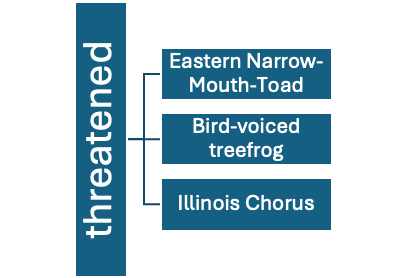
From my research, I learned that most of the species I studied, such as frogs, salamanders, deer, coyotes, dragonflies, and raccoons are native to southern Illinois, which means they play important natural roles in their ecosystems. A major theme in the data is that many of these animals help control insect or rodent populations, showing that predator-prey relationships are key to environmental health in southern Illinois. I also noticed that several species, like deer and raccoons, can create drawbacks by over-foraging or raiding human spaces, which suggests that human–wildlife interaction is an ongoing issue in the region. One limitation of my data is that article based research cannot show live trends or population changes over time. The sources may also reflect different years or regions within southern Illinois which that can affect accuracy. To improve this, the next step would be comparing my article data with local field observations, and wildlife reports. This would provide stronger evidence and fill gaps related to population size, environmental threats, and changes in habitat. The image shows the specific frog species my group chose to focus on for our project. These frogs are important because several of them are endangered or at risk in southern Illinois. The chart helped us identify and organize which species we needed to study more closely. It also highlights why protecting their habitats matters, since their decline can signal bigger environmental problems