CODE 220 Grading Contract & Portfolio
Goal Grade
| A Work | B Work | C Work |
-Misses one class or less, or completes make-up work for excused absences -Annotates all readings thoroughly -Makes substantive comments in discussions -Completes all assignments on time (or has an approved extension request) -Work demonstrates intellectual engagement, care, effort, and growth in response to feedback -Collaborates substantially, contributes to vision, works equally with peers | -Misses two classes or less, or completes make-up work for excused absences -Annotates readings -Often participates in discussion -Completes all major assignments on time (or has an approved extension request) -Completes most SAs on time -Work demonstrates care, effort and growth in response to feedback -Collaborates equally, completes required work | -Misses three classes or less, or completes make-up work for excused absences -Completes most readings -Sometimes adds to discussion -Completes all major assignments on time (or has an approved extension request) -Completes at least four SAs -Meets minimal expectations on assignments; shows limited growth in response to feedback -Completes required collaborative wor |
| What concepts are you going to learn, or skills are you going to develop? | How will you learn the content/ develop the skill? | What evidence will you add to the portfolio to demonstrate your learning? | How will you and I assess the evidence of your learning/skills? |
| Goal 1 (20%) Based on (5a & 5b): Information Literacy (Uses effective search strategies; Comprehends research questions and utilizes sources to properly address them) | -Use multiple different reliable sources. – Make sure to double check my processes, especially searching for reliable information to use in research. -Take more detailed notes -Remain open-minded to the complexities of research | – Developing research question; Finding literature and solidifying ideas – Annotated Bibliography -Research paper | -Perform “Excellent” on research paper – Provides reliable and accurate sources for paper – Has strong research question -Creates an “Excellent” Annotated Bibliography – Can clearly explain the journal articles I found and how they connect to my research -Results of proposed experiment, as it shows my overall understanding of my sources |
| Goal 2 (20%) Based on (9b & 9c): Problem-Solving Skills (Identifies and understands multi-contextual problems with multiple solutions) | – Take my time understanding the content of the issue – Pay attention to minute details throughout the processes or context -Use previous experiences and how I dealt with them as motivation -Stay attentive during class lectures covering this expertise | -Research paper – Annotated Bibliography (Being able to choose which sources each member does) -Jigsaw | – Success of research paper (in regard to how well I collaborated with others) – Research paper (reflections on my hypothesis as well as next steps) -Excellent collaboration with group members and classmates |
| Goal 3 (20%) Based on (10a & 10c): Quantitative Literacy (Uses quantitative information effectively, to understand contexts and support ideas) | -Take feedback – Have multiple sources to research for experiment -Stay attentive during class lectures on this expertise | – Research paper (experiment) – Jigsaws (papers with Quantitative methods) | -Report “excellent” work for research paper (experiment part) – Explain thoroughly how quantitative data connects and explains the situations |
| Goal 4 (20%) Based on (7b & 7c): Skills for Lifelong Learning (Understands educational information from outside contexts and reflects to change or confirmed perspectives) | – Keep my previous knowledge of the subject in mind -Keep an open mind regarding content – Be attentive during class lectures to base a proper change in perspective | – Research paper Can explain through the results through reflection) – Reflections/Worksheets | – Explain my changes in perspectives and/or connection to outside knowledge in each assignment if I have prior knowledge on it/how the assignment has produced growth/connection –Clearly show my mental processes through my writing |
| Goal 5 (20%) Based on (2a & 2c): Critical and Creative Thinking (Develop plans considering context, transforming ideas from multiple perspectives) | -Be attentive during class lecture to broaden my sources and perspectives – Make concept maps if needed – Collaborate with peers to broaden my perspectives – Educating myself on historical contexts if needed | – Research paper (reflection and processes) -Reflections -Scientist spotlight | -Clearly show my thinking processes throughout my work – Clearly explain changes in perspectives – Provide good connections in reflections and scientist spotlight, as they all require critical thinking |
Goal 1 (20%)
Based on (5a & 5b): Information Literacy (Uses effective search strategies; Comprehends research questions and utilizes sources to properly address them)
| What will you do to learn the content/ develop the skill? | What examples will you add to the portfolio to demonstrate your learning? | What characteristics of the chosen examples demonstrate you have met your goal? |
| -Use multiple different reliable sources. – Make sure to double check my processes, especially searching for reliable information to use in research. -Take more detailed notes -Remain open-minded to the complexities of research | – Developing research question; Finding literature and solidifying ideas – Annotated Bibliography -Research paper | -Perform “Excellent” on research paper – Provides reliable and accurate sources for paper – Has strong research question -Creates an “Excellent” Annotated Bibliography – Can clearly explain the journal articles I found and how they connect to my research -Results of proposed experiment, as it shows my overall understanding of my sources |
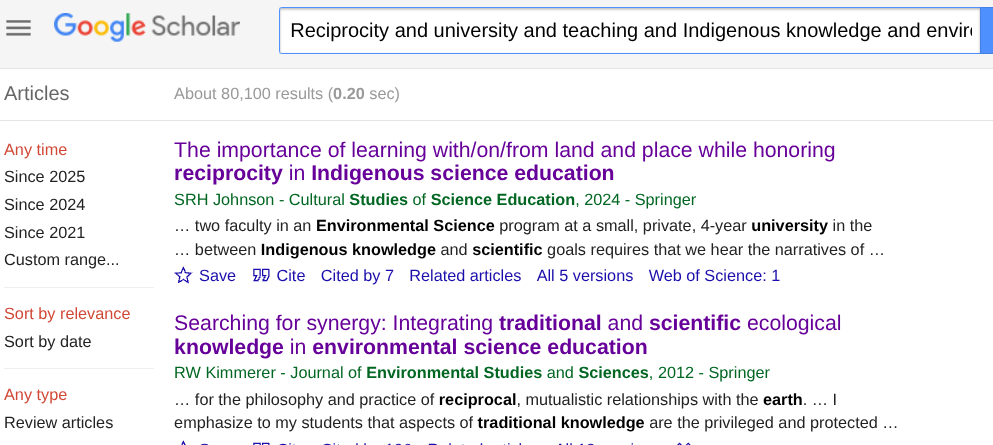
This piece of evidence above is showing my use of Google Scholar to search for my sources, as well as showing what I searched to find the sources I’m using for my project. This proves my use of information literacy as I was able to use a reliable search engine with applicable search practices.
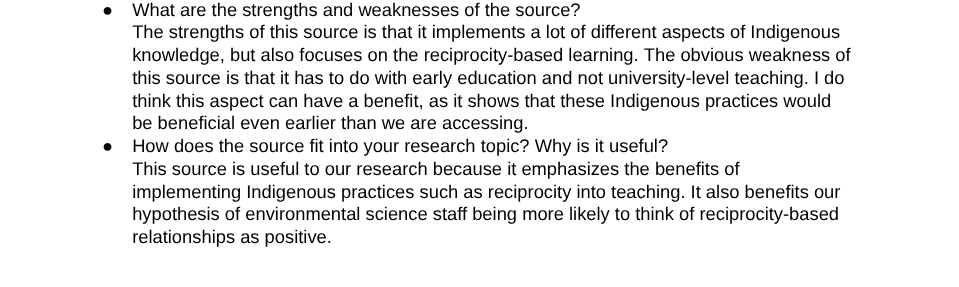
This piece of evidence above is from my annotated bibliography draft, in which it focuses on the questions of applying the sources to my research as well as determining how useful the sources are. This shows my use of information literacy as I was able to dissect the source I used, and determine how applicable it was to my research. This also proves that I comprehended my research question because I was able to find these useful sources, as well as identifying it’s weaknesses.

Above is an excerpt from my research paper analysis. This piece of evidence highlights my use of information literacy, as I was able to apply this journal article to my research question and understand what this tells me about Environmental Science staff’s interest in teaching reciprocity-based relationships.
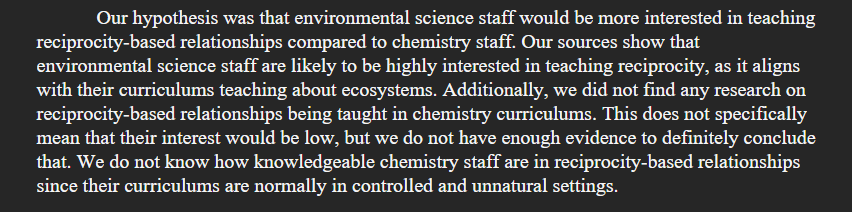
Above is an excerpt from the results and summary of my research paper. I exemplified informational literacy because I was able to review and use all the journal articles my group researched to come to a conclusion for our hypothesis.
Goal 2 (20%)
Based on (9b & 9c): Problem-Solving Skills (Identifies and understands multi-contextual problems with multiple solutions)
| What will you do to learn the content/ develop the skill? | What examples will you add to the portfolio to demonstrate your learning? | What characteristics of the chosen examples demonstrate you have met your goal? |
| – Take my time understanding the content of the issue – Pay attention to minute details throughout the processes or context -Use previous experiences and how I dealt with them as motivation -Stay attentive during class lectures covering this expertise | -Research paper – Annotated Bibliography ( Being able to choose which sources each member does) -Jigsaw | – Success of research paper( in regards to how well I collaborated with others) – Research paper (reflections on my hypothesis as well as next steps) -Excellent collaboration with group members and classmates |
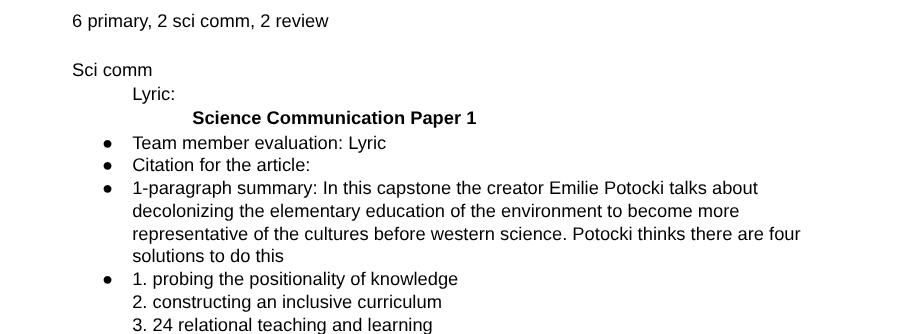
This evidence above is from my groups annotated bibliography. It doesn’t specifically show what I am trying to use, but it does show that we were able to talk and figure out which group member does each article. When I was talking with my group, I exemplified problem-solving skills as I was able to direct which articles I wanted to use and figure out who works on each article.
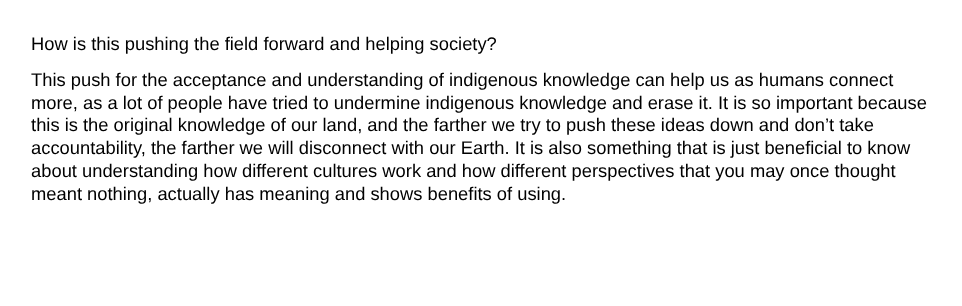
This evidence above is from my first jigsaw preparation paper, in which I had to reflect on the journal article I read. This highlighted my problem solving skills as I identified the multi-cultural problems with society currently and how implementing this Indigenous knowledge is a possible solution for people to accept more cultures and connect with our community/land.
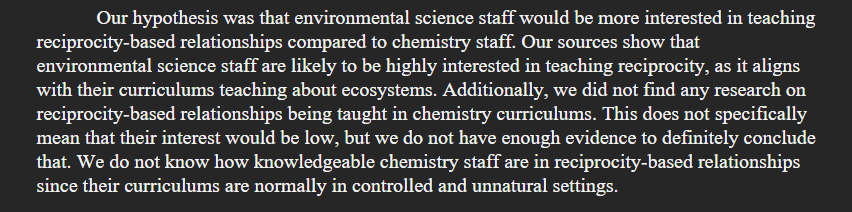
Above is an excerpt from my research paper from my summary of my proposed experiment. This exemplifies problem solving skills as I reflected about the lack of information that I had to prove the low chemistry staff interest index, but I was able to provide a solution that we would need to conduct more accurate and definite research.

Above is an excerpt from my research paper from my summary of my proposed experiment. From my review of research, I additionally learned how important implementing reciprocity-based relationships is to the sustainable future of our Earth. I exemplified problem solving skills by being able to identify this from research and correlate this with our research for next steps required.
Goal 3 (20%)
Based on (10a & 10c): Quantitative Literacy (Uses quantitative information effectively, to understand contexts and support ideas)
| What will you do to learn the content/ develop the skill? | What examples will you add to the portfolio to demonstrate your learning? | What characteristics of the chosen examples demonstrate you have met your goal? |
|---|---|---|
| -Take feedback – Have multiple sources to research for experiment -Stay attentive during class lectures on this expertise | – Research paper (experiment) – Jigsaws (papers with Quantitative methods) | -Report “excellent” work for research paper (experiment part) – Explain thoroughly how quantitative data connects and explains the situations |
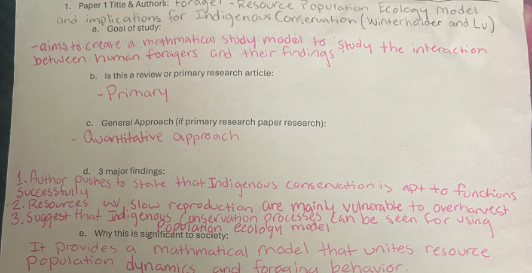
This evidence above is a portion of my jigsaw summary #2, which is emphasized with the use of quantitative research within the article. This proves my ability for quantitative literacy, as I was able to understand the quantitative approaches summarized to me to understand the contexts of the article more. This also supported my understanding of traditional ecological knowledge, in respects to this paper and the other papers on the jigsaw.

Above is an excerpt from my proposed experiment section of my research paper. I wanted to highlight my use of creating a hypothetical survey with the specific number of participants of each staff type. I considered that each type of staff should have the same number of participants so we could get an accurate comparison in data for the interest index. This highlights effective use of quantitative information exemplifies quantitative literacy.
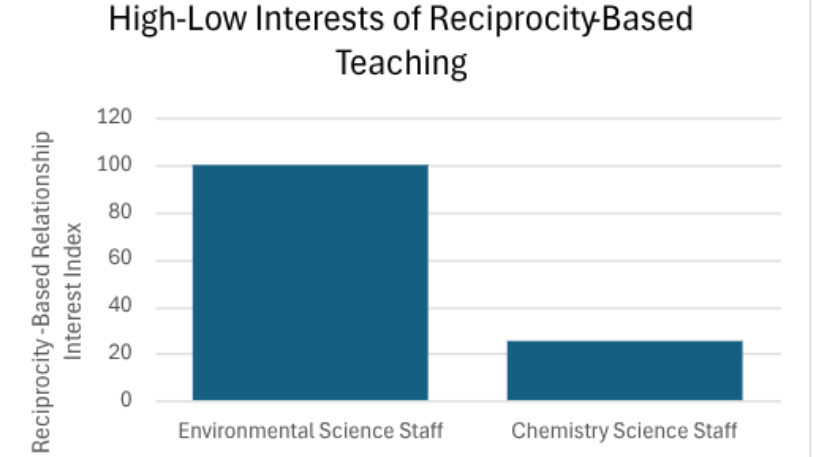
Above is the graph I created for my research paper experiment. I used Microsoft excel to create this with a data table with hypothetical survey data. This highlights quantitative literacy as I was able to create a graph with numbers that symbolized high and low interest indexes.
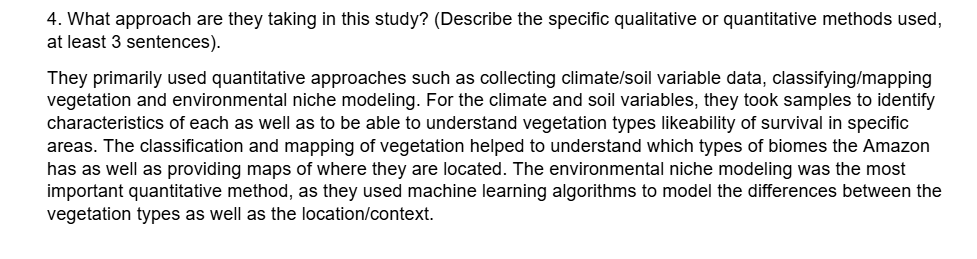
Above is an excerpt from my jigsaw #3 prep sheet. In this, I explained how the authors quantitative approaches helped them better understand the areas characteristics and vegetation types chance of survival depending on the environment, and how climate change has affected the areas. I exemplified quantitative literacy because I was able to figure out how the quantitative approaches led them to their conclusions and results.
Goal 4 (20%)
Based on (7b & 7c): Skills for Lifelong Learning (Understands educational information from outside contexts and reflects to change or confirmed perspectives)
| What will you do to learn the content/ develop the skill? | What examples will you add to the portfolio to demonstrate your learning? | What characteristics of the chosen examples demonstrate you have met your goal? |
| – Keep my previous knowledge of the subject in mind -Keep an open mind regarding content – Be attentive during class lectures to base a proper change in perspective | – Research paper(Can explain through the results through reflection) – Reflections/Worksheets | – Explain my changes in perspectives and/or connection to outside knowledge in each assignment if I have prior knowledge on it/how the assignment has produced growth/connection –Clearly show my mental processes through my writing |
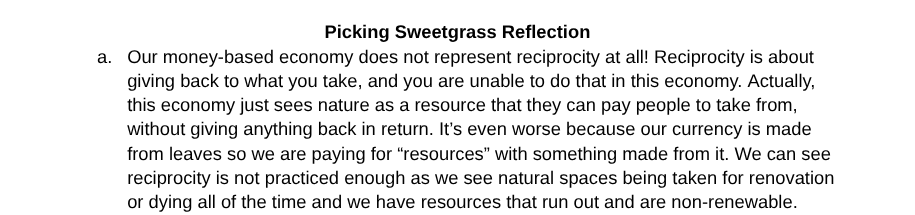
This evidence above is from my picking sweet grass reflection, highlighting how I connected my prior knowledge with the topics taught in class (Indigenous Knowledge). This proves my ability to understand class content from outside perspectives as well as changed perspectives as I am able to consider both in the way I reflected.
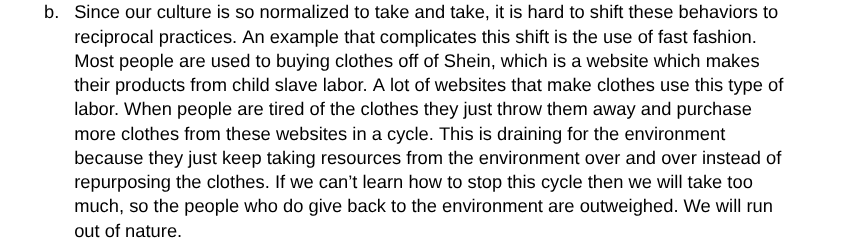
This above evidence is from picking sweet grass reflection as well, highlighting my understanding of our environment and the connection the content has to this prior knowledge. This proves my use of lifelong learning skills by clearly stating how I feel about the current contexts and the difficulties of implementing knowledge from the book into common practices.
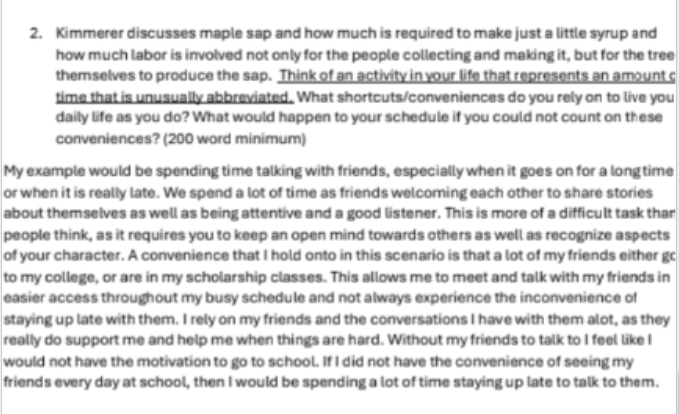
This evidence above is from my reading reflection for braiding sweet grass, which highlights my ability to understand concepts from the book and apply them to my real situation. This proves my use of lifelong learning skills, because I was using symbolism from the book and it changed my perspectives in understanding aspects of my life by connecting it to systems in nature.
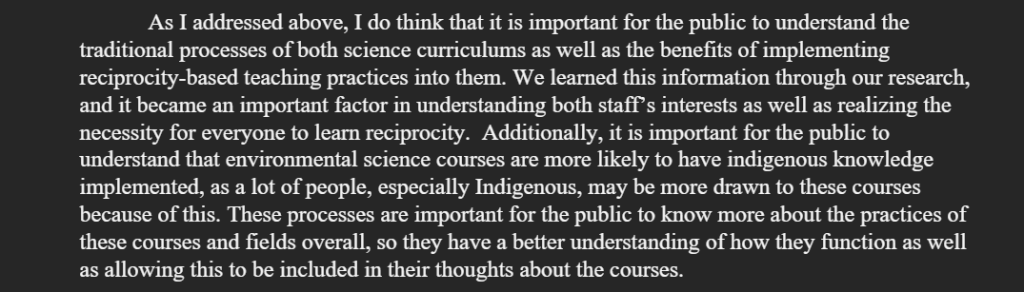
Above is an excerpt from my reflection in my research paper. I highlighted life-long learning skills by explaining how I learned so much more about why it is necessary to implement reciprocity-based relationships into classroom through the journal articles I found to answer my research question. This shows how my perspective of this evolved from this course.
Goal 5 (20%)
Based on (2a & 2c): Critical and Creative Thinking (Develop plans considering context, transforming ideas from multiple perspectives)
| What will you do to learn the content/ develop the skill? | What examples will you add to the portfolio to demonstrate your learning? | What characteristics of the chosen examples demonstrate you have met your goal? |
| -Be attentive during class lecture to broaden my sources and perspectives – Make concept maps if needed – Collaborate with peers to broaden my perspectives – Educating myself on historical contexts if needed | – Research paper (reflection and processes) -Reflections -Scientist spotlight | -Clearly show my thinking processes throughout my work – Clearly explain changes in perspectives – Provide good connections in reflections and scientist spotlight, as they all require critical thinking |
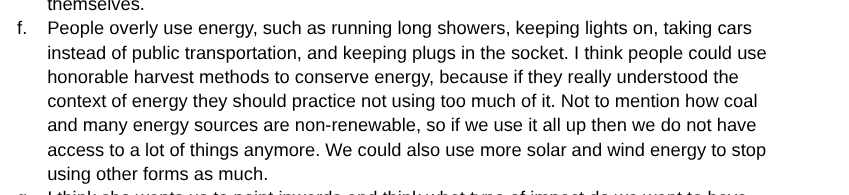
This evidence above is from my picking sweet grass reflection, as it highlights my ability to critically reflect on issues in the current world as well as providing my take on how we could improve as a society. My critical thinking skills were portrayed excellently through this prompt, as I criticized your average persons overuse of energy as well as providing different forms of energy that would be more beneficial to use.
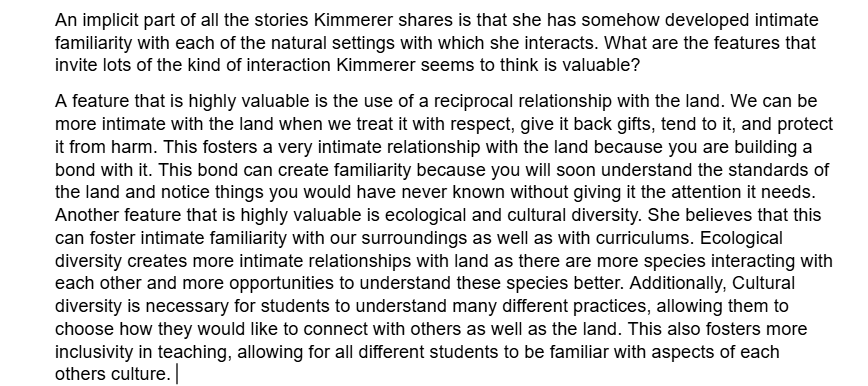
Above is an excerpt from my braiding sweetgrass reflection. I highlight critical and creative thinking by speaking about how important cultural diversity is, which shows my belief and use of learning from multiple perspectives.
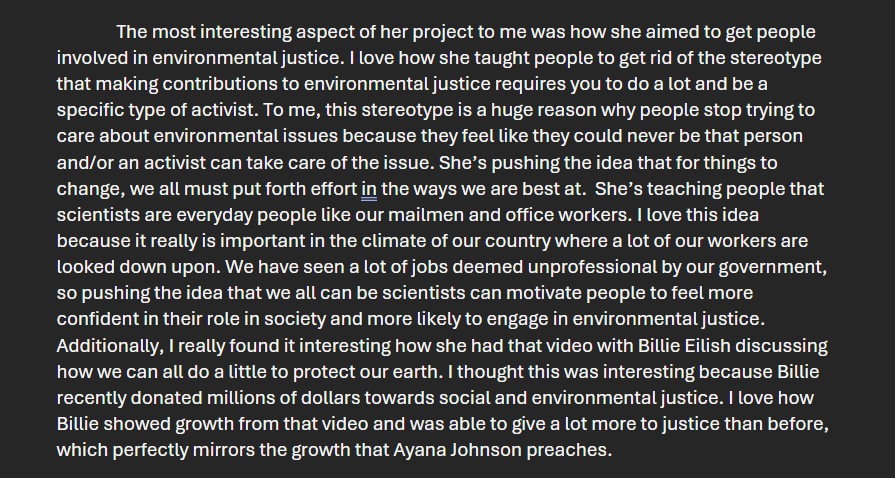
Above is my Ayana Johnson scientist spotlight. I exemplified critical and creative thinking through reflecting on how she was redefining who scientists are by encouraging others to fight for environmental justice using the skills that they are good at. This shows me transforming her original ideas and making connections to other questions she did not address but inherently answered.
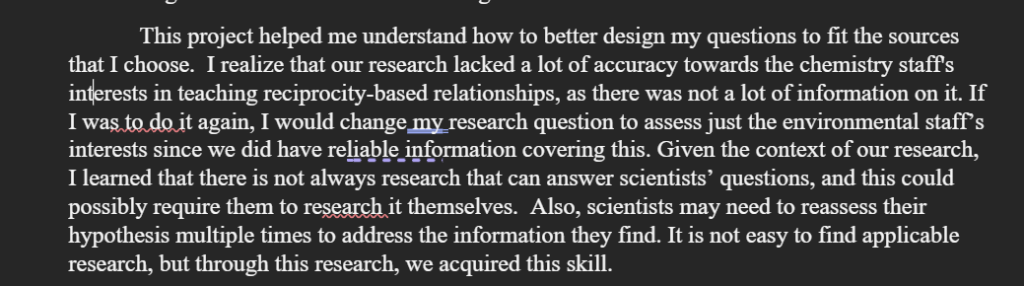
Above is an excerpt from the reflection section of my research paper. I exemplified critical and creative thinking by reflecting on what I would change if I was to re access my hypothesis and how I would develop that plan.