Category: Uncategorized (Page 3 of 8)
Group #9 Name: Alexandra Guerrero, Tamiria Dixon, Payton Plummer
Project Idea Draft Title:
The effects of elementary environmental education on student retention and community involvement.
Research Question: (stated as a testable question)
How do the benefits of teaching environmental education from a young age improve sustainable practices in the kids’ home/community?
Hypotheses: (stated as mutually exclusive answers to your research question)
Alternative Hypothesis:
If children receive environmental education from a young age, then they will be more inclined to apply sustainable practices in their homes and communities, because early exposure increases awareness, information retention, and long-term habits.
Null Hypothesis:
Teaching environmental education from a young age has no effect on sustainability improvements in children’s homes or communities.
Prediction: (stated as a range of expected results will lead you to reject or accept the stated or null hypotheses)
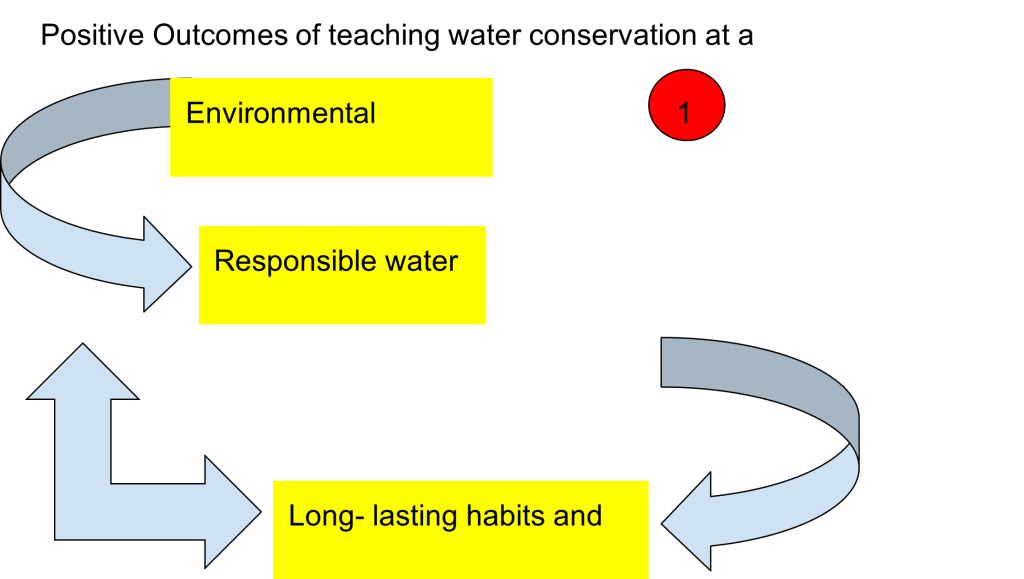
Children who receive environmental education from an early age will express water conservation, deeper community involvement, and better recycling habits compared to the children who did not receive this education as well as eventually influencing communities in these practices.
Evidence: (Rationale of your hypotheses based on peer-reviewed scientific literature and science news on your topic)
Review Articles: (list the citation and what it says about your topic)
This article focuses on studies conducted over many years to examine the impact of educating children about the environment at a young age. They had many positive outcomes that relate to what we hope can happen when integrating interactive water conservation activities into JJKfan. They have teaching strategies that we are also interested in using, such as kids spending time outside with nature, engaging in creative art activities, and taking action and advocating for change.
Ardoin, N. M., & Bowers, A. W. (2020). Early childhood environmental education: A systematic review of the research literature. Educational Research Review, 31, 100353. https://doi.org/10.1016/j.edurev.2020.100353
Research Articles: (list the citation and what it says about your topic)
This research was done in a preschool. I found it interesting that the different methods they use to improve. We can use many of their examples to help our project. The methods are surveys on educators, specifically early childhood, interviews with program designers, talking to the kids from the program to see what they think, could really help our project. Teaching the kids through programs at an early age can help us better understand the behavior and actions of the kids and their possible future actions in water conservation.
Miller, M. G., Davis, J. M., Boyd, W., & Danby, S. Learning about and Taking Action for the Environment: Child and Teacher Experiences in a Preschool Water Education Program. Children, Youth and Environments, 24(3), 43-57. https://doi.org/10.7721/chilyoutenvi.24.3.0043
SciComm Articles: (list the citation and what it says about your topic)
This article highlights the significance of education in water conservation from a young age. It informs us of challenges that come with programs, such as a lack of mentorship, funding, and teaching methods and materials. They discuss its importance in interactive activities, which help make habits or practices, just like what we discuss in our project.
Alternative Development Initiatives. (2024, June 5). Youth engagement in water
Conservation: Educating and empowering the next generation. ADI Interternation.
Proposed Experiment: (Experimental Design of your research project)
Independent Variables: what treatment or comparison groups or what factors will you modify
– Received environmental education from an early age
– Did not receive environmental education from an early age
– Received environmental education in later years
Dependent Variable: what will you measure
– Environmental education retention (this could be test scores)
– Amount of involvement in the community
– Water conservation habits
Control Variables: what will hold constant between treatments
– Age (elementary to middle school children)
– Location (North America)
Procedures: what you will do, how, how much, how often, how long, when
A few months, once a week for about an hour long.
Constructed Figure(s): graphic representation of the proposed results of data that supports your proposed hypothesis/research question. (hint: it’s based on your Prediction Statement
1) What was most interesting to you in reviewing these resources?
What I found particularly interesting was the discovery that only 14 percent of songbirds maintain the same partner and reproduce. And the others have babies with more than one partner.
2) What did you learn from these resources about animal behavior?
There needs to be more research in animal behavior, and monogamy is very different in birds than we thought. Dr. Lee explains social monogamy in birds, which is not just because a couple of birds share and care for their babies, mains there are from the same father. There could be many reasons why the female bird has more than one partners, but it is still a question to see in detail why that happens.
3) What do these resources tell you about the types of people that do science?
Not every science does research the same way; some work outside directly with animals and others in labs, but having more exposure to what they study or research helps build a better understanding and direct records of your research. Changing the way you teach science and using music, such as in hip-hop, can be fun and help students better understand the information.
4) What new questions do you have about animal behavior after reviewing these resources?
Some of the questions I now have are, what really makes rodents different in surviving in various locations, and are there safe ways to help reduce their population without affecting other animals? And does their way of thinking change in rodents based on their exposure to different access to food?
- Paper 1 Title & Authors: forager – resource model for indigenous conservation. By Winterhaller and lu
- Goal of study:
The goal was to evaluate the effects of human foraging on prey species and how to minimize those effects.
- Is this a review or primary research article:
This is a primary research article
- General Approach (if primary research paper research):
The authors created a model to simulate predator – prey
- 3 major findings:
- Forager- prey systems can stabilize without conservation effort
- Diversity of resources is a major factor in the survival of prey
- An animal intrinsic rate of increase can determine their survival
- Why this is significant to society:
This article is significant, because it introduces the tides of factoring in both prey vulnerability and human behavior into prey survival
2. Paper 1 Title & Authors: Ecological complexity, fuzzy logic and holism in indigenous knowledge. By the Berks
- Goal of study:
To advocate for the validity of indigenous knowledge systems
- Is this a review or primary research article:
Review article
- General Approach (if primary research paper research):
A qualitative approach is taken through research methods of ethnographies and interviews.
- 3 major findings:
- Indigenous knowledge is better vied with approximating
- I.k. is centered around nature and human connections
- I.K. is an adaptive method of science
- Why this is significant to society:
It introduces different and more personal methods of science that are more alternative to western science approach
3. Paper 1 Title & Authors: indigenous knowledge in ecologic by Jessen et al.
- Goal of study:
The goal was to evaluate the effect of human foraging prey species and how to minimize those effects.
- Is this a review or primary research article:
This is a primary research article.
- General Approach (if primary research paper research):
The authors created a model to simulate the predator-prey relationship
- 3 major findings:
- Forager – prey systems can stabilize without conservation effort
- Diversity of resources is a major factor in the survival
- Amount of records/ publications increased as indigenous knowledge becomes more acknowledged in Western society
- Why is this significant to society:
It helps for more people to gain a new perspective when it comes to ecology and evolution from indigenous people
4. Paper 1 Title & Authors: combining science and TEK: monitoring population for Co-management. By Henrik Mollers, et al.
- Goal of study:
Connecting TEK ecological knowledge with Western scientific data to further conservation efforts and data collection
- Is this a review or primary research article:
Review – article through the use of heuristic data analysis
- General Approach (if primary research paper research):
It was more qualitative than quantitative
- 3 major findings:
- TEK advances data collection of ecology in Western methods
- Mix methods offer stronger data
- Western methods take longer
- Why this is significant to society:
Hope ecology research TEK to improve Western methods
Team members: Alexandra, Payton, Tamiria
Research Question:
- Population:
Our population of interest is k-8.
- Intervention:
Our intervention is testing whether our interactive activity helps improve kids’ knowledge of sustainability practices.
- Comparison:
Some of the comparisons aim to determine if research indicates that interactive activities enhance building sustainability practices.
- Outcome:
- Time:
- Title: water conservation education in elementary schools: the case of the nenetzing river catchmen, mexico
- Article Type (primary research, review?)
- URL:Water Conservation Education in Elementary Schools: The Case of the Nenetzingo River Catchment, Mexico
- Citation (APA or MLA format)
Yolanda, G., Angel, M., & Alberto, C. (2022). Water Conservation Education in Elementary Schools: The Case of the Nenetzingo River Catchment, Mexico. Sustainability, 14(4), 2402. https://doi.org/10.3390/su14042402
- Title: youth engagement in water conservation: educating and empowering the next generation
- Article Type (primary research, review?)
- URL:Youth Engagement in Water Conservation
- Citation (APA or MLA format)
Alternative Development Initiatives. (2024, June 5). Youth engagement in water conservation: Educating and empowering the next generation. ADI International. https://www.adi-international.org/youth-engagement-in-water-conservation/
- Title: water conservation in schools
- Article Type (primary research, review?)
- URL: Water Conservation in Schools | Oxford Research Encyclopedia of Education
- Citation (APA or MLA format)
Bermúdez, O., & Lombana, M. (2020, September 28). Water Conservation in Schools. Oxford Research Encyclopedia of Education. Retrieved 21 Sep. 2025, from https://oxfordre.com/education/view/10.1093/acrefore/9780190264093.001.0001/acrefore-9780190264093-e-688.
- Title:Impact of educational interventions on early adolescent attitudes and behavior toward water conservation: a systematic review
- Article Type (primary research, review?)
- URL:JETIR2412467.pdf
- Citation (APA or MLA format)
Kumari, S., & Nayak, M. (2024). Impact of educational interventions on early adolescents’ attitudes and behaviors toward water conservation: A systematic review. Journal of Emerging Technologies and Innovative Research, 11(12). https://www.jetir.org/papers/JETIR2412467.pdf
- Title:Does environmental education benefit environmental outcomes in children and adolescents? A meta analysis
- Article Type (primary research, review?)
- URL:Does environmental education benefit environmental outcomes in children and adolescents? A meta-analysis – ScienceDirect
- Citation (APA or MLA format)
Van de Wetering, J., Leijten, P., Spitzer, J., & Thomaes, S. (2022). Does environmental education benefit environmental outcomes in children and adolescents? A meta-analysis. Journal of Environmental Psychology, 81, 101782. https://doi.org/10.1016/j.jenvp.2022.101782
- Title: The strategic role of conservation education in efforts to improve biodiversity literacy: a systematic review
- Article Type (primary research, review?)
- URL:EJ1478575.pdf
- Citation (APA or MLA format)
Fajri, S. R., Citrawathi, D. M., Adnyana, P. B., Arnyana, I. B. P., Sarnita, F., Fajri, N., & Fitriani, H. (2025). The strategic role of conservation education in efforts to improve biodiversity literacy: A systematic review. Turkish Journal of Education, 20(3), Article EJ1478575. https://files.eric.ed.gov/fulltext/EJ1478575.pdf
7. Title: Conservation and environment education: A narrative literature review
- Article Type (primary research, review?)
- URL:(PDF) Conservation and Environmental Education: A Narrative Literature Review
- Citation (APA or MLA format)
Mani, Jyothi. Conservation and Environmental Education: A Narrative Literature Review. figshare, 2020.
8. Title: Strategy on education for conservation (EFC)
- Article Type (primary research, review?)
- URL:educationforconservation-strategy-v3.pdf
- Citation (APA or MLA format)
Pisupati, B. (2020). Strategy on Education for Conservation (EfC). IUCN Commission on Education and Communication (CEC) & FLEDGE.https://iucn.org/sites/default/files/2022-08/educationforconservation-strategy-v3.pdf
9. Title: Learning about taking action for the environment: child and teacher experiences in a preschool water education program
- Article Type (primary research, review?)
- URL:Learning about and Taking Action for the Environment: Child and Teacher Experiences in a Preschool Water Education Program on JSTOR
- Citation (APA or MLA format)
Miller, M. G., Davis, J. M., Boyd, W., & Danby, S. Learning about and Taking Action for the Environment: Child and Teacher Experiences in a Preschool Water Education Program. Children, Youth and Environments, 24(3), 43-57. https://doi.org/10.7721/chilyoutenvi.24.3.0043
10. Title: Early childhood environmental education: A systematic review of the research literature
- Article Type (primary research, review?) review
- URL: Early childhood environmental education: A systematic review of the research literature – PMC
- Citation (APA or MLA format)
Ardoin, N. M., & Bowers, A. W. (2020). Early childhood environmental education: A systematic review of the research literature. Educational Research Review, 31, 100353. https://doi.org/10.1016/j.edurev.2020.100353
Article Title: Biodiversity conservation as promising frontier for behavioral science
Name: Abril A Guerrero .
What is the purpose/goal of this study?
The article shows the biodiversity crisis made by humans and how that is heading us to our extension if we don’t change the ways we are.
The goal of this article is to inform the public about the biodiversity crisis. They want to help the public have a better understanding of behavior and human actions. They also look to find more connections or collaboration within scientists and the public like communities to help make changes, to save the world from an extension
Why is this issue significant/why do we care?
The issue is very concerning as it involves us and is going to affect our everyday life if we don’t take steps to change and put the planet first instead of us. Biodiversity is falling and it has to do with us human behavior as we are a big part of the cause. We do thing but don’t concede the after math is somethings are already unreversible.
What words/vocab do you need to know to make this make sense? Define them here.
Humankind – the human race
Biodiversity – is all the different life in the world and their habitat
Climate change – changes in the atmospheric carbon and patterns in our climate
Invasive species – to may of a species that make a negative impact in an environment
Human behavior – is the human’s behavior during their life that includes physical, mental and social.
What approach are they taking in this study (e.g., specific qualitative or quantitative methods)
Qualitive methods
Interpretive analysis – philosophical and sociological perspectives
Quantitative data – show percentages of, wetland, land altered, decline in vertebrate
Conceptual mapping – used in figure 1 break down how thing are connected and how our behavior can support positive outcomes.
What are the results of the study? If there are figures – write a sentence summarizing each figure/table.
In the first figure it talks about cattle pasture in the amazon. As a result of cattle ranching there has been a loss in forest. It can be said that by human decisions we could have made better choices and now there are consequences and changes to be made. Figure 2 is more in the classification of actors, and how some are affected more than others, but they are all in effect in some way at the end. Not all the actors hold the same power, but they all have way for improving and their behavior.
Does the data make sense based on your experiences?
After rereading the article and having a better look at the charts I have a better understanding have what they were trying to explain in them. I can see that in the charts and in the public eye we sometimes come and argue with companies about their actions and pollution to our world but from the charts it looks like we as citizens need to make a lot of changes in our everyday lives to for the better of the world.
How is this pushing the field forward and helping society?
This article punishes the public by seeing that we need to make changes now. We have ways to improve our human behavior and choice we made. That includes everything from community to government and individuals.
Group#9 Alexandra Guerrero, Payton Plummer, Tamiria Dixon
General Project Theme:
Water conservation education
Project Idea 1:
Our project idea is to incorporate water conservation in school education in a different way. Some ideas we have include experiments, lessons, or school habits related to water sustainability.
Proposed Research Question: (stated as a testable question)
How can schools develop water conservation programs that lead to improvement and
raise public awareness of environmental impacts?
What is the relationship between x and y
Proposed Hypotheses: (stated as mutually exclusive answers to your research question)
If school districts implement water conservation programs that aim to enhance learning for K-8 students, then students will gain a strong understanding of the principles of water sustainability while contributing to their communities.
Keywords:
Curriculum, water, conservation, environment, school, program,
Aquifer, runoff, infiltration, wastewater
Found Review Articles: (list the citation and what it says about your topic)
EL-Nasany, Rabab I, Ibrahim Maarouf, and Waled Abd el-Aal. “Water Management as a Vital Factor for a Sustainable School.” Alexandria engineering journal 58.1 (2019): 303–313. Web.
Water management as a vital factor for a sustainable school
This article discusses the importance of water sustainability in schools. With that, they demonstrate that there are numerous benefits to water and the economy, including saving water and money, as well as additional opportunities for education. The information discussed in this article relates to our topic, illustrating how water conservation and sustainability benefit schools more than we might think.
Found Research Articles: (list the citation and what it says about your topic)
Melinda G. Miller, et al. “Learning about and Taking Action for the Environment: Child and Teacher Experiences in a Preschool Water Education Program.” Children, Youth and Environments, vol. 24, no. 3, 2014, pp. 43–57. JSTOR, https://doi.org/10.7721/chilyoutenvi.24.3.0043. Accessed 6 Sept. 2025.
This article was more focused on our topic and research on taking action and determining what works when it comes to curriculum for kids that teachers, students, and parents can learn from. They saw that teaching students about conservation had a positive impact on adults because the kids showed their practices to adults.
Found SciComm Articles: (list the citation and what it says about your topic)
Bodas, A., Chlebuch, N., & Weisberg, D. S. (2025). Water woes: The effects of children’s science media on conservation knowledge, self-efficacy, and environmental worry in the United States of America. Journal of Children and Media, 1–21. https://doi.org/10.1080/17482798.2025.2472666
This article employs various methods that could aid us in our research topic of finding ways to create fun and educational experiences. Some of the techniques they use include interviews with teachers, observation of school facilities, small-group discussions, and tracking of student behavior. We could utilize this in our overall project to gain a better understanding of water conservation and education systems.
General Project Theme:
Water conservation education
Project Idea 2:
For our project idea
For our project idea, we want to find or modify education lessons on water conservation and why it’s essential for us to have knowledge on taking care of what we have, being grateful, and finding ways in our everyday lives to be sustainable.
Proposed Research Question: (stated as a testable question)
What are the benefits of teaching environmental education from a young age, and how does that improve sustainable practices in the kids’ homes?
Proposed Hypotheses: (stated as mutually exclusive answers to your research question)
If students are taught environmental education from a young age, then they will bring that knowledge into their community to make a difference.
Keywords:
Community, students, kids, environment, sustainability, climate resilience
Clean water access
Found Review Articles: (list the citation and what it says about your topic)
Hove J, D’Ambruoso L, Mabetha D, Merwe MVD, Byass P, Kahn K, et al. ‘Water is life’: developing community participation for clean water in rural South Africa. BMJ Global Health. 2019;4:e001377. https://doi.org/10.1136/bmjgh-2018-001377
This addresses the poor water quality and flooding that we can relate back to our community. In our research team, we are talking with Zach, an educator from JJK, who expresses the importance of community in youth education.
Found Research Articles: (list the citation and what it says about your topic)
Sarva Mangala Praveena (2022) Exploring Water Conservation Awareness Level Among Primary School Children From Melaka (Malaysia, Malaysian Journal of Medicine and Health Sciences. Available at: https://www.academia.edu/79571304/Exploring_Water_Conservation_Awareness_Level_Among_Primary_School_Children_From_Melaka_Malaysia (Accessed: 6 September 2025).
This tells us what topics could be integrated into schools to influence them to participate in better water practices.
Oana, I., Claudia, T., Panainte-Lehadus Mirela, Dana, C., Florin, N., Narcis, B., . . . Diana, M. (2025). Understanding primary school students’ knowledge and attitudes towards water management: Insights from environmental education. Societies, 15(4), 109. doi:https://doi.org/10.3390/soc15040109
This article effectively explains the attitudes and knowledge that urban students in Romania have regarding water sustainability. It can be said that this experiment works to investigate the level of knowledge and behaviors of students as it pertains to water education. From reading the results, the professors used statistics to prove how much students improved after the implementation of the program. One of the main factors was curriculum changes,which were found through the research method of a survey. Surveys were a vital part of this research because they helped assess the student’s applications on concepts as far as understanding water sustainability practices.
GuruFocus.com: Cal water launches new water education programs to teach kids about conservation (2014). . Chatham: Newstex. https://www.proquest.com/blogs-podcasts-websites/gurufocus-com-cal-water-launches-new-education/docview/1642950064/se-2
In this article the state of California is working to implement a water education program through the North American Association for Environmental Education. Since California experiences many environmental disasters, such as droughts, educators believe that it’s imperative to provide students with knowledge regarding water sustainability. The program utilizes organizations such as the WestEd K-12 alliance to develop a system that involves STEM related activities. More specifically, the program’s duration will be divided up by 4-8 weeks as it provides students with the opportunity to engage in engineering and research oriented activities. Ultimately, it can be said this study demonstrates the impact of water sustainability education as it regards the environmental challenges that the state of California faces.
Q1: How can water conservation education in kids change the way they view and act in ecological concerns in their everyday life?
Q2: How can the way of teaching children in school on environmental education make a deeper engagement in many kids from different backgrounds and ages?
Q3: How can having a different approach to education in environmental studies benefit children?
Q4:Is there a way to use vertical farming projects in schools to enhance environmental knowledge in food and water?
Q5: What impacts do school programs like greenhouses have in helping kids understand food systems and environmental sustainability?
Q6: How can schools develop water conservation programs that lead to improvement and raise public awareness of environmental impacts?
Q7: What are the benefits of teaching environmental education from a young age, and how does that improve sustainable practices in the kids’ homes?
Q8: Can incorporating environmental knowledge in urban schools open doors for other schools to adopt sustainability practices?
Q9: How does the exposure of kids spending time learning outside of the classroom help them have better retention of environmental habits?
Q10: What is the positive impact of integrating environmental studies into the school curriculum to enhance their ecological literacy?
Week 2 Reflection: Planting Sweetgrass Name__Alexandra Guerrero
- What is your favorite quote from this section and why is this so memorable to you (100 word minimum).
My favorite quote from the book is, “We say that humans have the least experience with how to live and thus the most to learn – we must look to our teachers among the other species for guidance.” I feel a connection with this quote because, throughout life in the world, people have said that we need to learn from animals and understand them, and if we just did that, we would learn so much as people.
2. What does reciprocity look like in your culture? Provide specific examples (150 word minimum)
I come from a Latin background. I see reciprocity in many ways in my culture, exchanging food for help, and I thank them. Food in my culture is essential, and we value the time it takes to cook the food. I have personally helped my community as a translator for parents and teachers, and I never ask for anything in return, but they value the help I offer. They often give me food, which shows that they are truly thankful. I also view it as a love language in my culture because people want to express gratitude for something you’ve done, but they may not have the means or time, so they prepare a homemade meal to feed the heart.
3. This section begins with the following quote, ““Sweetgrass is best planted not by seed, but by putting roots directly in the ground. Thus the plant is passed from hand to earth to hand across years and generations. Its favored habitat is sunny, well-watered meadows. It thrives on disturbed edges.” What does this mean to you? (150 word minimum).
I think that, in a way, it describes humans; we live all over the world with different climates, but no matter where we are, we always manage to survive. Throughout history, and in various parts of the world, we have found ways to improve our way of living in different places. And you can see it through our generation and our technological innovation. Still, for specificity, I think it’s the seed of life in what we teach our future generations, whether that be to open our eyes, be thankful, or to respect one another. That also includes the culture and history of our institutions, as well as how we arrived at our current state. What has changed, and what are we going to do? Is it in the best interest of all? That’s my question.
4. Specifically, in “The Offering”, Kimmerer discusses how we focus our attention. What are ways in which you choose to focus your attention and are you happy with these choices? (100 word minimum)
Recently, I have focused on listening to my body to determine if I need to eat more or exercise. I’ve also prioritized not spending so much time on my phone for my mental health. I choose to focus my attention on not overthinking life, telling myself to take it one step at a time. Recently, I had a family member pass away, so through my grieving time, I have learned to take a moment and be grateful for what I have: a home, parents, brothers, food, and friends.