This semester has taught me a lot about not only myself, but my place in a group setting as well. One of the major lessons that I have learned is that the world does not stop moving just because you are going through complications in your personal life. There have been several difficulties in my own life that I have had to endure throughout 2026, but despite those trials, I have had to teach myself how to keep up with school and work at the same time. It has not been easy, but I believe that throughout this process, I have also started learning another valuable lesson, that hard work will always outweigh raw talent. High school was a breeze for me, so I never had to put in much effort, and carrying that same mindset into college was not a smart decision. I do not have the true level of responsibility that I wish I had, and I know that I need to work on that. I need to be able to push myself outside of my comfort zone in order to accomplish all of my goals.
CODES as a whole has been a major challenge on my collaboration skills. I have never been good at working in a group of people at any point in my educational career. This was a major challenge for me in college as well. I recognize now that it is a skill that I will need to be able to perfect if I want to get anywhere in my career field. I will need to be able to collaborate with others for the rest of my life, so it is a skill that I am attempting to work on that ability for next semester. However, I do believe that my ability to work with my classmates has improved towards the end of the semester. As long as I know my individual part in a project, I can get my work done on time. Overall, I have learned a lot through CODES, and I am truly grateful for my experience within this program. Now I have a lot of new insight on things that I need to change in order to be successful in my future.
Jaiden DeBoe is a sophomore at SIUE where he is majoring in biology with a minor in chemistry. He started his freshman year as a computer science major but switched to biology shortly after the end of his second semester. Growing up, Jaiden always showed proficiency in mathematics. By his senior year of high school, Jaiden was taking a college level Calculus I-II course. He did not know what exactly he wanted to do for work in the future, but he knew he wanted it to be something involved with math. As a result, he decided to follow in his father’s footsteps and become a computer engineer. After realizing that he had the skills to do so much more in the world, he decided that he wanted to become a doctor. He switched his major to biology and has since been working on catching up from the classes he missed. His plan is to graduate from SIUE and go to medical school in Springfield, where he hopes to specialize in neurology later.
Meetings with both my research team and my community partner will determine the way my research project is presented in the future. With my research team specifically, my individual research project will have to line up with the overall group project. We all have the same goal of finding ways to involve young adults in water conservation efforts, but we are going about it in different ways. Some of us are organizing events, some are creating podcasts, and some are even interacting directly with students at SIUE. The idea is that all our individual projects can be brought together to support one main initiative, but doing so is going to take compromise. We must develop a few core themes to center around in order to make sure that our ideas do not contradict one another. In the end, our projects may not look like how we imagined them to be a year ago, but they will be able to come together to form an even greater group project.
Interactions with my community partner are also going to have a huge impact on my project. Last semester, I drafted my product, which consisted of two separate pieces. Now, I want to ensure that my product lines up with the right information that Heartlands Conservancy wants to obtain and/or needs to portray. I plan to send my early drafts to Anna in order to get feedback on my overall product. Afterwards, I will implement any change that she believes is necessary. Right now, I have no idea what she might ask me to change about my products. These changes could be as simple as rewording a few sentences, or they could involve me adding or removing entire pieces of data from the product itself. So, my entire project could potentially be altered by the feedback given by my community partner.
So far this semester, feedback has not exactly been consistent within my group. Unless a particular assignment of mine veers away from the group’s “vision”, feedback is not given much. I know personally that I do not give feedback to my group members because of two main reasons. The first reason is that all my group members seem to understand the point of this project and what their individual role is within that project. Even if I do not fully agree with how they responded to a question, I realize that my group members do have a good grasp on what they are trying to accomplish with their words. Second of all, I feel like I do not have enough time to focus on other people’s work while I still have my own work to finish. I believe that my group members feel the same way when it comes to feedback. We all have a good understanding of the project as a whole, but we also do not have enough time to give feedback to each other individually.
When it comes to giving feedback, I recognize that I could pay more attention to what my group members are doing in their individual projects, because it will end up affecting the group project. Giving feedback could also be as easy as telling a group member to rephrase a sentence or add a better conclusion to their writing assignments. In regard to receiving feedback, I understand that it is important for me to not take my group members’ suggestions too seriously. Some suggestions may come off as negative, but I must remember that my group members are just trying to ensure that the group project fits together perfectly. Along with that, the same way that I will have to learn not to take comments seriously, I will have to make sure that I phrase my feedback in a way that is not an attack on the other person.
My name is Jaiden DeBoe, and my project for this semester is going to provide a direct link from community organizations to young adults in said community. Throughout the last semester, I spent my time researching the one problem that is the focus of my overall group project: “How can young adults be engaged in water conservation efforts?”. I felt that the best way to do this was to connect Heartlands, my community partner, with peers at SIUE. This started out by asking professors at SIUE how they felt about community organizations in a school setting.
After I received my survey responses, I immediately began my work on this semester’s product, which takes me to where I am right now. I am currently working on two smaller products, one which will allow Heartlands to know more about professors at SIUE, and one which will let the professors get to know Heartlands a little better. The goal of these two products is to allow them to understand each other better and hopefully form a connection in the future.
The center purpose of our project is to understand why young adults aren’t engaging in conservation activities and what we can do to help young adults engage in conservation activities. -Zuleyri
The goal of this project is to determine how to encourage young adults to engage in water conservation efforts in their community – Jaiden
The purpose of our project is to distribute products that will help young adults become more engaged in conservation. – Ayiana
The purpose of this project is to work together to fabricate a cohesive and encapsulating display of knowledge over how to get young adults better engaged accompanied by our research that will back it up in a clear and easy-to-comprehend way. – Isaiah
Our overall purpose of this project was to find ways to get young adults engaged in water conservation and make sure these practices could be used everyday and could be impactful. -Laylah
The central purpose of our research is to ensure that young adults have the access to information and actions to be able to participate in conservation as they grow into adulthood. We want to be the group to encourage young adults to a path in life that will help them in the long run. -Jasmine
Who is this project made for?
This project was made for young adults targeted at 18-25 years old who weren’t/aren’t as educated about water conservation. Also people who need to know more about water conservation and need navigation on where to start. -Laylah
Our project is for both our community partner, Heartlands Conservancy, and for young adults in our communities – Jaiden
Our community partner Heartlands Conservancy -Zuleyri
Young Adults
This project is made for young adults, who is our target audience, as well as Heartlands Conservancy, who is our community partner. – Ayiana
This project is made for young adults who possess some interest in but hold little to no experience learning about or dealing firsthand with topics related to water conservation or such practices that fall under that umbrella. – Isaiah
This project is made for young adults here at SIUE and locally ages 18 -25 who don’t have the knowledge , access, resources or motivation for conservation. – Jasmine
Why is it important?
Our group project is important because it provides multiple methods of educating people on and reducing the stigma surrounding water conservation. This is crucial to achieving our goal in facilitating the increase of interest or the decrease of factors that lead to non-engagement amid our target population, being young adults ages 18-25. – Isaiah
This project is important because it can educate young adults on how to contribute to solving problems in their communities. A lot of us are taught about the negative impact of issues such as pollution or contaminated water on our planet, but we are rarely taught what exactly to do about these problems in order to reverse the effects – Jaiden
The reason why this project is important is because conservation is an important practice that needs to be shared, and there are lots of people who want to be engaged, but just don’t know how to. So, this project will help to bridge that gap between their knowledge and actions. – Ayiana
Focusing on finding ways to get young adults engaged in water conservation and figuring out those stakeholders is important because young adults have the capability to make a change in society. If we can figure out ways to get them engaged, we can help them build long-term impacts into the environment. -Laylah
This social media campaign is important because it helps reach the young adults where they already spend a lot of time and attention. It spreads conservation quickly and in a format that is easy to understand and share. This campaign can create interaction and community by letting people respond, ask questions, and share their own actions. Overall, it turns conservation outreach into something visible, social, and repeatable rather than limited to a single event. – Sam Lee
Our project is important to allow students access to information , correct habits , and motivation for the future towards conservation that will help them be able to benefit their environment. It is also important for us to provide them with different opportunities to educate on something they may not have thought about. – Jasmine
What ethical considerations?
One concern in this project is encouraging young adults to participate in community activities while ensuring that they are willing to help out. We do not want to pressure young adults into thinking that they have to be active in their communities, this should be about volunteering – Jaiden
Background (such as where a person grew up or how they grew up) etc. -zuleyri
The ethical considerations are about making sure my posts are honest, respectful, safe, and fair to my audience and partners. I will only share information that is correct and supported. Motivating people ethically is the goal of this project. – Sam Lee
The ethical considerations that are important to think about is how our plans will affect the community. We need to make sure we are aware of our actions, behavior, and anything else that can possibly cause unethical conclusions towards the community. – Ayiana
An ethical consideration of mine is always making sure to inform the people I am interviewing that my podcast project will be publicly broadcasted and only to share information they feel comfortable with. – Isaiah
One ethical consideration that I have for this project is to provide a non-pressure inducing environment that facilitates a space of open communication. -Laylah
One ethical consideration I have for this project is presenting my information and research in a way that is helpful and welcoming and not pressuring. I would not like for my audience to feel any way towards outcomes I have created for them. – Jasmine
What working practices will you adapt?
Since my campaign is about young adult conservation and social media like the codes and Heartlands project, the best working practices are the ones that keep my content consistent, interactive, and easy to manage within a group. I am going to tie my post to real activities like Jasmine’s event. – Sam Lee
I am producing a brochure that will allow me to obtain practices such as creating a flyer, distributing it on campus, and informing others. -zuleyri
The working practices that I will adopt in order to be ready for distribution is to become more organized where I write down my actions and plans in order to stay on top of what I need to do and when it needs to be done. – Ayiana
I will be using a brochure to display Heartlands to professors at SIUE and a list of professors to show Heartlands who they would most likely benefit from a collaboration with. So it will be important for me to learn to display Heartlands and the professors in a way that is positive, yet truthful. – Jaiden
Some working practices that I could include in my contribution towards our project is to make sure that the video I create connects to our problem at hand and also making sure that the video is informational so that we can get our problem across but also making it very engaging which is our whole point of our project. Overall, keeping the audience’s attention. – Laylah
I will ensure that I have a schedule in place to make sure that I complete my project in a timely to conduct all the interviews and still have enough time transcribe and code them.
Working practices I will adapt will be organizing events with a purpose, communicating with community partners effectively for collaboration, and listening to student feedback. -Jasmine
My individual project for this semester is going to be complicated when it comes to ensuring that it benefits both groups that I am attempting to reach. As stated in the first reflection, my product is going to consist of two smaller products, one for Heartlands and one for professors at SIUE. The way that I see it, each of my products is going to be a reflection of the other one. For the first product, the focus will be professors at SIUE, while the audience that I will be attempting to reach out to is Heartlands, and the second product will focus on Heartlands in an attempt to reach out to professors at SIUE. With that being the case, both Heartlands and the professors at SIUE will be the primary stakeholders in my project. I will need to ensure that my work can best communicate the benefits of one stakeholder to the other.
Heartlands will play the most important role in this project. Since information on Heartlands and their projects is not as easily accessible as the work that professors do at SIUE, I will need to go to Heartlands directly to get the most accurate information. On top of that, I will need to know what information Heartlands needs from the professors in order to initiate a collaboration with them in the future. In my initial draft of my product to Heartlands, I included information like the specific courses they are teaching this semester and a description of these courses. However, Heartlands might also want to know things such as the professor’s history at SIUE or their specific contact information. On the other hand, working with professors at SIUE should be relatively simple. If I need specific information, I could always create another survey for the same professors or even reach out to the Department Chairs to avoid sending out over 30 emails.
Finally, after three semesters of building towards the implementation of a product for our community partners, this semester is the one we have all been waiting for. Just last year, I finalized my “product” in the Research Teams class, which consisted of two smaller products, one for professors at SIUE and one for Heartlands Conservancy. For the professors, I created a document that showcased what exactly Heartlands is and what they do for their community. The information I provided was solely based on what I knew from my experience with them or what I could find online. However, this may not be the way that Heartlands wishes to portray itself to professors at SIUE. In order to ensure that I display Heartlands to my list of professors in the best light, I believe that it is crucial for me to speak with people from Heartlands on how they would like to be portrayed to students and professors on campus.
For the second part of my product, I created a list of professors at SIUE who teach science, ecology, or environmental science courses. I also included the individual courses that they are teaching this semester, a description of those courses, and the chairs of each professor’s department. Unfortunately, I feel like there is some more information that I could include in this portion of the product in order to give Heartlands an idea of which professors would most benefit from a collaboration. All in all, my work throughout this semester is going to involve going back in forth between two groups, SIUE professors and Heartlands, in order to determine what would be best for forming a connection between both of them. I have a long way to go, but I already have an outline for what I want to accomplish, so I know this last part will not be too difficult.
– Misses one class or fewer, or completes make-up work for excused absences – Annotates all readings thoroughly – Contributes deeply to discussions – Completes all assignments on time or has approved extension – Work shows engagement, care, effort, and growth – Collaborates substantially, contributes to vision, and works equally with peers – Abides by the CODE of Conduct and classroom norms
– Misses two classes or fewer, or does make-up work for excused absences – Annotates most readings – Often participates in discussion – Completes all assignments on time or has approved extension – Work shows care, effort, and growth – Collaborates equally and completes required work – Abides by the CODE of Conduct and classroom norms
– Misses three classes or fewer, or does make-up work for excused absences – Completes most readings – Sometimes adds to discussion – Completes all major assignments and at least five SAs – Meets minimal expectations on assignments; shows some growth – Completes required collaborative work – Abides by the CODE of Conduct and classroom norms
First-Week Introduction
For one of my final semesters in the CODES program, I wanted to focus on goals that would highlight writing assignments and presentations. My first goal is all about showing an understanding of reading assignments in writing, which is where my reflections will be used as artifacts. My second goal will revolve around contributions to group projects, so the Emplace Contributions, Dissemination Plan, and Author Bio will serve as my major artifacts for that particular goal. Goals #3 and #5 will mostly relate to literary texts read in class, so the reflections will be the main pieces of evidence that I will use to support these two goals. Finally, my fourth goal will focus on developing strong central messages, allowing for the Final Presentation to serve as the main artifact. Part of me is nervous about these major assignments, like the Emplace Contributions or Dissemination Plan, just because I want them to turn out perfect. However, I think learning to develop better communication skills throughout this semester will help me do my part for my group in a way that allows us to submit more cohesive assignments.
Midterm Introduction
Throughout the first half of the semester, the biggest obstacle that I have been faced with is truly learning how to work with a team of people. Working in a group has always been a struggle for me, not only in college, but even back in high school. My communication skills have not always been good, making it difficult for me to successfully collaborate with others. It has not been easy working with my team this semester, there have been a few bumps along the way, but it is getting better. I am getting my individual assignments completed while also working towards the completion of group assignments such as the Emplace Contribution. The only thing I have not made much progress with yet is updating my product. However, I plan to get in touch with Anna soon in order to get advice on what I might need to add or remove from the product. Beyond that, my main goal now is to finalize the group project before the day of the presentation.
Final Introduction
Looking back on this semester as a whole, I am proud of the progress I have made in my overall project. One thing that I wish I would have done differently is submitting my assignments on time. I recognize that my timeliness was not always the best throughout this year, and it is something that I intend to work on in the future. I learned that collaborating with a group of people for a larger project requires a lot of compromise and consistent communication, which is something I have frequently struggled with in the past. In the future, I would like to prioritize both timeliness and collaboration skills, because I have seen how difficult school is when I do not focus on those two abilities. I know I have a lot to work on, but I am confident that I have the potential to go far in college if I put in the right effort.
Course Goals
Goal 1 (20%) Based on (13A): Demonstrates a thorough understanding of context, audience, and purpose.
What will you do to learn the content/ develop the skill?
What examples will you add to the portfolio to demonstrate your learning?
What characteristics of the chosen examples demonstrate you have met your goal?
I will demonstrate my ability to complete writing assignments in a way that acknowledges my primary audience for my product
Each reflection I turn in will address how my current progress on the group project is contributing to a greater connection to Heartlands and professors at SIUE
Reflection #2:
In my quest to make a brochure that accurately depicts Heartlands Conservancy, I reached out to Anna to ensure that the information displayed was accurate. This interaction fully demonstrates my growing connection with Heartlands.
Reflection #3:
Throughout this assignment, I described how the ability to give and receive feedback from members of my group is important for our individual projects to neatly fit together into the group project. As a result, learning how to take criticism is important for connecting Heartlands with professors at SIUE, since that is the whole point of my individual project.
Reflection #4:
In this reflection, I mentioned potential factors in the development of my individual project. For example, I recognized that asking Anna for her advice on my final product could result in changes to my project. Similar to the second reflection, this shows my growing connection to Heartlands throughout the semester.
Reflection #5:
I talked about how my collaboration skills were necessary to complete my project this semester. These abilities were crucial to creating a stronger connection between Heartlands and professors at SIUE.
Goal 2 (30%) Based on (12C): Works independently toward goals by contributing and meeting deadlines.
What will you do to learn the content/ develop the skill?
What examples will you add to the portfolio to demonstrate your learning?
What characteristics of the chosen examples demonstrate you have met your goal?
I will thoroughly complete individual assignments given throughout the semester
Each assignment I turn in will reference material from the Emplace website
Emplace Contribution 1:
Emplace’s collaboration with CODES is all about engaging in local communities. My project involved me collaborating with professors at SIUE to connect students with water conservation efforts from Heartlands. This is my attempt to connect my mission with their mission.
Dissemination Plan:
This assignment was meant for my whole group to explain the purpose of our project as a whole. We all described what we believed the goals for this group project were, which do align with the goals mentioned on the Emplace website.
Reflection #1:
Throughout this assignment, I gave a brief history on my work the previous semester, which involved the development of an early version of my product. I mention my work with community partners such as Heartlands Conservancy, and that ties into the idea of supporting local organizations that are making a difference in my community.
Reflection #2:
In the first paragraph, I briefly described what my finished product would look like. I also went in depth with who the products were for, one being Heartlands and the other being SIUE professors. Both are groups of people who exist within my community, which goes along with Emplace’s goal of positively impacting local communities.
Reflection #4:
In my fourth reflection, I mainly focused on interactions with my community partner and how those interactions could help shape my project as a whole. This goes along with the idea of collaborating with organizations to benefit the community.
Reflection #5:
In the second paragraph, I reflected on what I have learned as a part of the CODES program. I also looked back at the work I accomplished with my group, specifically the final project where we discussed our collaboration efforts with Heartlands Conservancy.
Goal 4 (10%) Based on (8C): Develops clear, innovative central messages with significant supporting materials.
What will you do to learn the content/ develop the skill?
What examples will you add to the portfolio to demonstrate your learning?
What characteristics of the chosen examples demonstrate you have met your goal?
I will use my work in the group project to show how I have learned new information throughout my research
Dissemination Plan, Final Presentation
Each assignment will show what I have learned up until that point and how it contributes to my overall project
Dissemination Plan:
In this assignment, I mentioned one ethical concern for the group project, which was not pressuring young adults into water conservation. This is one main thing that I have learned about projects such as ours throughout the course of this semester.
Final Presentation:
One thing that I mentioned in my presentation was talking about Heartlands’ connection with CODES in the brochure for professors at SIUE. I talked about how this could build credibility for Heartlands in the eyes of the professors. This is an example of what I have learned about what it takes to form a connection between two organizations throughout the semester.
Goal 5 (10%) Based on (4A): Adapts and applies a deep understanding of multiple worldviews, experiences, and power structures while initiating meaningful interaction with other cultures to address significant global problems.
What will you do to learn the content/ develop the skill?
What examples will you add to the portfolio to demonstrate your learning?
What characteristics of the chosen examples demonstrate you have met your goal?
I will use newfound knowledge to contribute to my understanding of my audience
Emplace Contribution 1, Dissemination Plan
Each assignment will explain my newfound understanding of my audience up until that point
Emplace Contribution 1:
In this assignment, I mentioned the need for professors at SIUE to truly understand Heartlands Conservancy and their mission, which was later reflected in my final product. This alone shows my newfound understanding of my audience for this project.
Dissemination Plan:
My team and I discussed how young adults are not properly educated on water conservation, which is why we want to try and involve them more. We all realized that our audience has a lot to learn about water conservation, so we made it our priority to help them learn more about organizations such as Heartlands.
Heartlands Conservancy is a nonprofit community organization located in Belleville, Illinois. Founded in 1989, it has been their mission to conserve water and other natural resources in order to ensure that they are still around for generations to come. By partnering with local landowners and sponsoring volunteer events in the community, Heartlands continues to push for public engagement in the same issues that they fight for. One such volunteer event is the Jingle Hike Challenge, which was a hiking event that took volunteers through several local trails that many people might not have known about beforehand. There are also several stewardships held by Heartlands, where volunteers from the community help restore specific locations, such as native prairie lands or the Exploration Garden.
Beyond their work in the community, Heartlands also partners with other groups or organizations, such as the CODES program. CODES, which stands for Community Oriented Digital Engagement Scholars, is a program at SIUE that works towards bettering environmental issues, such as water equity, in local communities. CODES is a growing program at this university, yet there is more work to be done with Heartlands outside of this program. Heartlands already supports schools outside of SIUE, such as those who send their students to sites such as the Signal Hill Outdoor Classroom. This site, located in Belleville, is commonly used by local high schools for environmental learning activities. Projects like these are only possible because of the dedicated team of people working at Heartlands, like Anna, who works directly with the CODES program to offer advice and feedback on their projects.
Student engagement is a massive part of Heartlands’ mission, and it goes without saying that expanding the number of programs they partner with is in their interest. The list of ways in which they can impact the learning of students is long, which is why a potential partnership with SIUE would be beneficial for every student interested in environmental conservation.
For Heartlands:
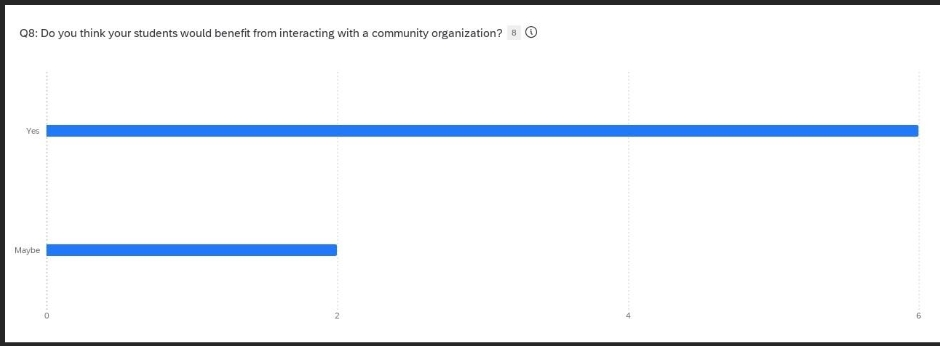
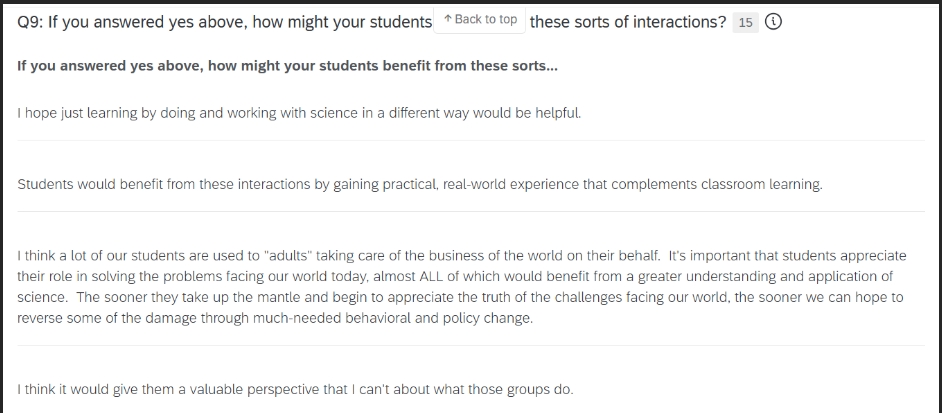
My research project this semester has been to connect students at SIUE to Heartlands through the professors who teach there. To divide the instructors who might be interested in water conservation from those who might not, I found 40 professors who teach courses related to ecology, environmental science, or general science. These professors, along with the courses they teach, are listed below. The department chairs of these subjects are also listed in order to allow for opportunities to connect with even more professors. These professors were sent a survey regarding their experiences and opinions on community organizations. Most of the professors showed little to no experience with community organizations, yet many were open to the opportunity to collaborate with organizations like Heartlands. Four out of five of those who did have prior experience showed an interest to allow Heartlands to either give a lecture in class or network with students. This list of professors and department chairs can allow for Heartlands to connect with professors outside of CODES, especially those who were a part of the survey I had sent out.
Course Number
Course Name
Course Description
Professor
ANTH-340
Environmental Anthropology
Surveys the relationship between humans and their environments from an anthropological perspective, including changes through time and cross-cultural comparisons.
Chad M. Huddleston
BIOL 464/ENSC 450
Applied Ecology
Applying ecological concepts and principles for solving, predicting and managing current important ecological problems, such as global climate change, conservation, wetland restoration, and environmental remediation.
Zhiqing Lin
BIOL 472
Topics in Plant Physiology
Examination of plant cells, tissues, and morphology. Two lectures and two labs per week.
Darron R. Luesse
BIOL 150
Introduction to Biological Sciences I
First of a two-course sequence, introduction to biochemistry, molecular genetics, cell structure and function, and evolution. Lab required.
Elizabeth J. Esselman
BIOL 151
Introduction to Biological Sciences II
Second of a two-course sequence, introduction to major taxonomic groups with emphasis on evolutionary relationships and ecological principles. Lab required.
Danielle N. Lee
BIOL 327
Evolution
Evolutionary change as shown in heredity, population genetics, speciation, adaptation, natural selection, development, behavior, geographical distribution, and the origin of life.
Christopher W. Theodorakis
CE 380
Environmental Engineering
Application of principles of chemistry, physics, biology, and mathematics to engineered systems for water purification, wastewater treatment, air pollution control, and solid waste management. Requires completion of stated prerequisite or consent of instructor.
Jianpeng Zhou
CE 482
Water Resources Engineering and Management
Excessive water use has adverse impacts on environment and natural water resources. Sustainable management is a necessity. Course focuses on demand analysis and management of water resources for different use.
Rohan M. Benjankar
ENSC 111
Intro to Physical Geology & Geography
Physical geology and geography of the solid earth. Hydrologic system, weathering, soils, landforms, sedimentary rocks. Tectonic system, magmatism, igneous rocks, crustal deformation, metamorphism.
Susannah Oettle
ENSC 111
Intro to Physical Geology & Geography
Physical geology and geography of the solid earth. Hydrologic system, weathering, soils, landforms, sedimentary rocks. Tectonic system, magmatism, igneous rocks, crustal deformation, metamorphism.
Deirdre Smith
ENSC 125
Topics of Environmental Health and Toxicology
Naturally occurring and anthropogenic toxicants can cause adverse environmental impacts. Provides the fundamental information concerning the effects of environmental toxicants on living organisms.
Kyong-Sup Yoon
ENSC 210
Applied Research Methods
Research methods for the analysis of environmental problems. Survey research and other data collection techniques. Collection, interpretation, and critical evaluation of data.
Sanoar Rahman
ENSC 401
Environmental Policy
Relationship between political processes and policy outcomes; correlation of environmental politics and science; balancing trade-offs between legal, economics, social and environmental goals, including service learning.
Nicholas P. Guehlstorf
ENSC 436
Environmental Epidemiology
Environmental epidemiology, the study of how environmental factors (e.g., pollution, climate, geography) influence human health. Includes advanced training in data management and analysis using spreadsheets.
Joseph Kusi
ENSC 440
Sustainable Environment Practices
Practices that meet the needs of the present generation without compromising the ability of future generations to meet their needs.
Nathaniel Adegboyega
GEOG 202
Natural Resource Management and Sustainability
Examines the management, use, and sustainability of natural resources, including biodiversity, water, food, soil, and energy sources. Also considers issues in pollution and environmental degradation.
Shannon McCarragher
GEOG 211
Meteorology
Introduction to weather controls and elements; and their relationship to human activities and human health; analysis and use of weather maps and forecasts.
Alan Black
GEOG 403
Advanced Urban Geography
Selected topics in spatial patterns and processes of urbanization. Topics may include: planning, transportation, sustainability, society and culture, health, housing, global cities, and economic functions.
Emily R. Calderon
GEOG 418
Geographic Information Systems
Concepts, basic theory, and principles of GIS using both Raster and Vector data models in a PC environment.
Tianyu Li
GEOG 424
Vector Based Geographic Information Systems (GIS)
Examination of vector topology, digital map transformation, manipulation, analysis, and composition.
Shunfu Hu
SCI 241B
Foundations of Science: Physics, Earth Science and Inquiry Projects
General background in science. Laboratory emphasis on process skills, hands-on activities, and projects suitable for children in grades K-8. (b) physics, earth science, and inquiry projects.
Mary J. Kaemmerer
BIOL 111
Contemporary Biology
Contributions of biology to understanding ourselves and our world. Development, nature and human implications of cell theory, heredity, the modern synthetic theory of evolution, population dynamics, ecology and environmental problems.
Thomas Anderson
BIOL 220
Genetics
Introduction to transmission, molecular and population genetics with applications to all organisms.
Thomas James Fowler
BIOL 250
Bacteriology
Structure, nutrition, and genetics of bacteria; control of microbial growth; comparison of medically important bacteria and viruses; host response to infectious disease.
Christine Simmons
BIOL 319
Cell and Molecular Biology
Introduction to cellular processes including gene expression, protein and vesicular trafficking, and cell signaling. Differentiation between eukaryotes and prokaryotes.
Faith L.W. Liebl
BIOL 340
Physiology
Function and regulation of major organ systems in vertebrates, neural responsiveness and integration, homeostasis of body fluids, circulation, respiration, organic maintenance, and hormonal control.
Jason Williams
BIOL 350
Microbiology
Structure, metabolism, and genetics of bacteria and bacteriophages. Role of bacteria in disease, biotechnology, and the environment.
Susanne DiSalvo
CHEM 113
Introduction to Chemistry
Preparation for University Chemistry. Mathematical techniques, problem solving, chemical terms, concepts, and laws.
Leanne J. Boyer
CHEM 120B
General, Organic, and Biological Chemistry
Primarily for students planning careers in Nursing and Allied Health professions. Not for Chemistry majors. Organic and biological Chemistry
Lawrence P. Norcio
CHEM 121A
General Chemistry
University-level modern chemistry for science and engineering students, atomic structure, molecular bonding, structure, stoichiometry, chemical change, equilibrium, and qualitative analysis.
Richard Edward Finger
CHEM 121B
General Chemistry
University-level modern chemistry for science and engineering students. Atomic structure, molecular bonding, structure, stoichiometry, chemical change, equilibrium, and qualitative analysis.
Thomas Holovics
CHEM 241A
Organic Chemistry
Structural types of organic compounds correlated with chemical and physical properties; bonding, reaction dynamics, reaction types, stereochemistry, functional groups, spectroscopic methods.
Yun Lu
CHEM 351
Basic Biochemistry I
Topics will include the structure and function of biologically important macromolecules including: nucleic acids, proteins, carbohydrates, as well as regulation of metabolism, biosynthesis, and degradation of biological molecules.
Robert P. Dixon
CHEM 352
Basic Biochemistry II
Topics will include the structure and function of biologically important macromolecules including: carbohydrates and lipids, as well as regulation of metabolism, biosynthesis, and degradation of biological molecules.
Chin-Chuan Wei
CHEM 361B
Physical Chemistry
Mathematical models of chemical behavior and its underlying causes. Experimental foundations of models, thermodynamics, statistical mechanics, kinetics, quantum mechanics, and spectroscopy with applications.
Debanjana Ghosh
CHEM 444
Organic Reaction
Emphasis on mono-functional compounds. Topics not covered in elementary courses.
Sarah Luesse
CHEM 455
Experimental Methods in Biochemistry
Current practice in enzyme isolation and assessment. Microcomputer-assisted data treatment, graphics, statistical methods, and data acquisition.
Mina Sumita
CHEM 482
BioProcessing Chemistry and Biochemistry
Covers the intermediate principles of the historical, scientific, technological, and cultural aspects of fermentation of chemistry and biofuels, fermented beverages, and food production.
Jie Dong
CHEM 439
Advanced Topics in Analytical Chemistry
Selected advanced topics.
Edward C. Navarre
CHEM 241B
Organic Chemistry
Structural types of organic compounds correlated with chemical and physical properties; bonding, reaction dynamics, reaction types, stereochemistry, functional groups, and spectroscopic methods.