Author: jdeboe (Page 6 of 8)

Chapter 11 Top 5 Assignment

  1. It is interesting to think that making research a “solo journey” can drastically impact the results of the study. Conducting a study alone is not uncommon, but when it comes to multi-layered issues, it turns out working with a team can actually benefit the way in which the research is done. 
  1. I believe the effects of ethnic diversity on community connections could go both ways. A similar ethnic population could lead to the people feeling like they all have something in common. On the other hand, people from different backgrounds could get together and begin to form bonds, allowing for greater overall connections instead of just connections between a majority. 
  1. The author mentioned that Marrow chose to highlight White Americans, African Americans, Indian immigrants, and Mexican immigrants in his study. I wonder why other groups were not given this same “importance”. What about Asian immigrants, or immigrants from Eastern Europe? 
  1. Problem-solving skills are always going to be a big part of conducting research. Learning to look for and fix minor errors will help get the most valid data. While it may be difficult sometimes to tell if your data is truly valid, using multiple different methods from the textbook will help clarify that. 
  1. It is interesting how people from different fields of study view the world in different ways. Biologists might look at certain scientific concepts differently than chemists, and chemists might have different views from physicists or mathematicians. But at the end of the way, each of their points of view is considered equally right. 

Reflection #1

Conducting research, whether in the lab or out in the field, is not something that you can just dive right into. The complexity of experiments and all their variables is one factor that makes preparation a necessity in research studies. Add in ethics and the rules, and it makes sense how not just anybody could become a researcher. Many people starting off have no idea what criteria should be met. Thankfully many researchers have made different acronyms or memorable phrases to help ensure new researchers know what to look for in their early plans. One of them being EMRN: Engagement, Mechanics, Reasoning, and Novelty. 

Novelty, in this context, means coming up with an authentic plan that looks for deeper meanings in events. A great research study must come from an idea that is unique and significant to the subject matter. Conducting an experiment based on old ideas or unpopular ideas will not give people any reason to look at the results. This is most likely why many researchers would prefer to conduct fieldwork over lab experiments. Discoveries made on human patterns or interactions cannot always be found in a laboratory. Going out and talking to people is the best way to conduct a groundbreaking study. 

For the Mechanics part of the EMRN criteria, a researcher must make sure their plan is understandable and without fault. However, these “faults” can be from many different causes. For example, one of the biggest changes to research in the 21st century is implementing rules for ethics.  Which is good for not only the participants of research studies, but the researchers as well, since mistreating volunteers in a study could lead to a shift in the results. But what about the other people who are a part of the study, such as the testers? They are not mentioned a lot, but what if they did not have ethics protection? Those same errors from the participants could still happen with the testers. This is why researchers need to be thorough in looking for “faults” in their studies, because they could easily come from an unsuspected source. 

Doing research for the first time is not easy. There will be challenges the person must overcome. But there are always resources to help early researchers. I know this from personal experience, I am soon to be conducting research for the first time too. Luckily, I know exactly where to go if I get lost. 

Henrietta Lacks Top 5 Assignment

  • It is interesting how many people would disagree on whether or not the doctors were right to take samples from Henrietta Lack’s cancer cells without her permission. On one hand, the samples they took did allow them to further their cancer research, but on the other, they wrongfully took these samples from a dying woman who did not give them permission to do so. It is a debate between whether it is better to fulfill the last wishes of a dying person or fulfill the wishes of the living. It is a topic that I believe will never fully be agreed upon. 
  • What living through events such as the Black Lives Matter movement and the COVID-19 Pandemic has taught me is that resolutions to conflicts often come too late. For example, throughout the 1800’s, Native American tribes were forced to endure constant relocations and violent altercations from the American government. These people were separated from their homes and their families just because they did not fit in with the rest of the American population. A century later, most of these Natives are living in poverty-stricken reserves, unable to get themselves out. By that time, the US government had begun to reflect on how they treated the Native Americans in the past and attempted to bring the tribes back together, preserve their religions, and give them more control over their lives. But at this point, the damage was already done, the Native Americans could not return to the lives they had decades ago because of how much the American government had torn apart their culture. With the Black Lives Matter movement, it started when George Floyd was killed by the police officer Derek Chauvin. But this was not Chauvin’s only wrongful kill. He had actually received almost 20 complaints about the way he handled conflict as a police officer. It took him killing a person for people to finally realize that he should not be a cop. While he was later sentenced to 21 years in prison, the damage was already done, this one action ignited the whole country and nearly lead to the government defunding the police. 
  • The problem with society nowadays is that many people are so quick to highlight negativity and ignore the positive side. Several scientists who found out about what happened to Henrietta wanted to try and slow down or entirely eliminate research done with HeLa. However, Henrietta’s own relatives did not even think that this was the best route to take. Many of them, such as her grandson Alfred Lacks Carter, believed that the best approach would be to at least acknowledge the fact that none of this development in cancer treatment would have been possible without Henrietta Lacks. Alfred knew that despite the doctors being in the wrong for using Henrietta’s cells without her consent, what they did with those samples ultimately benefited tons of people.  
  • One question I have is how will the new policies on taking samples from people for research change the progression of medical advancements? If these rules did not exist beforehand, then it is safe to say that Henrietta Lacks was not the only case of ignoring consent. In fact, many of the medical advancements made in the mid 20th century could have been the result of this same issue. So, if we start enforcing a new policy on conducting research with proper consent, could this slow down future medical discoveries or is Henrietta’s case not as common as one might think? 
  • Many people believe that racism is a thing that will exist until the end of time. While in the past, racial prejudice majorly impacted the lives of minorities in the US, it is now less of a common problem. Despite that, the hard truth is that racism is still prevalent in America. It is still embedded in many professions and lines of work today. For example, racial prejudice from the police is still a massive problem in this country. Is it as bad as it was in the 1950’s? No, but it is still seen often. From George Floyd to Sonia Massey, the public is constantly being reminded of racism in the police force. The question is how can we stop this? In the case of Henrietta Lacks, how can we ensure that doctors will not try to bend the rules for someone simply because of the color of their skin? 

Introduction Top 5 Assignment

• In the beginning of the chapter, it is mentioned that following good research practices in a school setting does not always lead to conducting impactful research in the future. What is interesting about that is it shows that many students are missing a crucial part of the research process, a part that might be overlooked in a classroom setting.
• One thing that stands out to me about understanding methods of research is that most of the time, you must acknowledge that there are a lot of questions that you do not have the answer to. I could see how this could be difficult for many people who believe they know a lot more about a topic than they actually do.
• How can we best prepare for true field research? Since conducting actual research often involves making quick decisions and looking for solutions for any obstacles, what can we students do in order to best prepare for a fast-paced setting?
• It is interesting to me how passion is often a driver for good research. The introduction explained how most of the researchers who made appearances on the Give Methods a Chance podcast showed excitement and joy throughout the process.
• One question I have is how can students make themselves interested and engaged throughout a research study? How can we build a passion for research that could allow our results to be more impactful?

Making Change

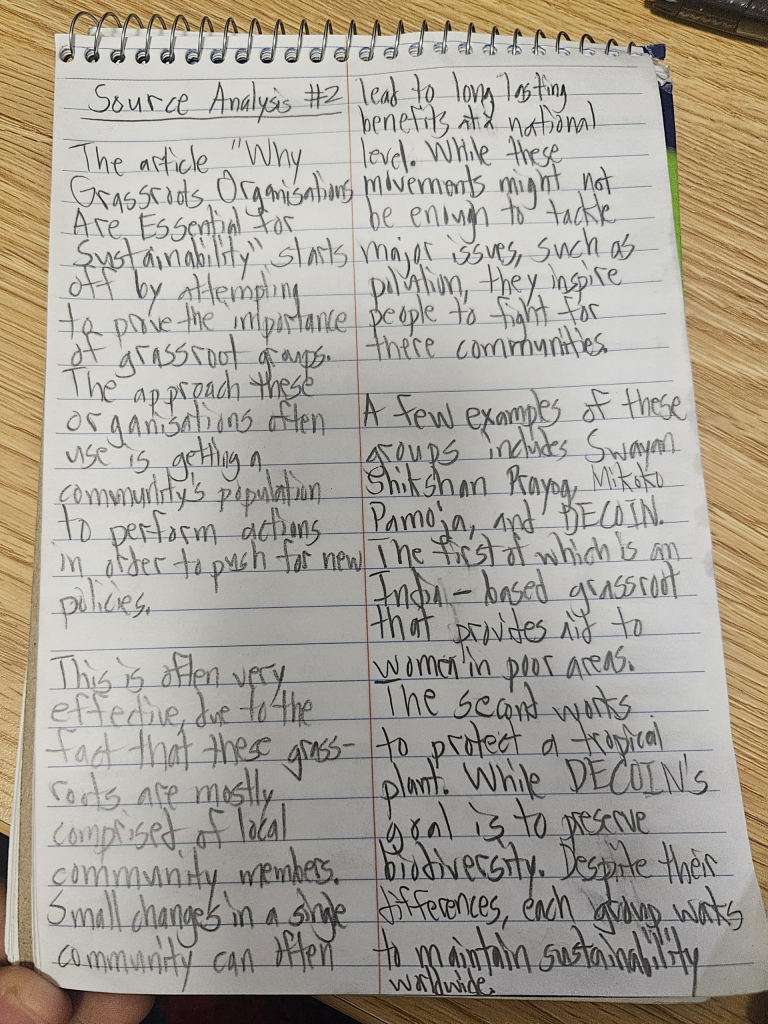
Creating long-term transformations in our world has always been a problem, simply because our world is not the same all around. We all exist within smaller, complex systems that make up the entire planet. These systems often differ in many ways. This is what makes solving wicked problems so difficult, since coming up with a solution for one particular issue does not guarantee that it will work for that same issue all throughout the world. Leaving many people to assume that the fight for worldwide change is impossible. However, we often forget to look at the small similarities between the systems that govern our societies. As we do start to recognize these patterns, we begin to realize that large scale change is not as difficult as it may seem at first glance. 

Adrienne Marie Brown shows in the beginning sections of “Emergent Strategies” that the most crucial step in making changes in our world is by learning about natural systems. As explained in the introduction, we are often greatly affected by changes in other ecosystems around us and vice versa. If we want to make real changes that can benefit more than just one or two regions of the world, a basic understanding of the natural systems around us is a necessity. That means learning how to sustain our population and the population of other animals that share the planet with us. “I want to understand how we humans do that-how we earn a place on this precious planet, get in the ‘right relationship’ with it. So I am focusing on the ways creatures and ecosystems function together in and with the natural world” (5). Despite so many efforts being made to leave Earth behind in the future, we often forget to notice the perfect planet we already live on. The chances of life existing at all are slim, if this planet managed to get it right, then we should spend more time trying to heal it instead of abandoning it. 

The most intriguing part of Brown’s plans for understanding natural systems is the use of emergent strategies. The term emergent strategy is best explained by breaking down the meanings of the individual words. Emergent simply means looking at multiple different layers of interactions between systems. If two ecosystems were to be closely related based on similar patterns, this relationship could help people learn how to change or sustain one ecosystem by affecting the other. “But emergence shows us that adaptation and evolution depend more upon critical, deep, and authentic connections, a thread that can be tugged for support and resilience… Dare I say love. And we know how to connect-we long for it” (14). Strategies, on the other hand, refer to the steps taken to accomplish some sort of feat. Together, emergent strategies are measures made to change certain systems based on the relationships outside and within them. This is important because many patterns in nature are often ignored or not investigated because they may not have seemed so significant at first. However, Brown argues that these patterns could be the key to solving problems throughout multiple different systems, simplifying the way we look at complexity in the natural world. 

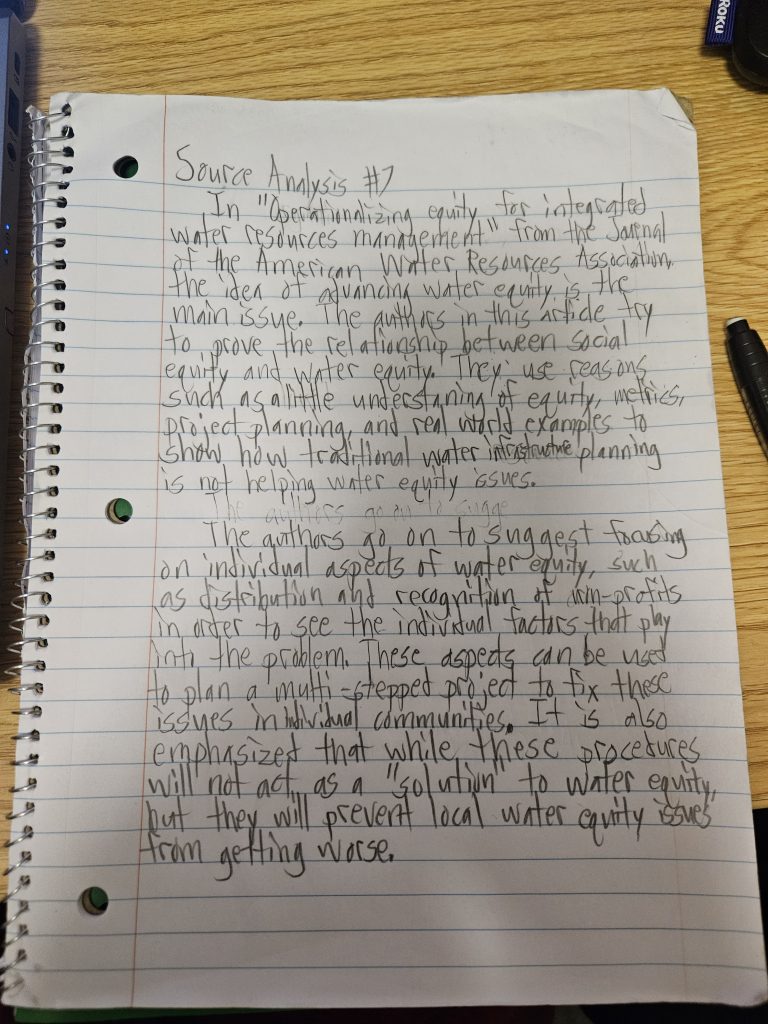
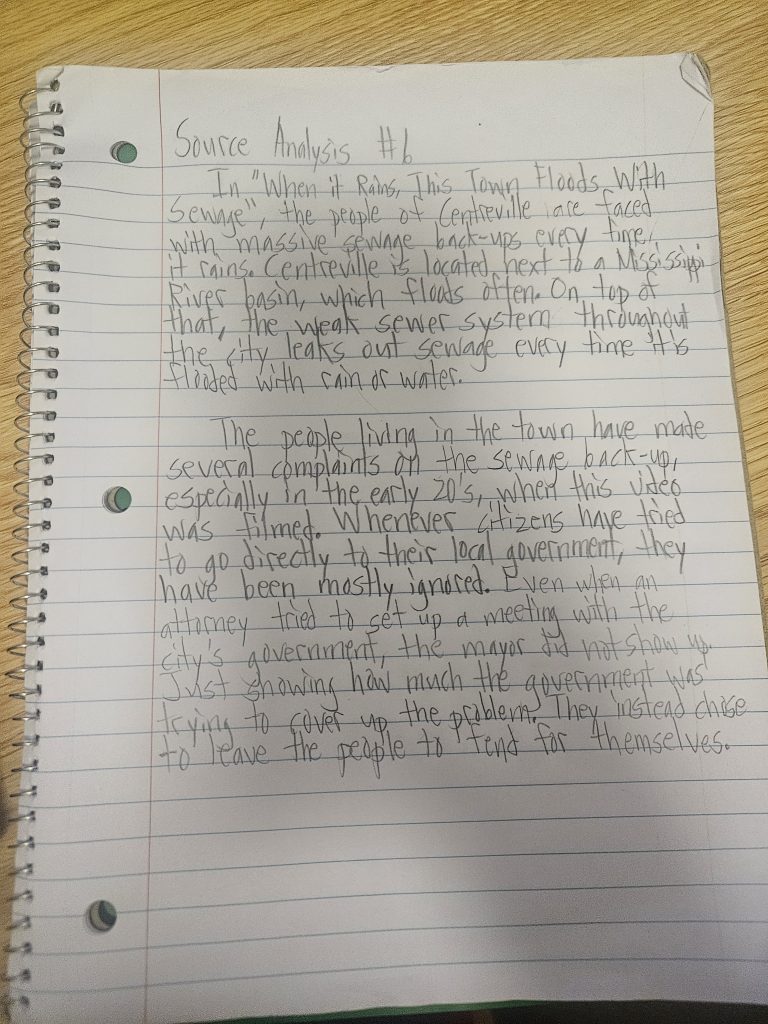
So what’s the point? Yes, these ideas are useful for people wanting to make changes in their communities, states, or even countries. But how does this apply to water equity and the Mississippi River? How can emergent strategies be used to solve problems along one of the largest rivers in the Americas? Well, despite how different certain communities along the Mississippi may be, they all share common advantages and disadvantages. Many of these cities experience massive flooding from the river, yet they also have access to easy transportation thanks to the river. In mapping the Mississippi, we can notice the similarities in nearby communities and use that to our advantage. For example, efforts made to minimize flooding in one city could also be used in another city with the same problem. Implementing Brown’s ideas in real life could be the key to changing our goals from just a vision to a reality. 

All in all, the systems in our world are a lot more connected than we may realize. Many different cities and states along the Mississippi River share common problems that can be solved by noticing the patterns within them. Even beyond our country, there are several massive rivers throughout the world that may pose the same problems for the people who live along them. Water equity along the Mississippi River is an issue in and of itself, but it is not the only water related issue that is faced in our world today. If we can learn to recognize the patterns within our vicinity, we can also learn to apply these solutions to other systems around the world, making real change not just for our country, but for our entire planet. 

Who’s Really the Villain?

In every story, there are clearly defined protagonists, heroes, and antagonists, villains. The reality of these stories is that they would be vastly different if told from the POV of the “villains”. Nobody wants to see themselves as the enemy or the bad guy in their story. Instead, we tend to try and either justify the actions that we made or sweep those actions under the rug. In the case of US history, it is clear now that we were not always the good guys. For example, our treatment of Native Americans was terrible in the late 1700’s and early 1800’s. The US government originally tried to act as if all the massacres and relocations never happened, but this did not work for long. Eventually, the government had to own up to their cruel treatment of the natives and admit that they were the bad guys in this situation. However, the concept of “good” or “bad” is often based on the perspective of the audience, an idea that is explored throughout Bruce Upholdt’s “The Great River”. 

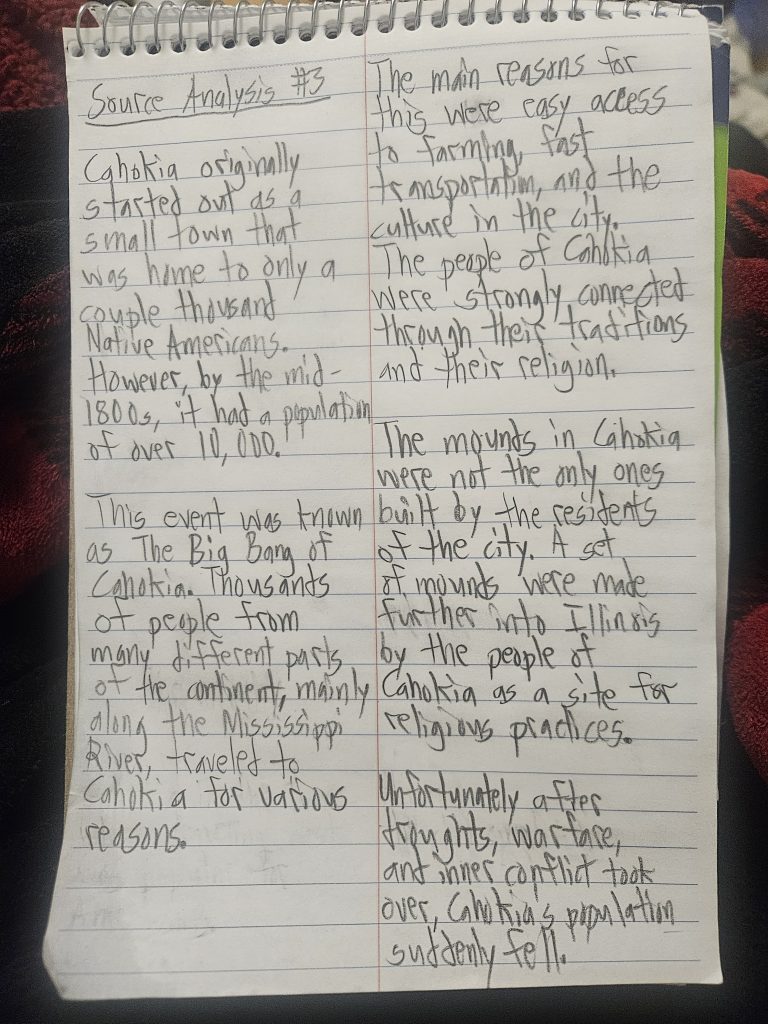
For most novels or pieces of literature that discuss the old relationship between the US government and Native Americans, they are often told in the perspective of the natives, in order for the audience to get the best glimpse of how bad the US treated them. “The Great River” is not like these texts though. Bruce Upholdt’s piece actually starts out with the point of view of a group of settlers reaching the Mississippi River. As the story progresses, it becomes apparent that the settlers did not want anything to do with the land near the Mississippi Valley. “He seemed unimpressed, repeatedly grading this floodplain territory as second-rate land. Robbins, too, had his doubts: when his former general offered a patch of the Arkansas floodplain as a part of his ‘war bounty,’ the surveyor declined, figuring it would be too much work to wring out a profit” (72-73). The groups of explorers that were sent out to survey the new land first thought that the land could not be profitable due to its depth and its cluster of bushes and trees. Not everyone shared this same opinion though. President Thomas Jefferson, the man who was encouraging settlers to explore the Mississippi River, believed that it could serve as an “empire for liberty” (75). This ideology led Thomas Jefferson to suggest the removal of natives from their tribal lands, a proposal that kicked off decades of mistreatment. Perspective is most important in this. While the settlers and Thomas Jefferson may not see themselves as the bad guys yet, since they are just trying to explore the land that they won from the British, the actions that they take to do so make them a bad guy for the natives who have been living there for hundreds of years. 

Along with giving a description of the settlers who traveled to the Mississippi Valley, the author also shows just how influential the Mississippi River was too. Even though President Jefferson wanted the river under US control, the Mississippi was not exactly “all good”. “A bad flood had liquefied forty miles of land, and even after the waters receded, there would be hazards to contend with: ‘the poisonous effects of Half dried mud, putrid fish, & Vegetable matter-almost impenetrable cane brakes, and swarms of mosketoes,’ the surveyor wrote” (82). The Mississippi River had a history of flooding, which often damaged the land around it and brought along other problems. Once the government began to realize how often these floods can occur, systems were put in place to try and “control” the once revered river. However, Jefferson was not the only man who truly admired the river. The author makes a quick nod to an account of a settler named Fink, published by Morgan Neville in 1828. In this story, Fink strives to live a peaceful life in the wilderness, while ironically killing any Indigenous person who got in his way. Once this narrative was sent throughout the country, it not only portrayed the idea of opportunities out west, but also the idea that the natives were insignificant. 

The author goes on to talk about how tension between the Native Americans and the US government grew harsher. While the settlers continued to get into confrontations with the natives, the US was once again waging war against Great Britain. In the War of 1812, the British returned to America, and this time, they recruited local soldiers to help them win the war. “Many Indigenous people, subscribing to the theory that the enemy of my enemy is my friend, had allied with the crown. Two Shawnee brothers-one a prophet, the other a soldier-set up the headquarters for a burgeoning anti-American movement in the unconquered territory along the Wabash River” (83). With supplies from Britain, the natives were finally able to fight back. But this was only the beginning of the conflict. The war was ended by General Andrew Jackson at the Battle of New Orleans in 1815, who would later go on to continue his attacks against the Native Americans. After Andrew Jackson was made president in 1829, his violence towards the natives shifted from small battles to massacres and large relocations. The author clearly wanted the audience to realize that the mistreatment of the Native Americans was not just a single centralized occurrence. Rather, it was a slow progression from negotiating to outright murdering innocent natives. It was a cycle that continued from president to president, from war to war, for over a century. 

Many people often wonder why settlers, and later the US government, could order for the killing and relocating of thousands of Native Americans for tens of years. Bruce Upholdt does a great job at answering this question by first showing the perspective of the “bad guys”. The members of a young country who were determined to carve out their own destiny by taking the resources that laid out west became lost in their ambitions and started to put conquest over the lives of native populations. It is important to note that throughout all of this, neither side saw themselves as the villains in this conflict. Each group was simply looking out for their own interests. The US government just let their arrogance and self-entitlement drive them to greater lengths. Which is why it is important to always look at a situation outside of your own POV. If not, you could end up as the villain of your own story without even noticing it. 
« Older posts Newer posts »

© 2026 Jaiden DeBoe

Theme by Anders NorenUp ↑