Starting the Community Oriented Digital Engagement Scholars (CODES) in August of 2024 began the process of interacting with research that allows our cohort to help the local community with a wicked problem. The wicked problem we were assigned and chose to address for our course of four years is conservation. Conservation is an important topic that knowledge is needed to be communicated about throughout the world and we are a group of young adults at Southern Illinois University Edwardsville that are trying to put action to needed work.
When beginning conservation research we were able to start by learning the background of conservation. Addressing questions like “what is [water] conservation and why is it important?” This helped prepare our team to get information and knowledge that would help draw the disconnect/barriers between solutions/help with a specific audience comforting conservation. The specific audience and age group we chose to select to educate and motivate towards this topic is young adults ages eighteen through twenty-five.
After learning background information and getting familiar with connections about our wicked problem, we were able to bring the action part of our research into doing things such as creating surveys and conducting interviews. These surveys and interviews aimed to determine both what is hindering young adults from participating in water conservation issues and how we can convince them to get involved.
Based on our research, we developed products that aid in our purpose of engaging young adults in this topic. This consisted of social media campaigns, social events, social media content based videos, podcasts, as well as brochures offering a variety of engaging knowledge. Using these different methods for our products allows us to share our research through multiple platforms, reaching a broader audience.
My name is Jasmine Davis and I will be introducing my perspective of “Involving Young Adults in Conservation” research. Starting off the beginning of my research journey , I did not know as much as I should have about conservation. First semester of fall 2024 allowed that to turn around. My team, professors, and I spent that semester doing research on information like stakeholders, conservation, wicked problems and young adults. This allowed me to expand my knowledge and obtain background information before starting. The following semester provided my team and I a chance to do survery’s on young adults ages 18-25 on the Southern Illinois University- Edwardsville campus. One take away from that semester of research was not being able to capture as many responses as we wanted. However, we were able to learn key prohibitors such as motivation, awareness, time , and more. Starting our second year of research I was able to do more of a individual research path with a survey. I decided to make a survey for the young adults who particapated in SIUE’s Cougar’s in the community service day specifically with our community partners Heartlands. I decided to do this survey to get the personal opinions of young adults towards conservation kind of work. I was able to learn …. Taking the feedback from my survey, I plan to create a similar but more intimate conservation event for young adults here on campus. My event will provide awareness, knowledge, guidance on how to fix habits towards conservation, and a take home craft. I would like to create this event to help my peers help themselves and the world. I would like my event to provide knowledge that they are able to spread. I plan to hold my event in the Morris University Center in April in collaboration with Heartlands Conservancy.
For my project, I’m creating a social media campaign to promote Jasmine’s on-campus workshop. Everyone in my group is working on their own part of the overall plan, but I’m the only one focusing on the social media side. Because of that, I have to think carefully about who I actually want this campaign to reach and how it’s going to make an impact. Social media can either be really effective or completely ignored, so I don’t want to just post something basic and hope for the best.
The main audience I want to reach is young adults on campus. They are the ones most likely to attend the workshop, so if they don’t see the posts or don’t feel interested, the event won’t be successful. That means the content has to be engaging and relatable, not just informational. I have to think about what would actually make someone stop scrolling and pay attention. It also needs to be clear about why the workshop matters and why someone should take time out of their day to attend.
I also want professors to see the campaign. Professors have influence and can encourage students to go, mention it in class, or even connect the workshop to what they’re teaching. If they see value in it, that gives the event more credibility. In addition, I think about investors or potential sponsors. Even if funding isn’t the focus right now, presenting the campaign in a professional and organized way shows that this workshop has real purpose and potential to grow. The way I design and promote it reflects on the entire group and the seriousness of the project.
Most importantly, I want the campaign to reach the people who are directly affected by the issue the workshop focuses on. They are the reason this workshop exists. Keeping them in mind reminds me that this isn’t just about getting attention online, but about spreading awareness and encouraging meaningful conversation. Since I’m responsible for the social media portion, I feel more pressure to make sure it actually works. It pushes me to balance creativity with strategy and think beyond just completing my assignment. Overall, considering these different audiences makes me more intentional about how I approach my work and the impact it can have. My project is involved with getting people active in person which project which brings my project into the next project.
My name is Laylah Leech, for my project, I was to engage young adults using social media content based videos. The way I achieved this was by attending an Heartlands event that our research group is partnered with. I did interviews with many different ages and put all of the recorded clips into a 1 minute video. The importance of creating these videos helps build awareness and influences behavior through related content.
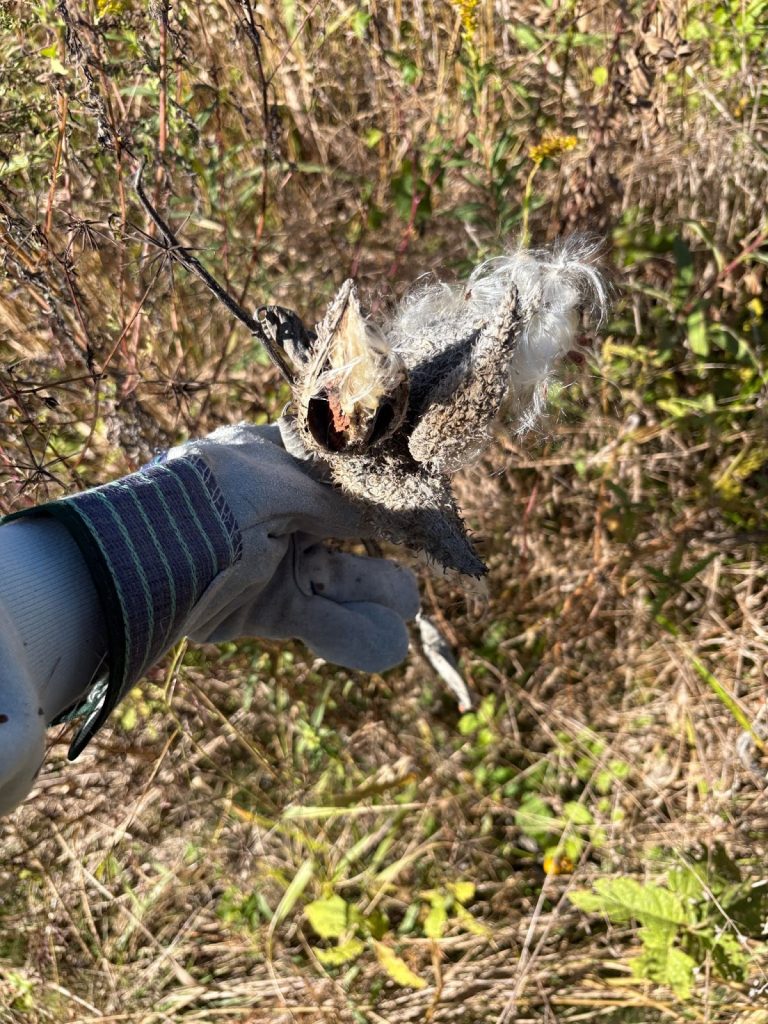
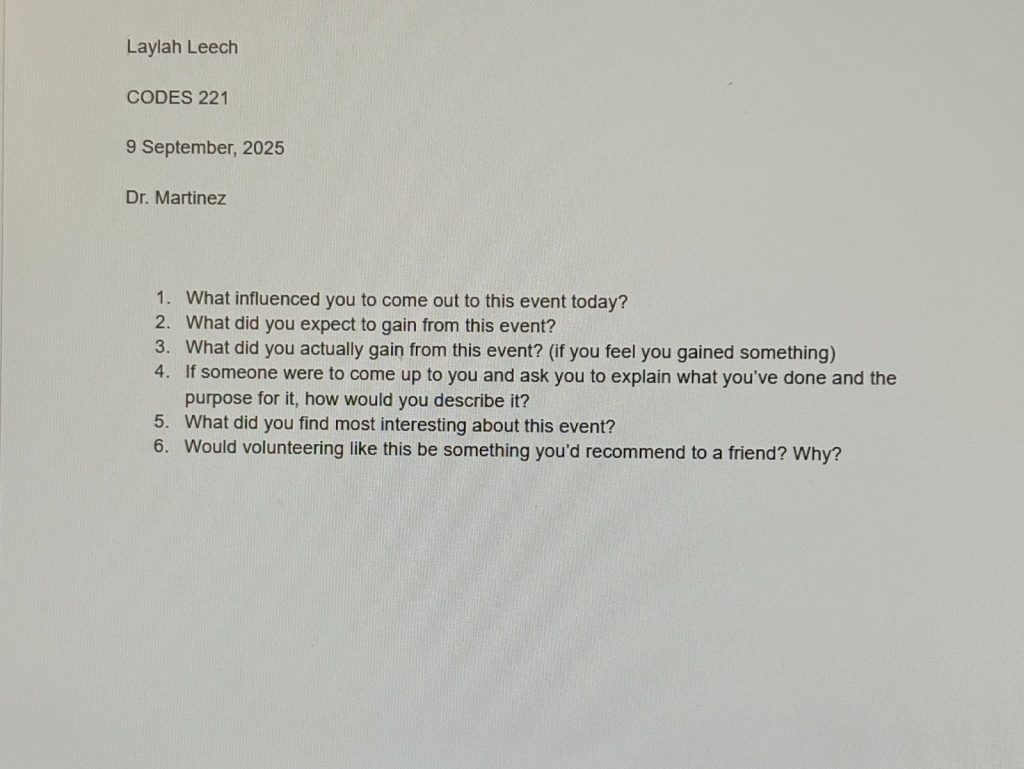
Above are some questions that I’ve asked my interviewees at the event. After interviewing them, I’ve learned a few ways that young adults do not know much about water conservation and how to move forward with getting engaged or engaging them. Overall the interviewing process went well and helped me gain the information needed. Up next we have Isaiah Otey presenting his contribution.
For my EMPLACE contribution, I am creating a podcast designed to communicate the purpose and importance of our project in a way that is accessible to a wide audience. When I think about who I want my podcast to reach, I do not imagine a narrow or purely academic group. While students on campus are an important audience, I want the message to be understandable and meaningful to anyone who may encounter it. A podcast has the ability to travel beyond the classroom, which means I have a responsibility to make the content clear, inclusive, and engaging.
Students are a significant audience because they are often still forming their habits, perspectives, and awareness about larger issues. Many are learning how to think critically and make independent decisions. Through the podcast, I want to help them understand not only what the workshop is about, but why it matters and how it connects to their own experiences. Because podcasts rely on voice rather than visuals, I must be especially intentional about tone, pacing, and clarity. If I use complex terms or research-based language, I need to slow down and explain those ideas in a way that does not feel overwhelming.
At the same time, I recognize that other stakeholders may listen. Professors, campus leaders, and even community members could hear the podcast. Their perspectives shape how I approach the structure and depth of my content. I need to clearly explain the reasoning behind the workshop, the ideas that support it, and the thought process behind our planning. In audio form, organization becomes even more important because listeners cannot reread a sentence if they miss something. This pushes me to carefully structure my points so they build logically and are easy to follow.
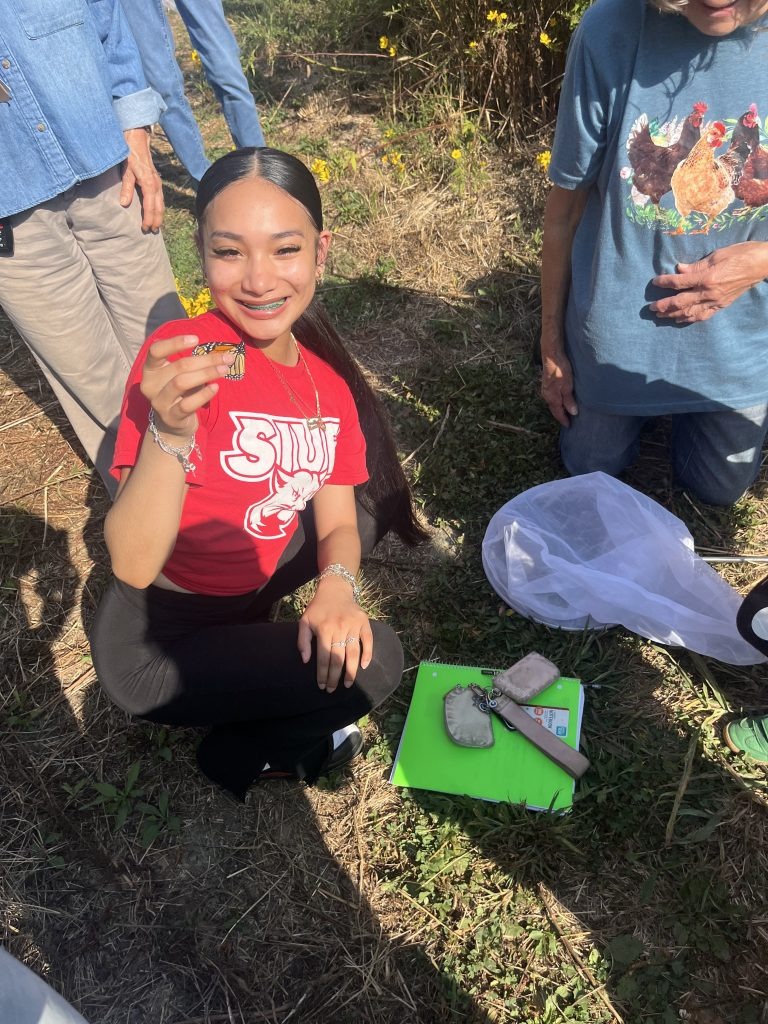
Most importantly, I think about the individuals who are directly impacted by the issue our workshop addresses. They are not just part of the audience—they are the reason the conversation exists. That awareness influences my word choice and the level of care I bring to the discussion. My goal is not simply to promote an event, but to contribute to understanding and encourage meaningful reflection. Up next we have Zuleyri presenting a monarch tagging event hosted by Heartlands Conservancy.
My name is Zuleyri Medina-Campos, and I will be writing about my project that I worked on the past semester. Our wicked problem is based on young adults and why they don’t engage in conservation activities. We would like to know this is so and what we can do to help change young adults’ point of view on conservation. I took it upon myself to attend a Heartland’s Conservancy and conduct interviews with the peers who attended as well.
Examples of themes
While coding and transcribing the interviews, I identified 5 themes, transportation, time management, work, babysitter issues, and lack of education. After conducting my interviews I now would like to create brochures that I will be able to pass out on campus. Now, Jaiden will present his products.
My name is Jaiden DeBoe, and my project for this semester is going to provide a direct link from community organizations to young adults in said community. Throughout the last semester, I spent my time researching the one problem that is the focus of my overall group project: “How can young adults be engaged in water conservation efforts?”. I felt that the best way to do this was to connect Heartlands, my community partner, with peers at SIUE. This started out by asking professors at SIUE how they felt about community organizations in a school setting.
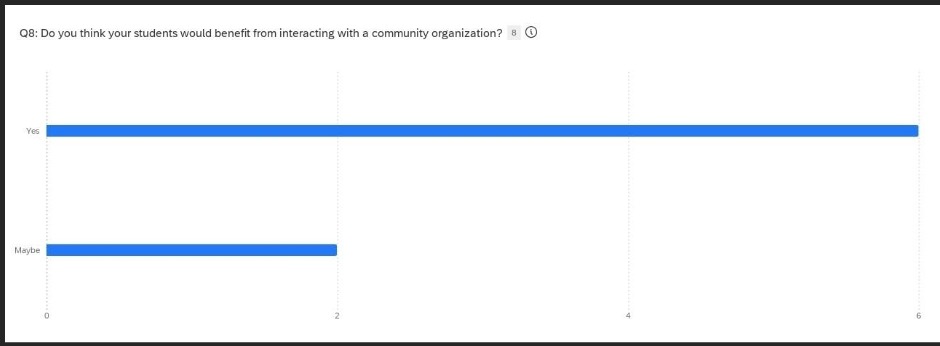
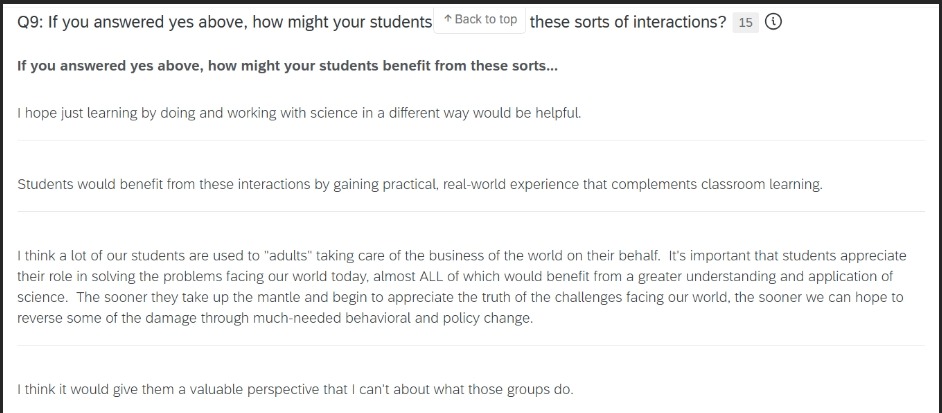
After I received my survey responses, I immediately began my work on this semester’s product, which takes me to where I am right now. I am currently working on two smaller products, one which will allow Heartlands to know more about professors at SIUE, and one which will let the professors get to know Heartlands a little better. The goal of these two products is to allow them to understand each other better and hopefully form a connection in the future. Now, Ayiana will showcase her project.
Ayiana Baynes:
My name is Ayiana Baynes and my contribution to our group’s research is an informational brochure. I got to this product by conducting interviews at Southern Illinois University of Edwardsville. I asked students straightforward questions such as their involvement in conservation activities, where they got their information about these opportunities, as well as other questions to gauge their knowledge about the topic. I figured that the best way to bridge that gap between young adults and conservation is by getting into the mind
Figure 1: When asked the question above, “these events” meaning conservation activities, 9 out of 9 interviewees agreed with the statement; coming to an unanimous decision.
Based on the results of my interviews I came to the conclusion that there isn’t enough publicity around conservation. It is hard for young adults to learn about and engage in these activities when they don’t know about when, where, or even how it is taking place. Therefore, I will be creating an informational brochure that will contain resources to point young adults in the direction of volunteer opportunities, internships, activities, as well as overall knowledge about conservation. These resources will include events organized by our partner, Heartlands Conservancy, as well as other organizations in the area. In addition to that, these brochures will be digital as well as printed in order to reach a wider range of audiences by broadening their access to this information. Lastly, we will move to wrap up our research on our contributions.
Through our research and individual emplace contributions, our group has developed a clearer understanding of why young adults are not as engaged in conservation efforts and more importantly, what can be done to change that. Across interviews, surveys, and event participation, a consistent theme emerged. Which is, the issue is not necessarily a lack of care, but a lack of awareness, accessibility, and clear connection to everyday life.
Each of our projects approaches this challenge from a different angle. The social media campaign works to meet young adults where they already are. Using engaging and relatable content to promote workshops and spark interest. The social media campaign will be promoting Heartland’s non-profit foundation and Jasmine’s project that she has been working on. Young adults are constantly on social media so that should help with getting more people to show up to Jasmine’s event. The podcast expands the conversation beyond campus, making conservation understandable and meaningful to a broader audience. The brochure provides substantial, organized resources that help students easily find volunteer opportunities, internships, information about Heartlands and CODES, and educational materials. The community-connection initiative builds relationships between organizations and university faculty to create long-term engagement opportunities. The social media videos and interviews highlight real voices and lived experiences, helping make conservation feel personal and relevant rather than distant or abstract.
The Heartlands brochure and document for professors from Jaiden’s project serve to connect professors at SIUE with Heartlands from both ends. The list of professors at SIUE provides direct access to students who would most likely want to be involved with water conservation, based on their majors and the classes that they take. The brochure about Heartlands gives the professors information about the organization, information given by Heartlands themselves.
Together, these contributions form a connected strategy to raise awareness, improve communication, strengthen partnerships, and provide accessible pathways for involvement. Instead of relying on one method, we use multiple platforms to reach different audiences, students, professors, community members, and organizations. Ensuring that conservation is communicated in ways that are clear, engaging, and actionable.
Ultimately, our work shows that increasing young adult engagement in conservation requires intentional outreach, meaningful storytelling, and stronger connections between communities and campuses. By combining research with practical tools and media-based strategies, we aim not only to promote individual events, but to foster long-term awareness, participation, and responsibility toward conservation efforts.