Highlight the header for the column below to indicate which grade you plan to work toward in the course. Meeting the basic requirements for your chosen letter grade, according to the table below, is mandatory.
A Work
B Work
C Work
– Misses one class or fewer, or completes make-up work for excused absences – Annotates all readings thoroughly – Contributes deeply to discussions – Completes all assignments on time or has approved extension – Work shows engagement, care, effort, and growth – Collaborates substantially, contributes to vision, and works equally with peers – Abides by the CODE of Conduct and classroom norms
– Misses two classes or fewer, or does make-up work for excused absences – Annotates most readings – Often participates in discussion – Completes all assignments on time or has approved extension – Work shows care, effort, and growth – Collaborates equally and completes required work – Abides by the CODE of Conduct and classroom norms
– Misses three classes or fewer, or does make-up work for excused absences – Completes most readings – Sometimes adds to discussion – Completes all major assignments and at least five SAs – Meets minimal expectations on assignments; shows some growth – Completes required collaborative work – Abides by the CODE of Conduct and classroom norms
First-Week Introduction
For my first week in CODES 123, I’m really excited to dive in and see what this semester has in store! I actually chose to stick with Professor Robles again after taking CODES 120 with him because I really enjoy his teaching style and feel comfortable in his class. I’m hoping this makes learning more engaging and less stressful. I’m also looking forward to meeting new classmates since my 123 class seems more diverse than my 121 class. I’m hoping the conversations around ethics will be both thought-provoking and entertaining, and I can’t wait to hear everyone’s different perspectives and experiences. I’m ready to participate, share my own ideas, and see how this class challenges me to think in new ways while still having some fun along the way.
Midterm Introduction
This midterm period has been more challenging than I anticipated. With the start of my nursing courses, my workload has become much more demanding, and I have struggled to maintain a healthy balance between school, work, and self care. The assignments in CODES 123 are more frequent than the assignments we had in CODES 121, which has made it difficult for me to stay consistently on track. As a result, I have occasionally fallen behind and submitted assignments late while trying to catch up.
I am actively working to regain my routine and have a better balance moving forward. This situation is not reflective of my usual performance, and I am confident that with additional time, patience, and focused studying, I will be able to improve. This experience does not diminish what I have accomplished so far this semester; given the demands of my schedule, it is understandable that I have faced some difficulty managing everything at once. I’m positive that I’ll finish strong.
Final Introduction
This course ended up being a lot more work than I expected going in. I thought it would be more flexible and less focused on every single assignment being graded, especially since I understood CODS courses to be more about the process than strict grading. Instead, almost everything had a grade attached to it, which made it feel like there was always something due or something to keep up with.
On top of that, I had a lot going on this semester personally, which made it even harder to stay on top of everything. Between outside responsibilities and trying to balance school, it sometimes felt overwhelming to keep up with the pace of the class. The deadlines were also pretty strict, and there wasn’t much flexibility when things got difficult.
At times, the class honestly felt like a lot of busy work compared to 121, where the assignments felt more connected and meaningful overall. In this class, some of the work didn’t always feel like it was clearly building toward the final project, which made it harder to stay engaged and motivated.
The grading also felt pretty tough, and small details seemed to matter a lot, which added to the stress. Overall, I didn’t really enjoy this course as much as I thought I would, and I’m honestly glad it’s over. I did learn some useful skills, but the experience itself felt more stressful than enjoyable for me, especially with everything else I had going on this semester.
Course Goals:
Goal 5a (20%) Information Literacy
I will responsibly integrate my research into my work while respecting any and all ethical and legal guidelines surrounding information use. As I design and conduct research, I want to be mindful of citation practices, consent, and the responsibility that comes with handling data. Ethical research builds trust and credibility, and my goal is to ensure my work reflects integrity and respect for both sources and participants.
What will you do to learn the content/ develop the skill?
What examples will you add to the portfolio to demonstrate your learning?
What characteristics of the chosen examples demonstrate you have met your goal?
I will define clear research questions and select credible sources that support my project.
I will include: – Evaluate a survey exploration – Survey development exploration – Reading summary (Ethics & Justice Readings)
These examples demonstrate my ability to identify, evaluate, and use information purposefully to support a thoughtful and well-designed research process.
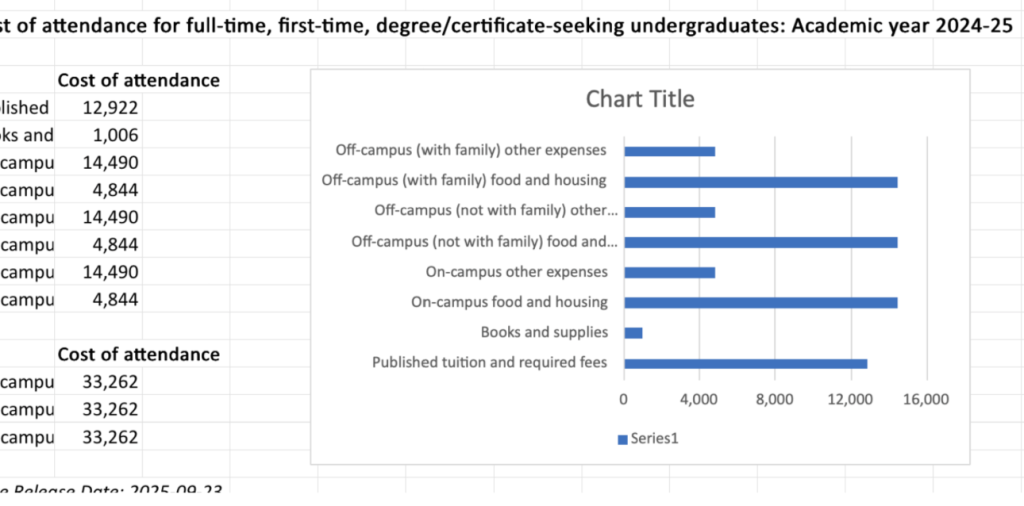
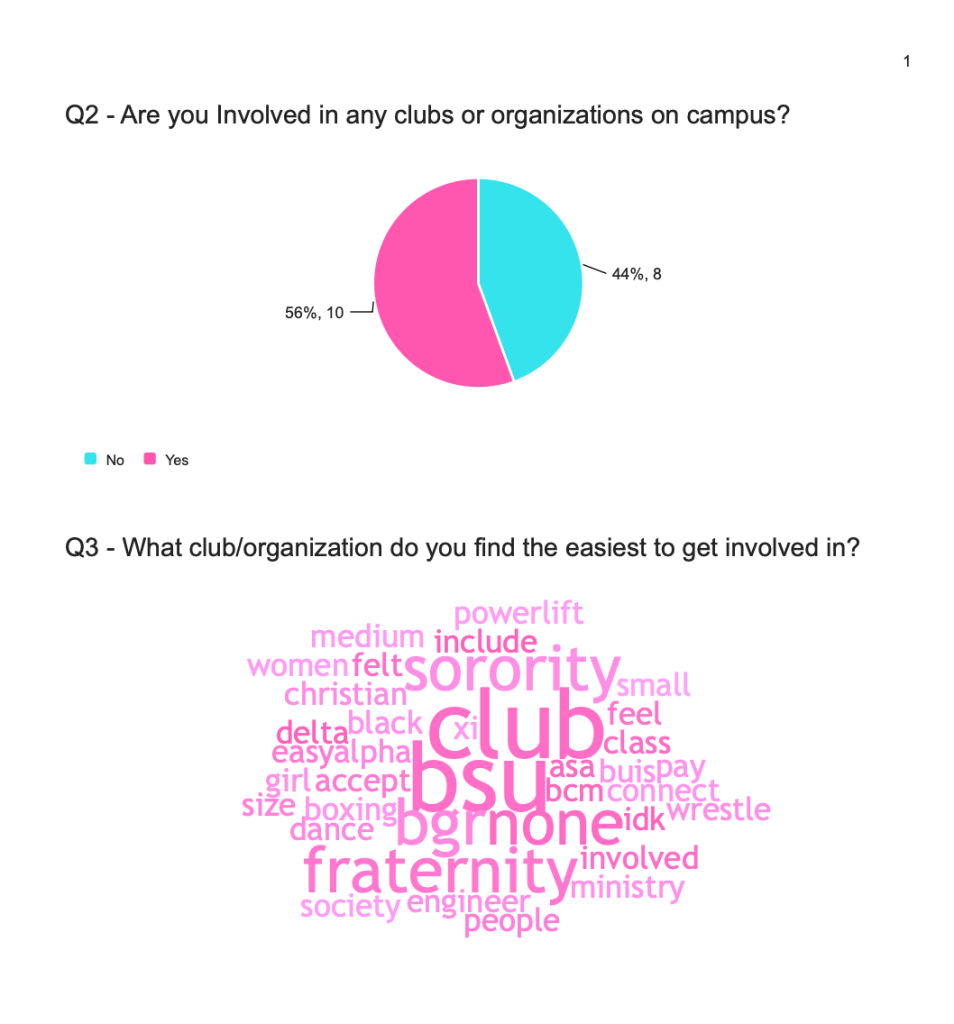
This artifact is an exploration where I learned how to export survey data into Microsoft Excel and turn it into charts and graphs. I practiced organizing raw data so it could actually be understood and used in research. This helped me see how information can be transformed into visuals that make patterns easier to identify. This connects to my goal because it shows how I learned to manage and interpret data in a clear, organized way that supports research questions with real evidence.
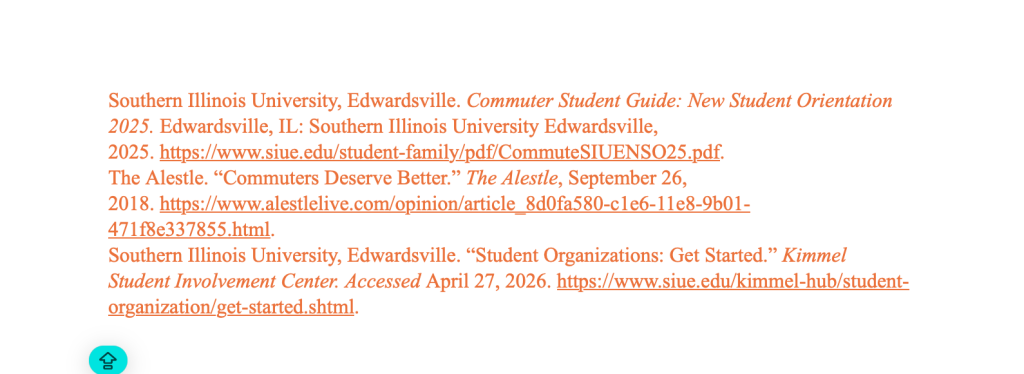
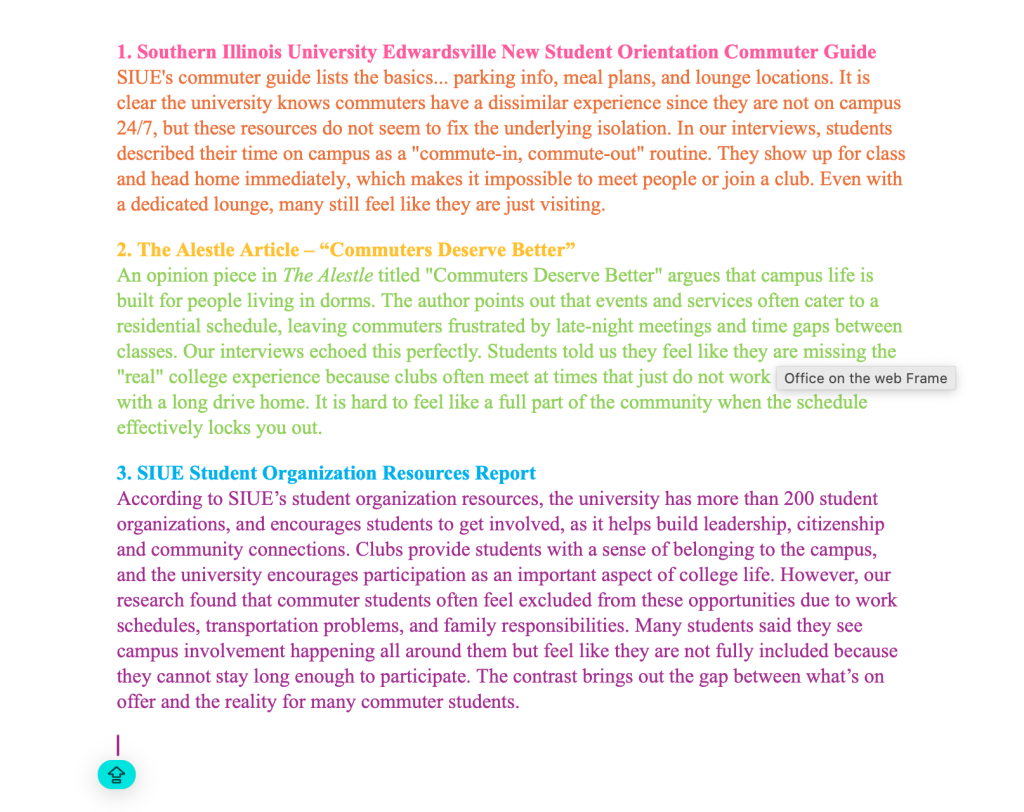
This artifact is my source bibliography, where I collected and organized credible sources for my research project. I made sure each source was relevant, trustworthy, and supported my research question about commuter student involvement. This required me to evaluate different types of sources and decide which ones were actually useful for my project. This connects to my goal because it shows my ability to find, choose, and organize credible information that strengthens my research.
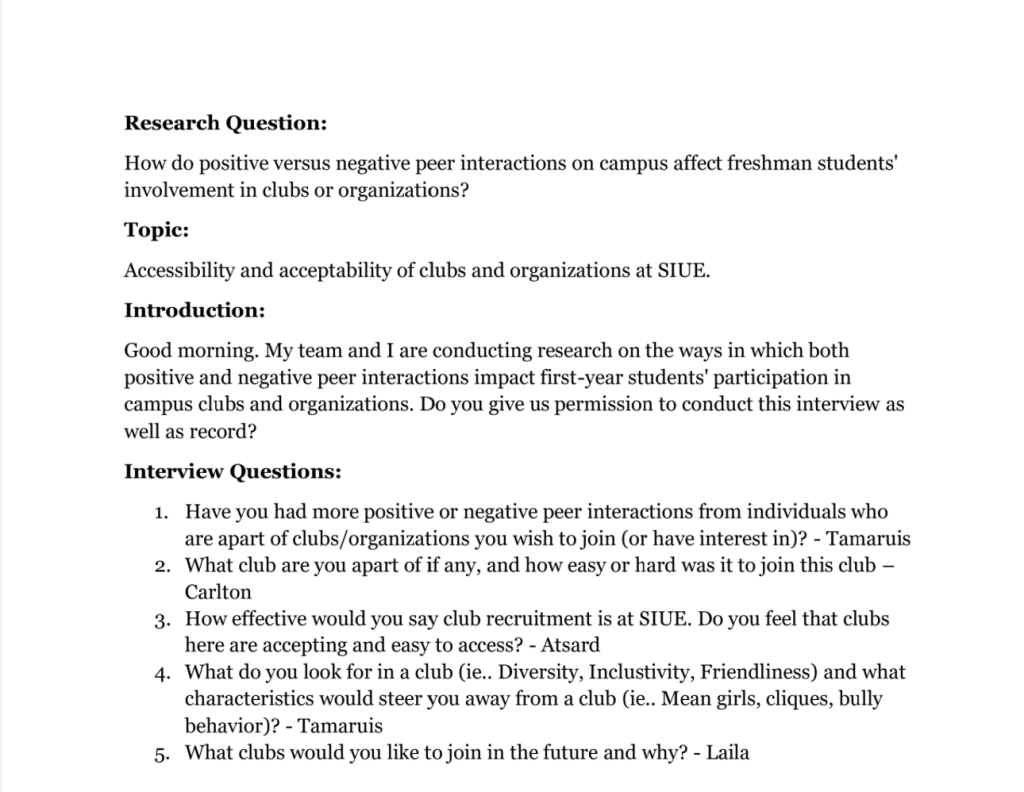
This artifact is our group interview plan, where each group member contributed at least one interview question. We worked together to create questions that would help us better understand student involvement and commuter experiences. I helped think of questions that were clear, relevant, and connected back to our research topic. This connects to my goal because it shows how I helped define research questions and worked with my group to gather useful, credible information for our project.
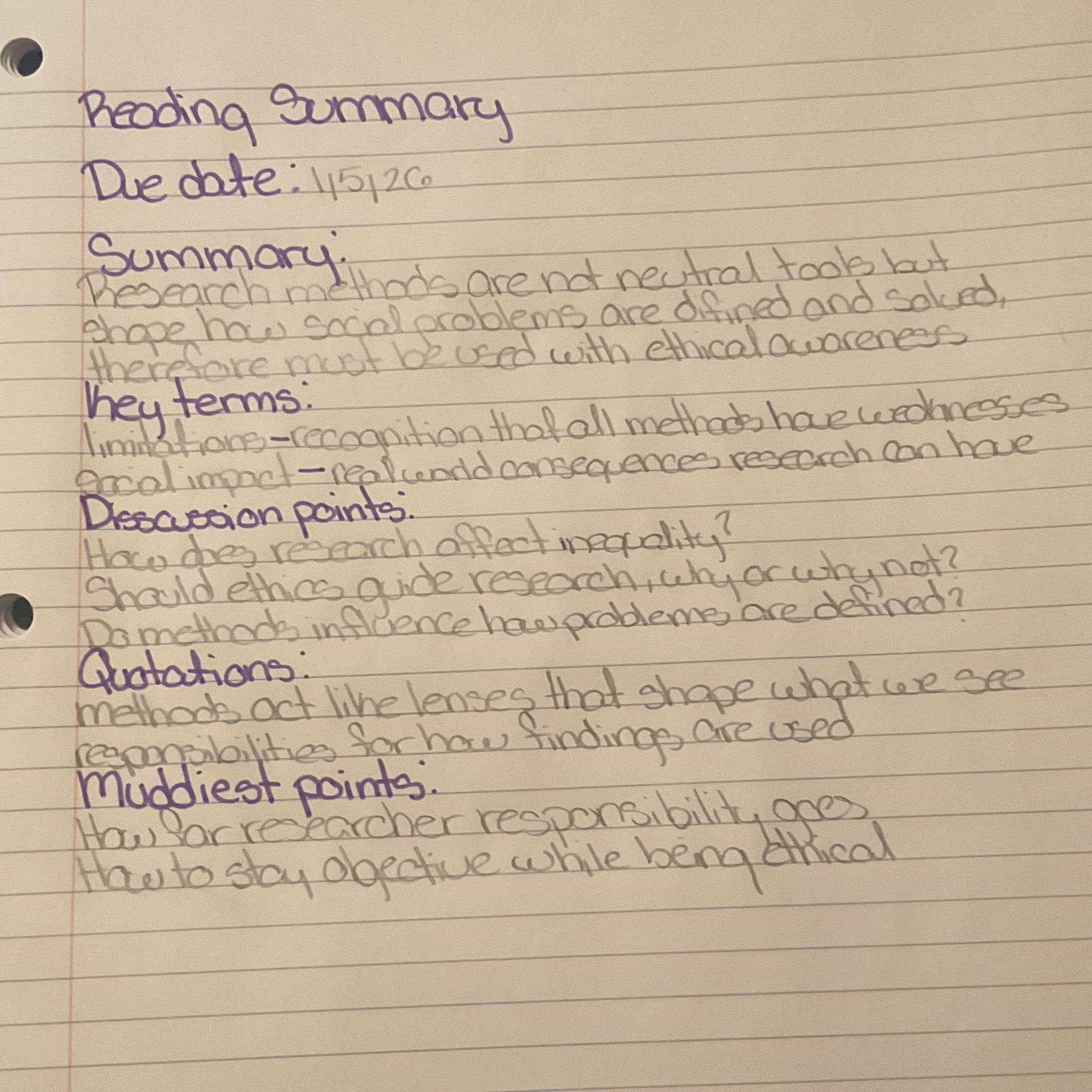
This artifact is a reading summary on the topic “How research shapes social problems.” In this assignment, I focused on identifying the main ideas and understanding how research can influence the way society understands issues. I summarized the key points in my own words and reflected on how research connects to real-world problems. This connects to my goal because it shows my ability to read a credible source, pull out important information, and understand how research is used to shape knowledge and decisions.
Goal 2c (20%) Critical & Creative Thinking
I will synthesize ideas from multiple disciplines to design research projects that reflect the complexity of real-world problems. CODES 123 emphasizes mixed methods, and I want to challenge myself to connect qualitative and quantitative perspectives. By blending different ways of knowing, my goal is to create research that is more insightful, creative, and impactful.
What will you do to learn the content/ develop the skill?
What examples will you add to the portfolio to demonstrate your learning?
What characteristics of the chosen examples demonstrate you have met your goal?
I will combine ideas from multiple disciplines to design creative, effective research strategies.
I will include: – Data visualization exploration – Digging into archives exploration – Mixed methods research plan – Survey Interview reflection
These examples show I can combine knowledge across domains and use creativity to design research approaches that are thoughtful, innovative, and evidence-based.
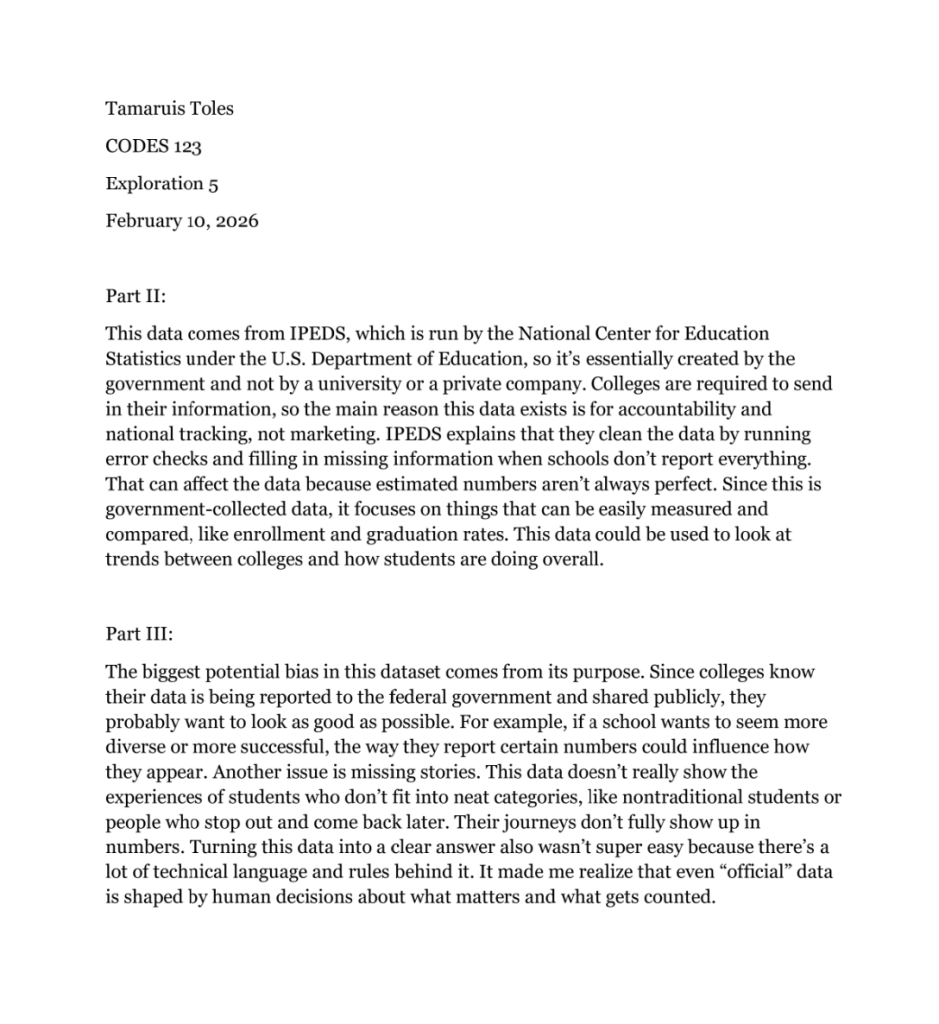
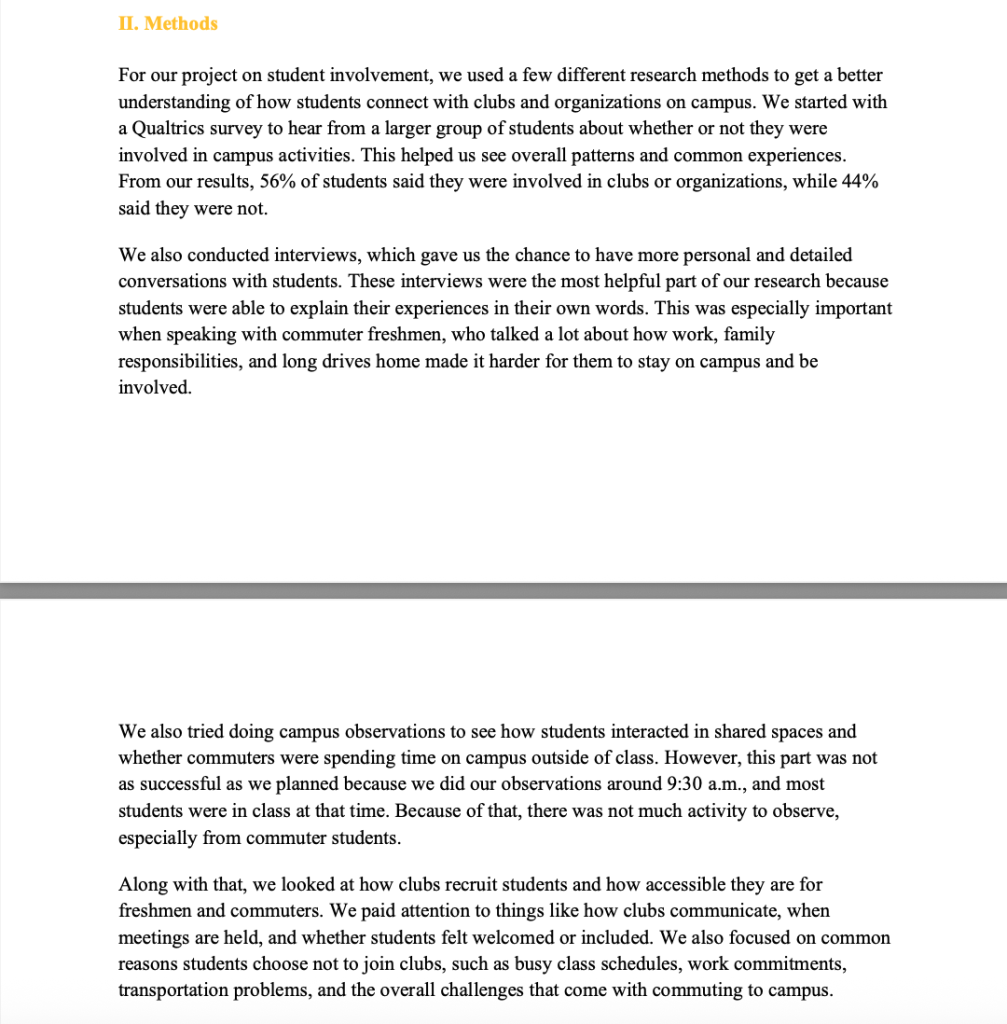
This artifact is my Exploration 5 assignment where I learned how to create a survey and analyze the results afterward. I had to think carefully about what questions would actually help answer our research topic and how different types of answers would give us useful information. I also practiced looking at the results and figuring out what patterns or trends were showing up. This connects to my goal because it shows how I combined planning, creativity, and analysis to design a research tool that helped us better understand student involvement.
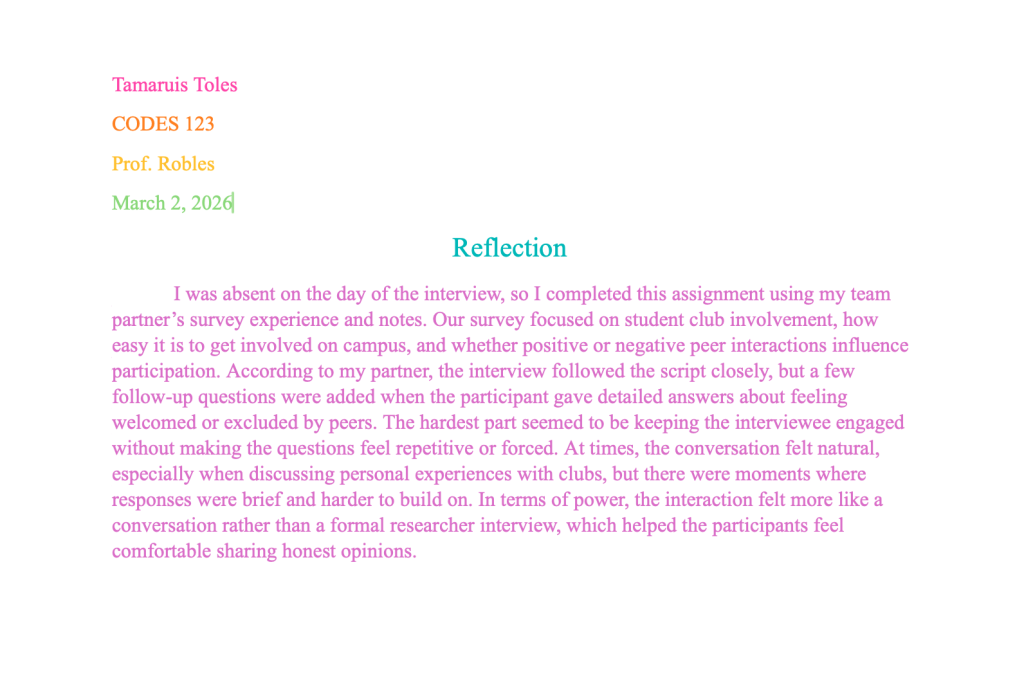
This artifact is a reflection from an in-class interview activity based on our original survey topic about inclusivity and accessibility of clubs at SIUE. During this assignment, I had to think on my feet, ask meaningful questions, and respond to what the interviewee was saying in real time. Afterward, I reflected on the experience and what it added to our research. This connects to my goal because it shows how I used critical thinking to connect interview responses back to our broader research topic and improve my understanding of student involvement.
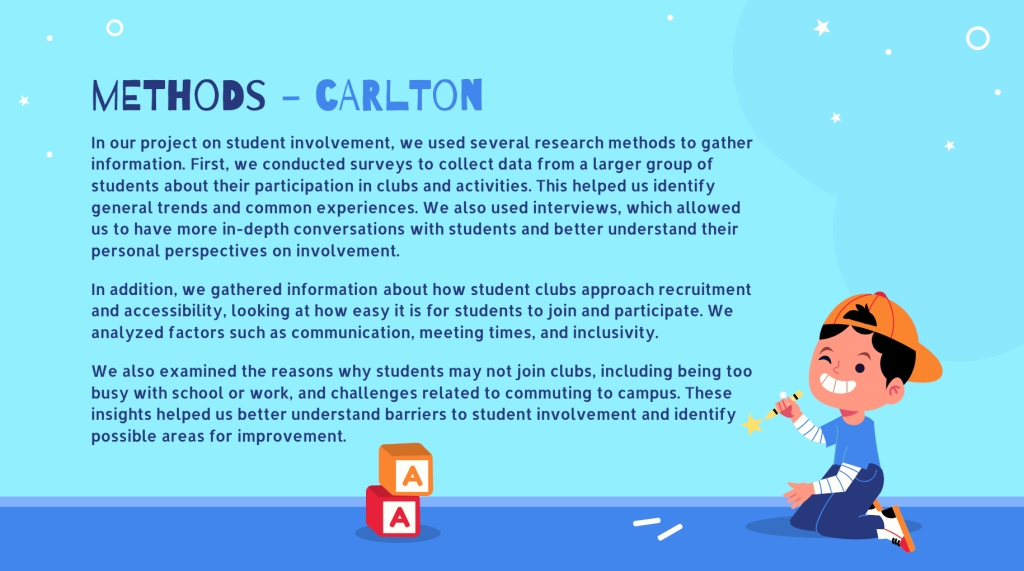
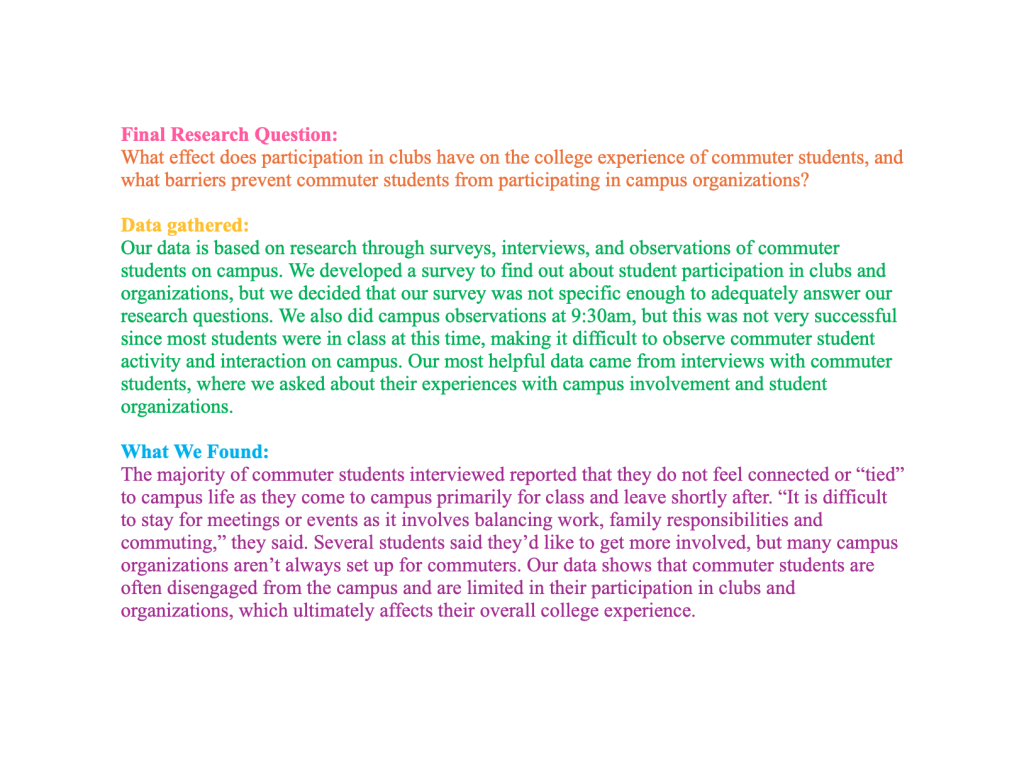
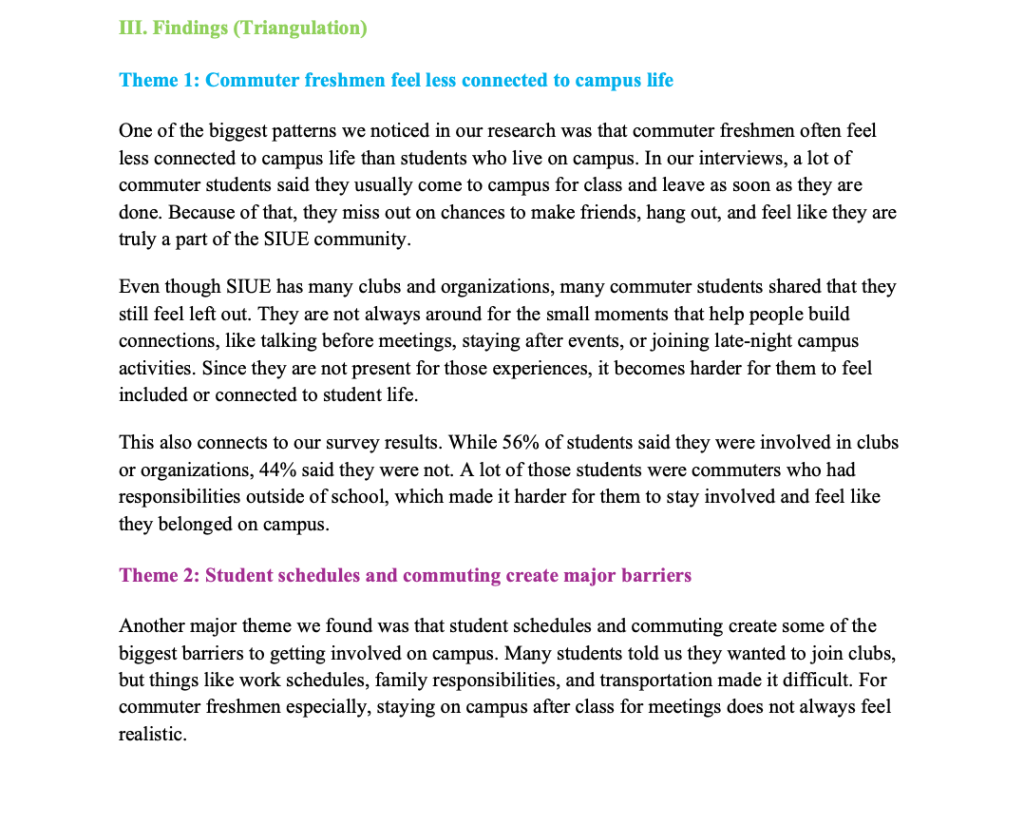
This artifact is a slide from our group presentation where we explained the different research methods we used in our project. We combined surveys, interviews, and other approaches to get a more complete understanding of our topic. I helped organize and explain how each method contributed to our findings. This connects to my goal because it shows how I worked with multiple types of research strategies and connected them together to build a stronger, more complete analysis.
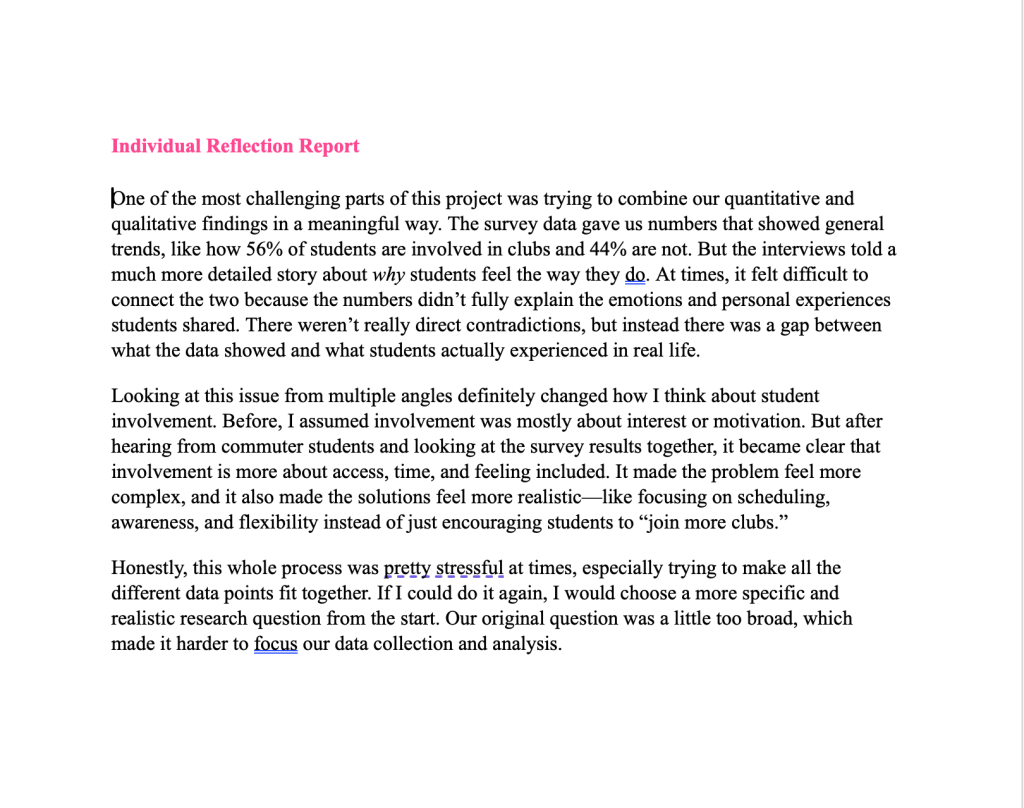
This artifact is my final project reflection where I discussed the different methods we used throughout our research process. I talked about what worked, what didn’t, and how each method helped us understand our topic in different ways. This reflection required me to think critically about our entire process and how all the parts connected. This connects to my goal because it shows how I combined different research approaches and reflected on their effectiveness to better understand our results and improve our thinking.
Goal 4a (20%) Global Learning
I will consider multiple worldviews and power structures when examining research problems, especially those that affect diverse communities. Understanding global and cultural contexts helps prevent oversimplified conclusions. My goal is to approach research with awareness and respect for perspectives beyond my own, recognizing how systems and experiences shape data and outcomes.
What will you do to learn the content/ develop the skill?
What examples will you add to the portfolio to demonstrate your learning?
What characteristics of the chosen examples demonstrate you have met your goal?
I will consider global perspectives and cultural contexts when analyzing research problems.
I will include: – CITI training exploration – Research question exploration – Archival methods exploration – Feminist data visualization reading
These examples demonstrate that I can apply a global perspective to research problems, considering multiple worldviews and social factors in my work.
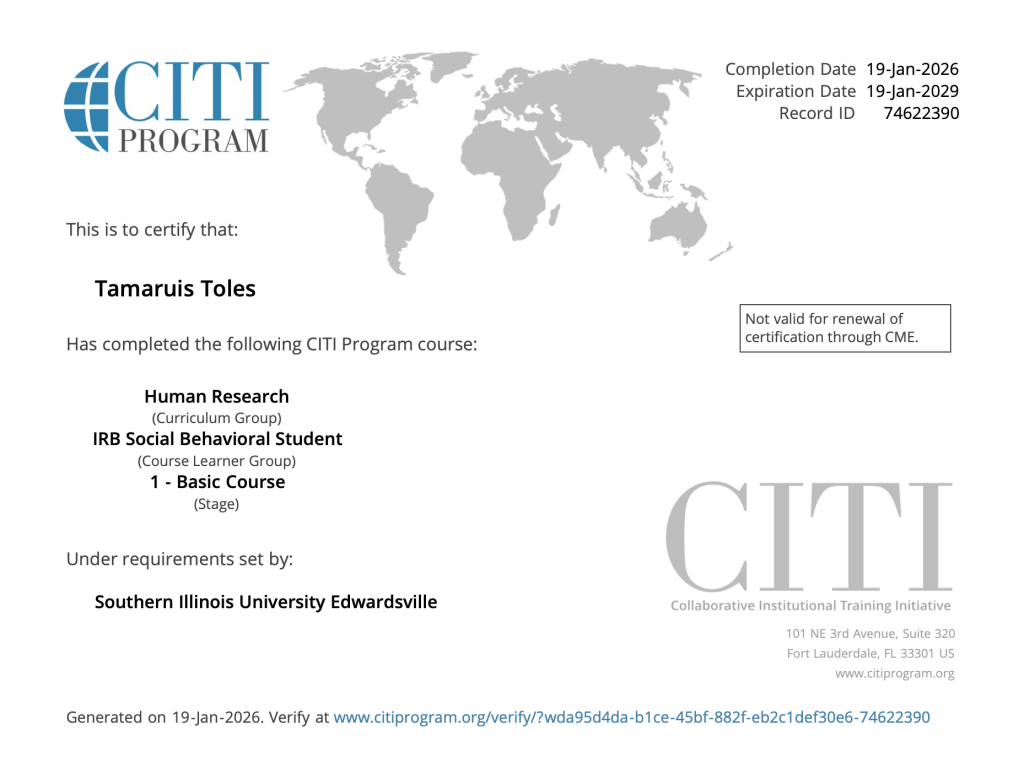
This artifact is my certificate from completing the CITI Program, which focuses on ethical standards in human research. Through this training, I learned how important it is to treat participants ethically, protect their privacy, and think about how research impacts real people. It also made me more aware that research is not just local, but often follows global standards and expectations. This connects to my global learning goal because it helped me understand how research is guided by cultural and ethical rules that apply across different communities and populations, not just one setting.
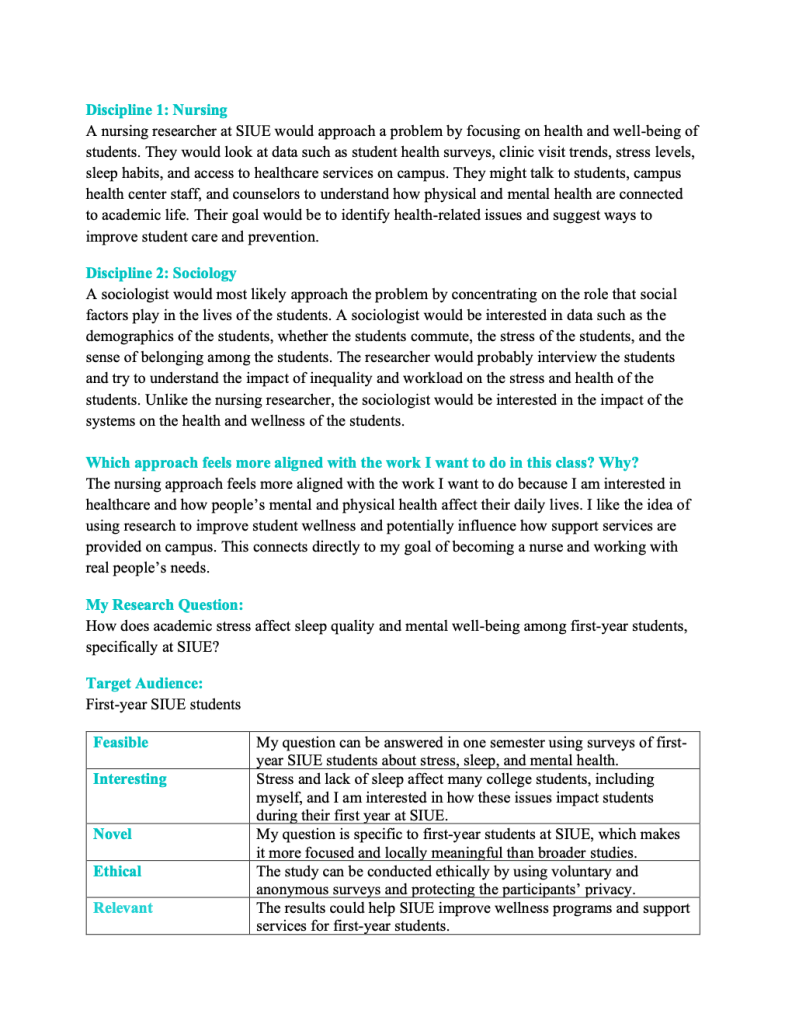
This artifact is from my second exploration, where I learned how to properly form a strong and focused research question. I practiced narrowing down broad ideas into something more specific and researchable. This helped me think more carefully about how different perspectives and contexts can shape what we study and why it matters. It connects to my global learning goal because forming a good research question requires thinking beyond just one viewpoint and considering how different groups of people might experience the same issue differently.
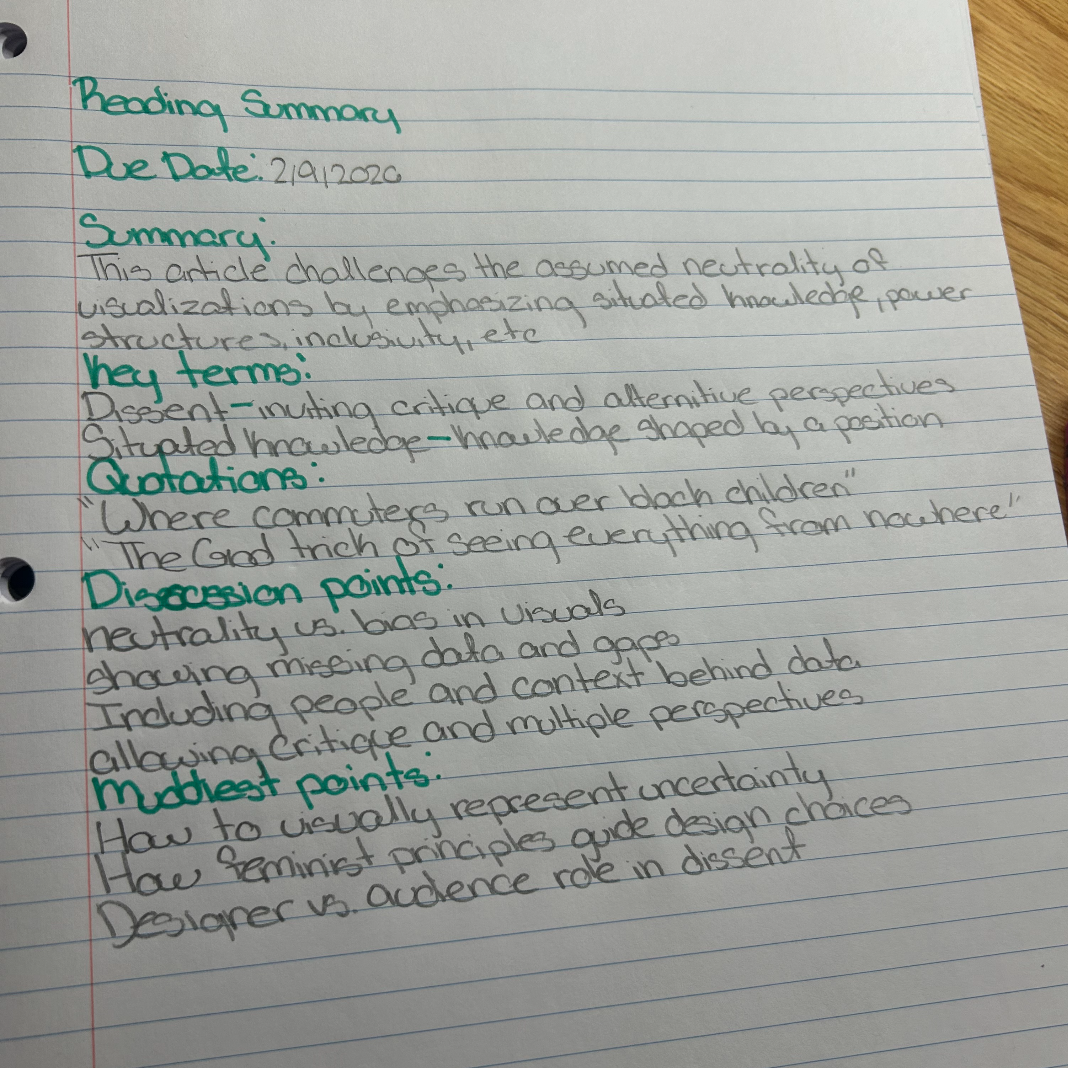
This artifact is a reading summary and discussion on data visualization and why it is important in research. I learned how visuals like graphs and charts can help explain data in a way that is easier to understand, especially when sharing research with different audiences. It also showed me that how data is presented can change how people interpret it. This connects to my global learning goal because it highlights how research communication needs to work for diverse audiences and different ways of understanding information.
This artifact is a screenshot of my final reflection submission for my research project. In this reflection, I thought about my entire research process, including what I learned, what challenges I faced, and how my understanding of the topic changed. It helped me see my work from a broader perspective and think about how research connects to real-world issues. This connects to my global learning goal because it shows my ability to reflect on research in a way that considers bigger social and cultural contexts, not just my immediate findings.
Goal 12b (20%) Collaboration
I will actively support my research team by building on others’ ideas and encouraging full participation from all members. Research is collaborative by nature, and I want to be intentional about creating space for everyone’s voice. My goal is to contribute meaningfully while also helping the group function as a supportive, productive team.
What will you do to learn the content/ develop the skill?
What examples will you add to the portfolio to demonstrate your learning?
What characteristics of the chosen examples demonstrate you have met your goal?
I will contribute actively to my team, share ideas clearly, and encourage everyone’s participation.
I will include: – Survey development workshops – Interview practice exploration – Ethnographic observation team project – Data visualization presentations – Workshop sessions for exploration
These examples show that I can work effectively in a team, fostering collaboration and ensuring everyone’s contributions strengthen the research project.
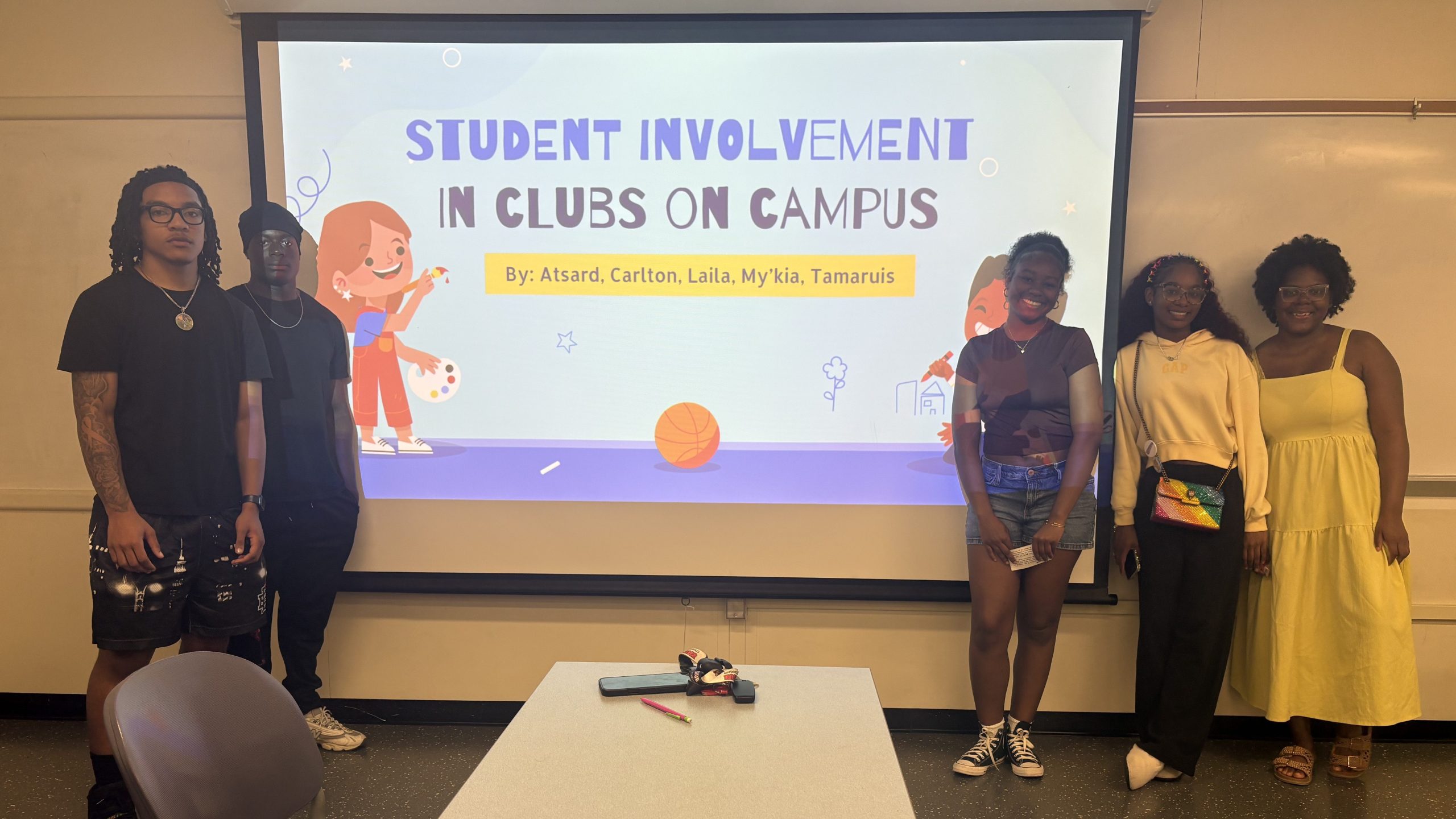
This artifact is a picture of me and my group during our class presentation. It represents the teamwork we put into preparing and presenting our project. We all had different parts, but we supported each other while presenting and made sure everyone was comfortable speaking. This connects to my collaboration goal because it shows me actively working with my group and helping make sure everyone was included and confident during our presentation.
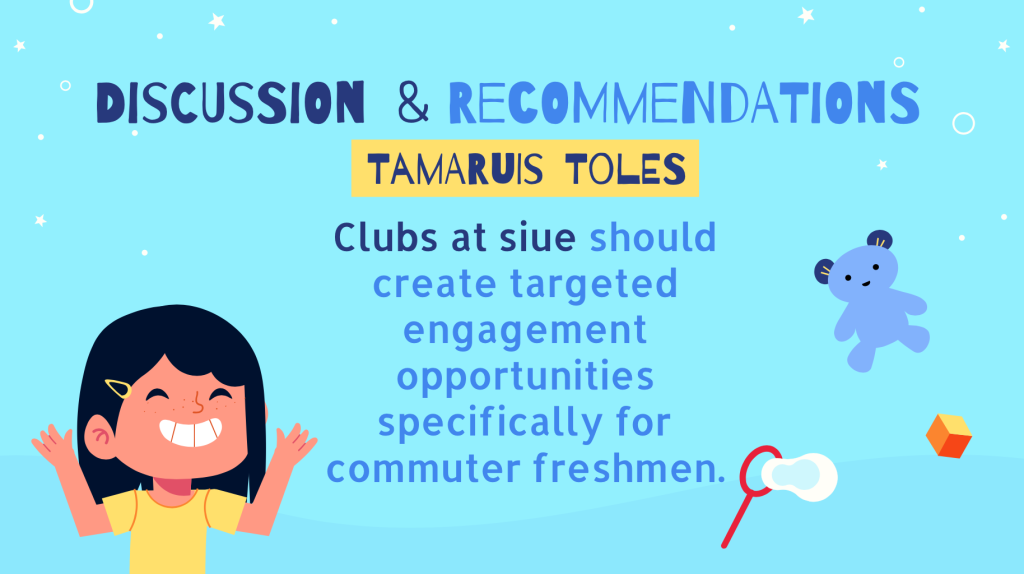
This artifact is a slide from our group presentation that I helped create and present. I worked with my group to organize the information and make sure our ideas were clear and easy to follow. I also presented my part to the class, which meant I had to communicate our findings in a way people could understand. This connects to my collaboration goal because it shows how I contributed to both building the presentation and working with my group to deliver it together.
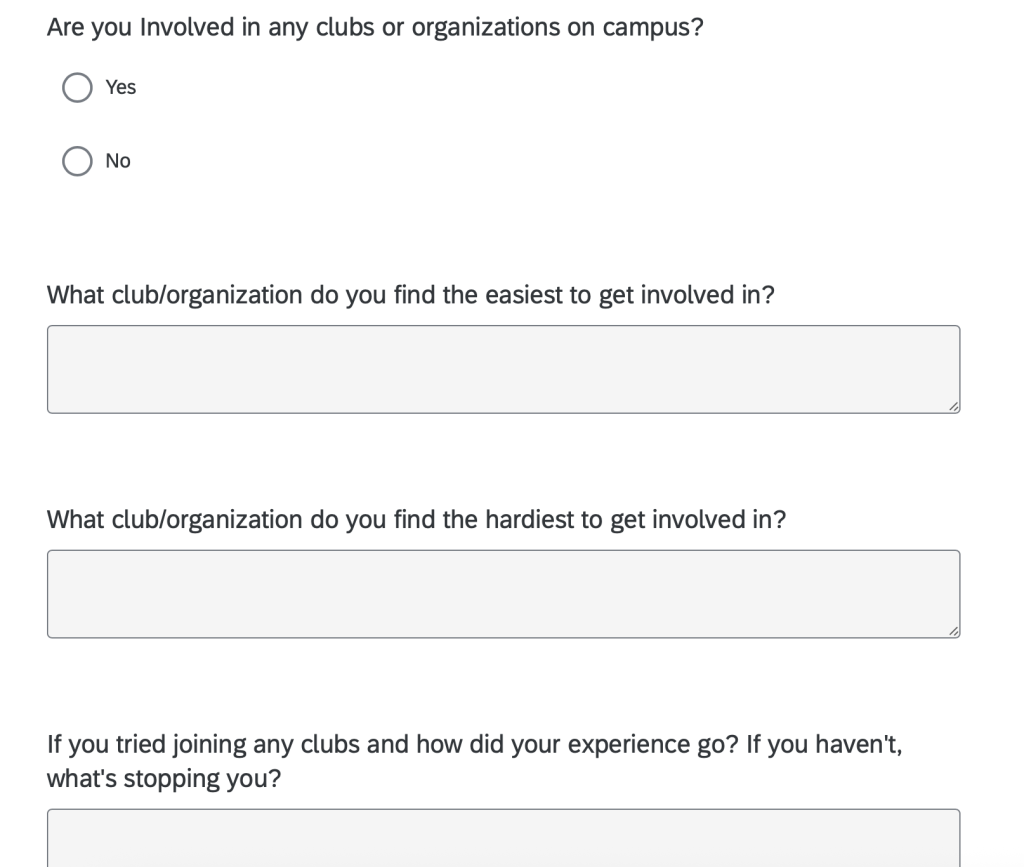
This artifact shows the group assignment where my team and I created our survey together. We had to talk through what we actually wanted to learn, decide on questions, and make sure everything made sense for our research topic. I contributed ideas during our group discussions and helped shape questions so they were clear and actually useful for what we were studying. This connects to my collaboration goal because I worked with my group, shared my thoughts, and helped us build something together instead of doing it individually.
This artifact shows the results from the survey my group created together. We all worked together to gather responses and then looked at the data as a team to understand what it was telling us. I helped talk through the patterns we were seeing and what they might mean for our research question. This connects to my collaboration goal because it shows how we didn’t just work separately, we actually came together to analyze the results and make sense of them as a group.
Goal 11a (20%) Reading
I will evaluate the significance of the texts I read and apply their ideas to my research questions and problem-solving in CODES 123. Reading isn’t just about summarizing; but it’s about understanding how knowledge from different sources can inform my research design, methods, and conclusions. By reflecting on what I read, I can connect theory to practice and see patterns across disciplines. My goal is to use my reading summaries as evidence of thoughtful engagement with scholarly ideas, showing how they shape my understanding and guide my research decisions.
What will you do to learn the content/ develop the skill?
What examples will you add to the portfolio to demonstrate your learning?
What characteristics of the chosen examples demonstrate you have met your goal?
I will read critically, summarize key ideas, and connect them to my research projects.
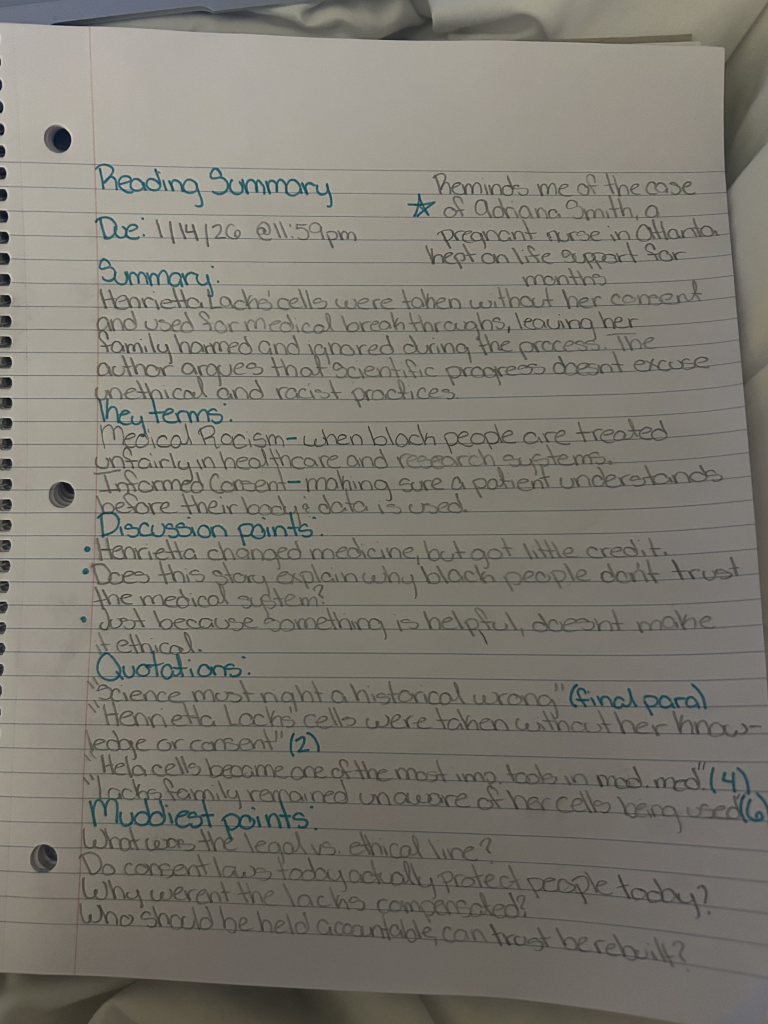
I will include: – Reading summary on Henrietta Locks – Synthesis notes entry – Application of readings to research design – Archival & ethnographic readings
These examples demonstrate that I can critically engage with texts and apply their insights to guide research decisions and project development.
his artifact is my source analysis of three different materials we used in our research. I read each source carefully, pulled out the main ideas, and explained how they connected to our topic on commuter student involvement. It helped me practice breaking down more academic or formal writing and turning it into something I could actually use in my project. I also compared how each source supported our findings in different ways. This connects to my reading goal because it shows my ability to read critically, understand key points, and connect outside information back to my own research.
This artifact shows the results from my Qualtrics survey about commuter student involvement at SIUE. It includes the data we collected on how many students are involved in clubs and how many are not. I had to take the numbers and actually figure out what they were saying about student life, which helped me practice reading data in a more meaningful way. Instead of just looking at percentages, I connected them back to student experiences and what they might mean. This connects to my reading goal because I learned how to interpret information, pull out key ideas, and explain what the data is really telling us.
This artifact is my reflection on the research process and the challenges I ran into while working on my project. I talked about things like issues with our survey, problems with observations, and how hard it was to connect all our data together. Writing this made me think back through everything we did and figure out what actually worked and what didn’t. It helped me reflect in a more honest and critical way instead of just listing what happened. This connects to my reading goal because it shows how I can take a complex process, understand it, and explain it clearly in my own words.
This artifact is my handwritten reading summary and reflection on The Immortal Life of Henrietta Lacks. I broke down the main ideas of the book in my own words and wrote notes about what stood out to me, especially around ethics in medicine, race, and access to healthcare. While reading, I focused on really understanding the message instead of just getting through the text. This helped me practice reading critically and picking out the most important ideas. It connects to my goal because it shows how I can read something deeply, summarize it, and actually reflect on what it means in a real-world context.