Digital Project 1
Tamaruis Toles
Dr. Wamalwa
CODES: Transdisciplinary Communication
September 9th, 2025
Once a Grizzly, Forever a Ram: Cheer as Identity
Identity can be shaped by anything: culture, family, or experiences.. Yet in me, cheerleading was the area in which I learned who I was. Where I discovered my identity. Cheer is not a sport; it is voice, it is energy, confidence, and leadership. In me, it also became reflective of how much my high school life was shaped by culture and by issues of race. I had the opportunity to be a cheerleader at two very different schools: North Point High School, a mainly white school in Wentzville, Missouri, and at Riverview Gardens, a mainly Black school in St. Louis. The two experiences couldn’t be more contrasted, yet as a whole, challenged, polished, and finally defined a key part of my identity.
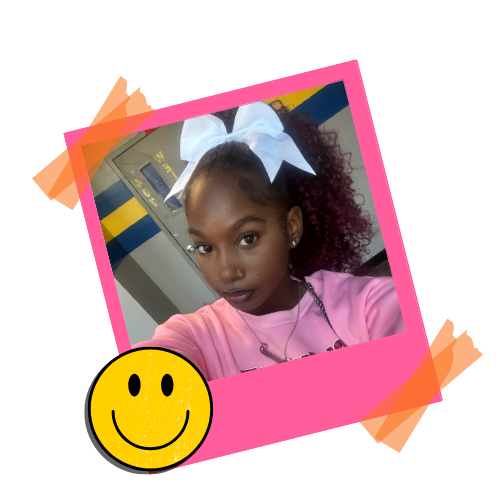
When I came in at North Point as a ninth grader, it was my initial year in cheer. I was pumped, darn it, I was completely pumped to finally be a part of something bigger than myself. The program had it all: new uniforms, sponsorship by a corporation, a massive fan base, and feeder communities. On paper, it looked as though it was the perfect place to grow as a cheerleader. But it was different on the inside.
That was my first time seeing how identity could be ignored or minimized. Small aggressions regarding my hair were a daily reminder that I was “other” in ways that the others could not relate. Individuals would drop little comments.. about my curls, about how I wore it, that were minimized as jokes. But to me, it hurt deeply. It told me, without necessarily saying so, that I did not completely belong. Cheer at North Point was professional and classy, yet it was also unforgiving. I was not encouraged to infuse my own personality or spirit. I was simply another body in the squad, who was supposed to look the same, act the same, and not be too much of a standout. That silence challenged me. I learned how oppressive it is when your identity is set aside, when you are in the room but not noticed.
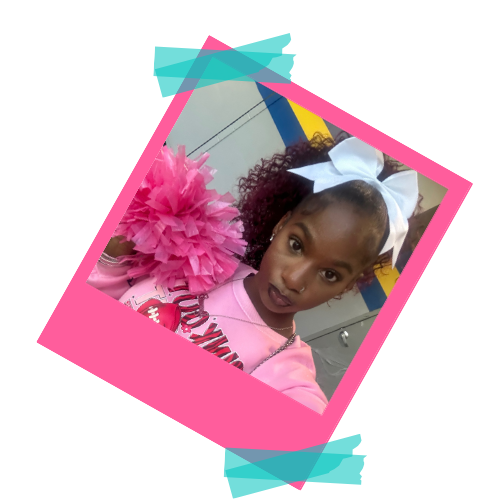
The turning point came when I transferred to Riverview Gardens. Walking into that gym felt like stepping into a different world. Riverview didn’t have nearly the resources North Point did, uniforms weren’t brand new, and funding was limited, but the spirit was alive in a way money couldn’t buy. There, I wasn’t just a number on the roster. I was Tamaruis. My hair, my style, my voice, they weren’t just tolerated, they were celebrated. That validation mattered. It gave me space to be myself without apology.
At Riverview, I was trusted with leadership. After putting in a lot of effort and pushing myself, I was able to become Varsity Captain. Leading the sideline cheers was only one aspect of that role. It was about developing trust, inspiring others, and bringing people together. Even on the days when the game was difficult or the crowd was small, I made sure my teammates felt secure. I learned how to handle responsibility, how to solve conflicts, and how to put the team first. In those moments, cheer wasn’t just an activity, it became a part of my identity. It taught me resilience, strength, and confidence.
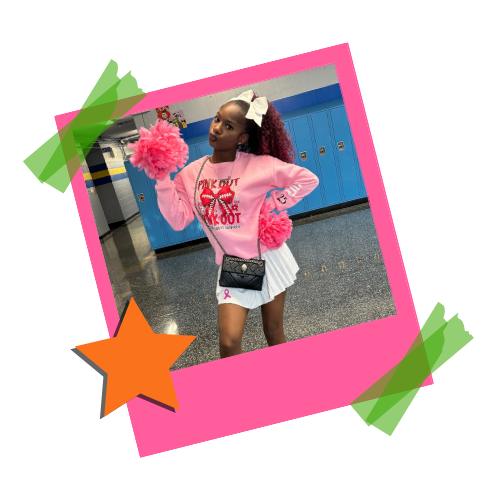
The difference between Riverview and North Point revealed to me how identity can be challenged in quiet and how it can flourish in affirmation. At North Point, I was invisible, and that invisibility might’ve quieted me entirely. But being transplanted to Riverview provided me with the opportunity to emerge into my identity as a leader. That even when no one in this world sees you, you keep yourself and when you’re in a space that affirms you, then you can rise.
Cheering also became how I related to the community. At Riverview, cheering was more than sidelines and routines. Cheerleading was about culture. What mattered to us was that, collectively, as a group, we represented our school, classmates, and ourselves proudly. That pride wasn’t superficial, it was internal. What emerged was part of who I was, both in and out of school. I walked differently. I stood up tall. I spoke more boldly. I felt that my voice could be heard because I learned to voice it, not in that small, enclosed space of chant, but in life.
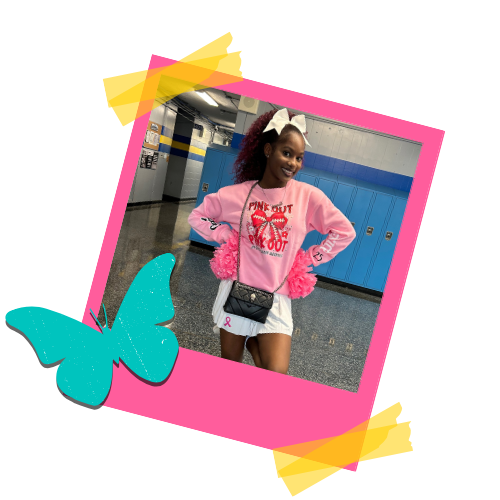
In retrospect, I realize how much my identity has been defined by those years. Cheer taught me resilience in the presence of microaggressions, empowerment when I was placed in leadership, and pride in being unabashedly cultural. It stretched me at North Point, where I felt invisible, and polished me at Riverview, where I learned to lead. Most of all, it provided me with a voice, a voice that I will take with me far beyond high school.
So when I talk about “Once a Grizzly, forever a Ram,” it’s not just a name change. It’s a reflection of my maturing. I am a person who has known being left out and being part of it, being quiet and being a leader, being invisible and being seen. Cheer was the program that made me see those extremes, and it made me tougher, more confident, and more resilient. Cheer isn’t what I did in high school; it’s who I became. My identity, and it will always be a part of me.