What is the purpose of your work- both the group project and individual products? What is the format of the groups? What individual products does this project consist of, and in what forms( maps, podcasts, video, reports, etc)
Purpose of our work
The purpose of our work is to educate youth students regarding water conservation and how it relates to the water cycle. Our individual products play a role in each of us contributing to a lesson in the water fair, surveys, and the toolkit. Each of our products and contributions help us achieve our overarching goal.
Who is the project made for? Describe the relevant stakeholders and what they might need to best understand/or use the different elements of this project
The target audience for our project is 5-12th grade students with an emphasis on educating kids on water conservation and better water habits. The youth of today is one of the most important stakeholders in society and has a huge impact on the environment. To best understand our project teachers should read the water fair tool kit, which gives you access to different water conservation lesson plans and other water fair important tips.
Other stakeholders that could utilize our research and products are local schools, educators, our partners, and especially after school programs without specific curriculum criteria.
Why is it important for your work to be shared? What value does it bring to the communities/stakeholders it serves.
It is important for our work to be shared because it can
What ethical considerations are important to think about when planning to disseminate your work? How will you ensure these ethical considerations are integrated into the dissemination plan?
It can be said that respect, equity, and integrity are imperative ethics to consider as they relate to the work we plan to conduct.
As I go over my water fair lesson plan from last semester, while revising my work, I plan on focussing on the clarity of my lesson plan and having a further detailed procedure. I want to add pictures on my lesson plan from when I did the experiment, and have captions underneath each picture. My main idea is explaining the background information that consists of the importance of the experiment, and the overarching statement. My background information where I will state the environmental impacts of rain gardens and how different pollutants can affect the water cycle.
To bolster my research, I plan on researching secondary sources regarding rain gardens, pollutants and other obstructions, and runoff water. I remember while researching I found several YouTube videos regarding these topics that were very helpful when I was compiling my research. In addition to these videos, I will also look into articles regarding runoff water and its benefits and its contributions to the water cycle as a whole. It is also important to put into perspective how this one lesson plan can help picture the water cycle and runoff while understanding its functions and roles. Therefore I will research these ideas and include them in my plan to strengthen the overarching idea.
My main audience is elementary and middle school teachers who are looking to incorporate water conservation into their classrooms with my lesson plan. Which is why I will add visuals and include a detailed step by step procedure which is easy to follow and understand.
By revising my work I will include more evidence in my lesson plan and tailor it efficiently for my specific target audience to help convey the importance of runoff water in water conservation.
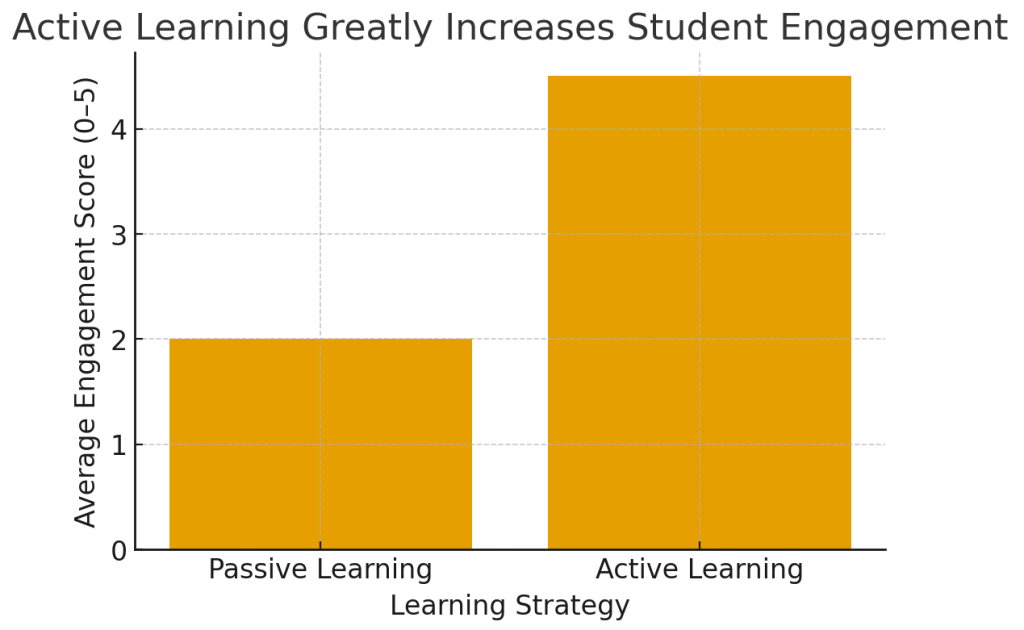
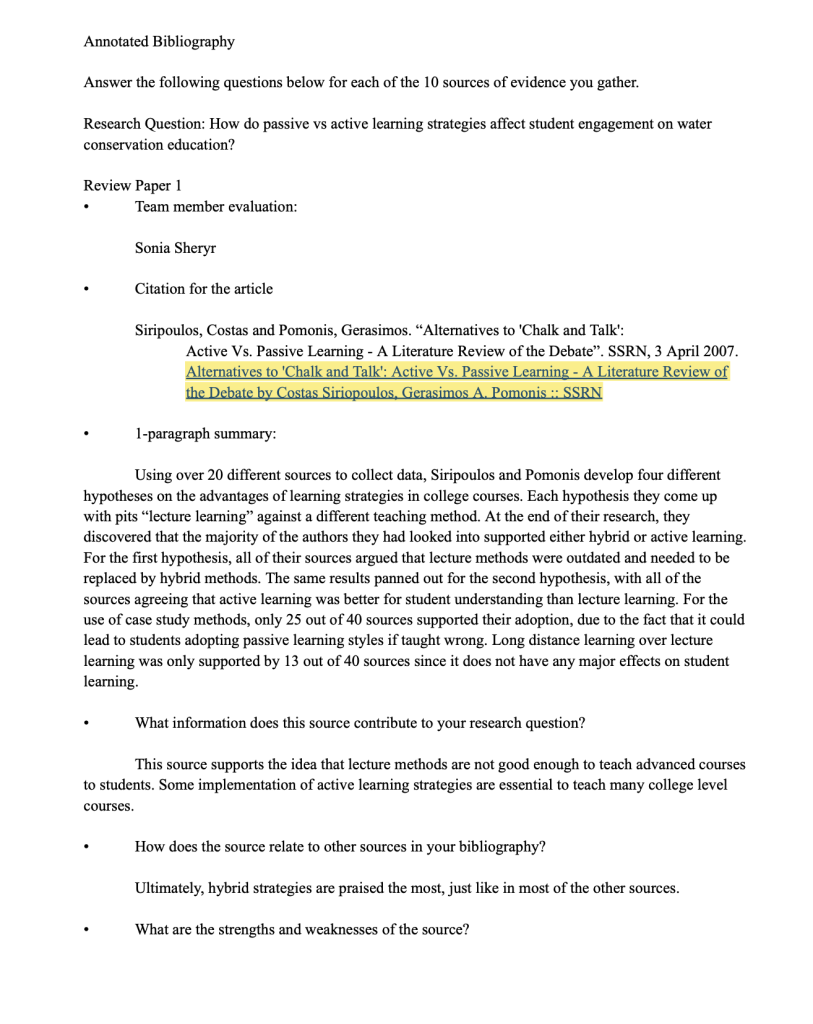
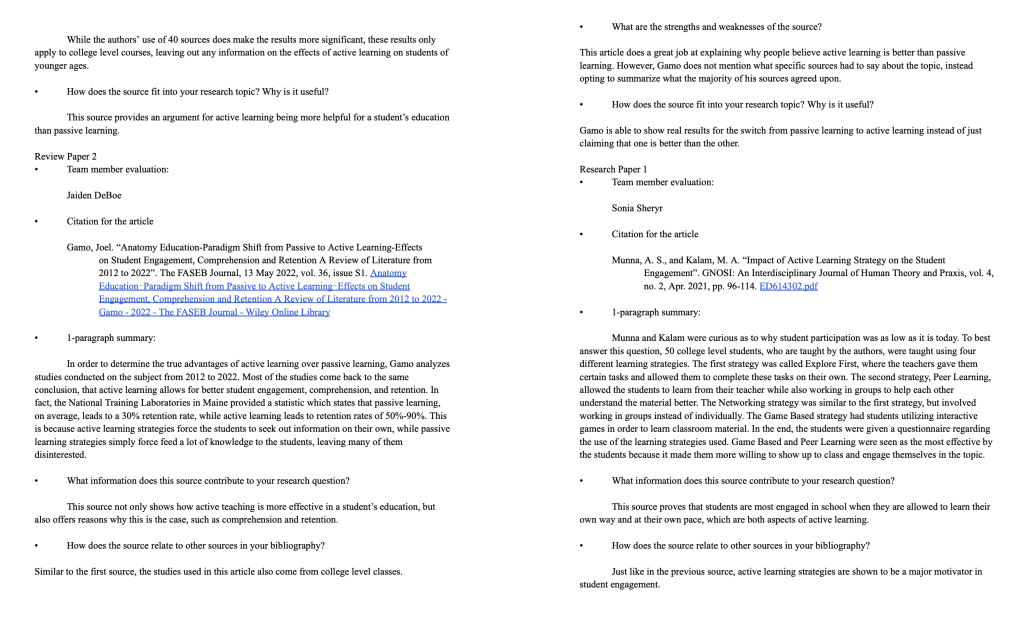
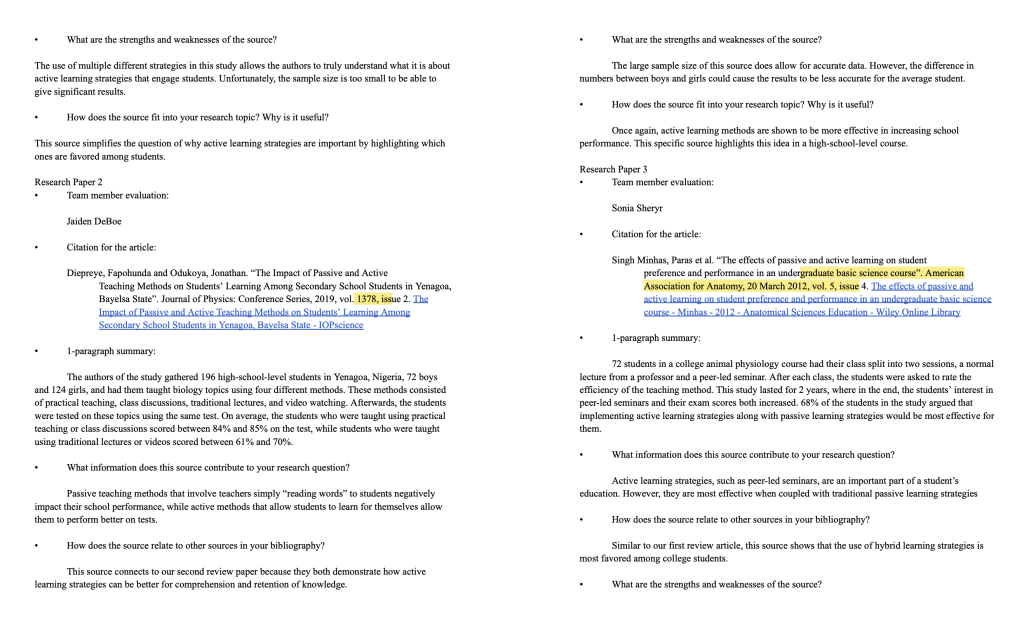
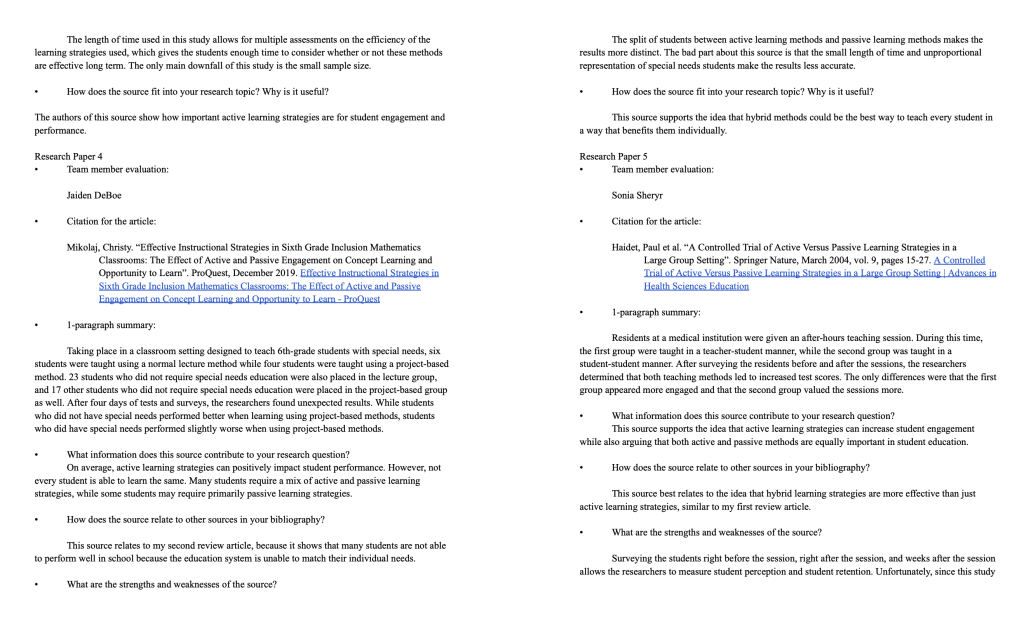
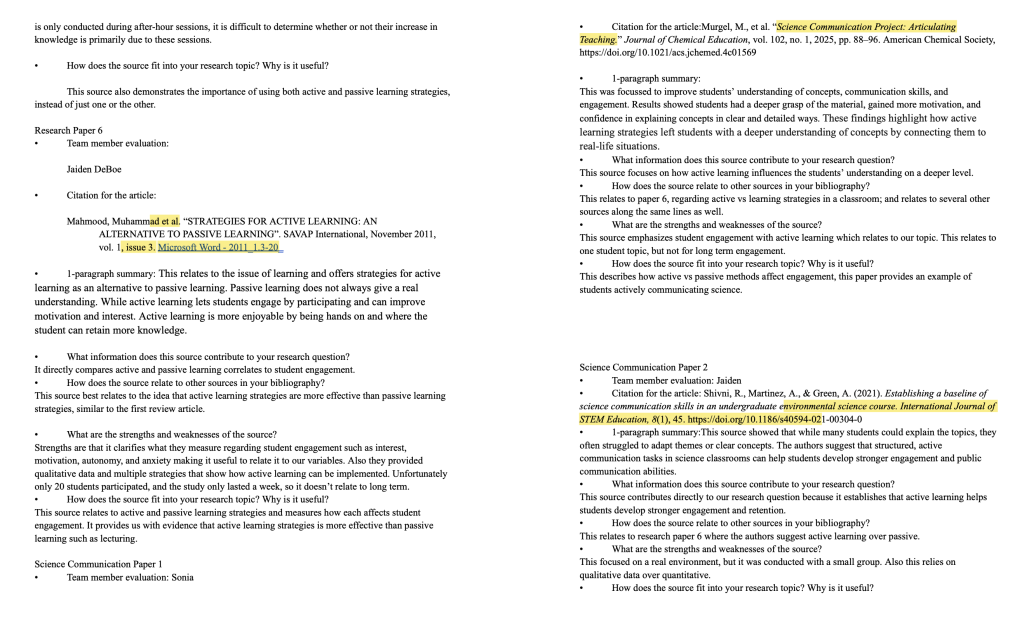
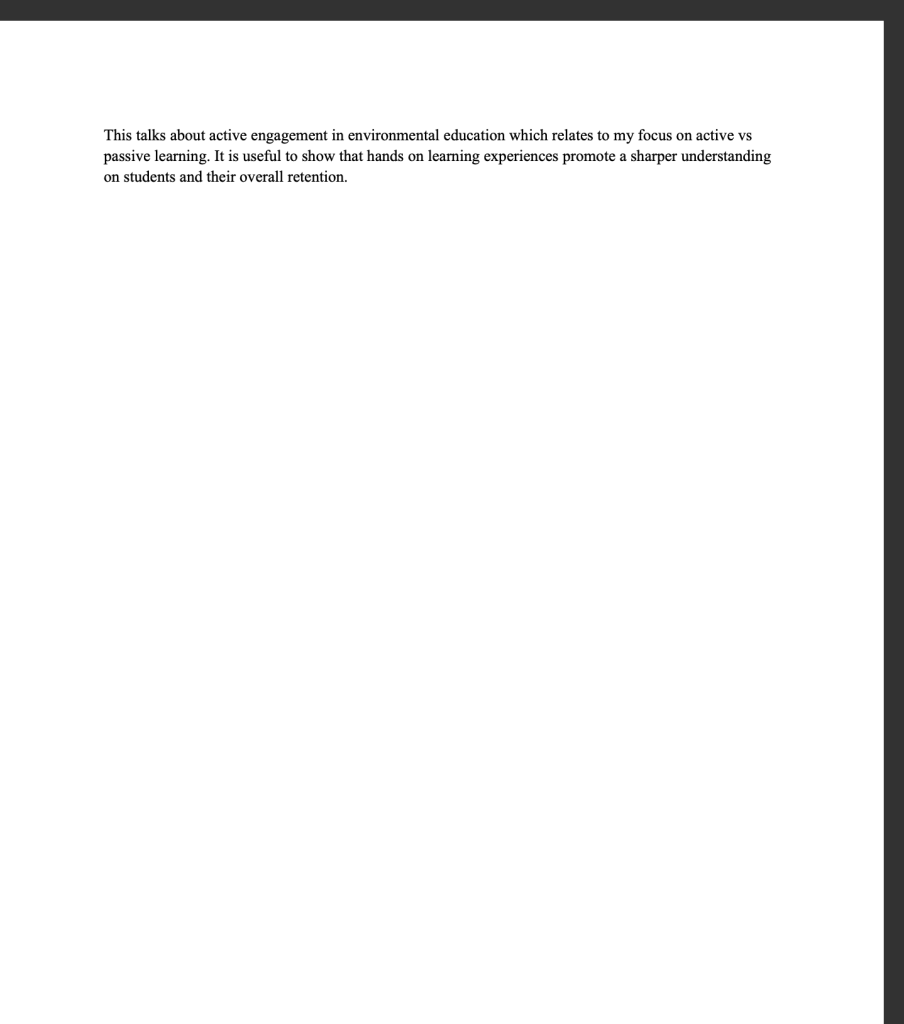
Our research question is “How do passive vs active learning strategies affect student engagement on water conservation education. The independent variable will be the type of lesson strategy used, such as the active learning lesson. While the dependent variable will in this case be student engagement and performance which will be measured through a method called active recall. The control is going to be a group that undergoes passive learning lessons like a notes powerpoint.
Some children learn best by listening to their teacher, while others require hands-on experience, and still others benefit from a visual example provided by an instructor. For the last type, some plans include videos of instructors demonstrating rainwater runoff. This is why we need to be open to finding a lesson that is easy to understand, comprehensive, interactive, and engaging.
A lesson that I conducted at the Jackie Joyner Kersee Food Agriculture and Innovation Center is that students will be provided with 3 cups. Cup A will contain clean water. The water will be poured into Cup B. Cup B will contain soil on top and one other object at the bottom (such as leaves, tin foil, wood chips, etc). Cup B and the object will both contain a hole. The water that is poured into Cup B from Cup A will run into Cup C. The students will observe the amount of water in Cup C and the color of the water in Cup C.
First, we will demonstrate the experiment with Cup B, which contains only soil at the bottom and requires two scoops of soil. Then we will fill Cup A a third to halfway with water. Then, dump the water from Cup A into Cup B. Then, observe what comes out of the bottom into Cup C. The water that comes out is called run-off. This ultimately flows into Cup C. Discuss the amount and color of the water with the students. Observe the amount and color of the water. Now, you will redo the experiment, but place different objects at the bottom of your Cup B that will act as obstructions, such as tinfoil or a sponge. What do we predict will happen, and then observe the runoff?
Then we all come together and discuss our observations and results regarding which object had the most and least run-off, and which run-off was the darkest. This shows how water moves through a system and changes along the way. How different objects affect the amount of water and the quality of water in a system, and if water can’t be taken into the soil, it can go through various routes of the water cycle.
This lesson plan will serve as our method of teaching for the experimental group. For the control group, we will use a slideshow presentation to teach the students with a “passive learning strategy”. The slideshow presentation will contain the same information on the topic presented in the hands-on activity. There will be bullet points to highlight key points in the lesson and pictures to show exactly how water runoff works. We will act as instructors for this group, going into an in-depth lecture on water runoff while making sure to stick to the layout of the presentation.
Throughout each section, we will measure the students’ engagement through the frequency of questions brought up in class. Performance will be measured using the results of quizzes taken at the end of the lesson. Both results will be compared in order to determine which learning method impacted the average student the most. However, it is always possible that one method could positively impact engagement, while the other positively impacts performance. In this instance, the argument could be made that a mix of both strategies would be most effective in maximizing both engagement and performance.